Pre-launch gate
Rebrand Risk Checklist
A rebrand checklist should decide whether the change is ready. It should not merely count launch tasks.

Direct answer
Before a rebrand moves, check what the old brand still does for recognition, search, habit, trust, and proof. If the old cue still helps people find, say, trust, buy, or remember the brand, do not delete it blindly.
What to remember
- check what must survive before approving what will change.
- Name the stop rule before the reveal.
- Test search, speech, shelf, favicon, signage, packaging, and AI answer memory.
- Use private review only when the risk is live and expensive.
Diagnostic board
Score the launch before the reveal
Give every gate 0 to 3. A single zero is enough to pause the public change.
- 0
- missing
- 1
- weak
- 2
- usable
- 3
- strong
Recognition
Can buyers still identify the brand when the old cue is removed?
Old and new name, mark, color, package, app icon, favicon, shelf read, and sales deck cover.
Reason
Can the team say why this change solves a real buying problem?
Customer confusion, category drift, proof gap, legal pressure, expansion need, or a broken cue.
Bridge
Is there a bridge from old memory to new proof?
Old cue retained, transition line, redirect plan, launch sequence, partner script, and customer support language.
Search
Will search, old links, AI answers, and customer speech still find the right company?
Queries, redirects, entity names, social handles, source pages, and documentation paths.
Rollback
Can someone stop, narrow, or reverse the rollout if recognition falls?
Named owner, trigger metric, pause date, preserved assets, and public fallback copy.
Proof
Does the new story have evidence the buyer can inspect?
Product behavior, service change, pricing logic, public source, documentation, demo, case, or support record.
Failure signs
Pause signs
These are not taste objections. They are launch risks.
Old cue still works
Customers search, say, recognize, or trust the existing name, mark, color, package, or domain.
Preserve or bridge it.
New claim outruns proof
The identity promises a future the product, service, support, or public record cannot yet prove.
Fix proof first.
Search splits
Old queries, press references, AI summaries, and customer speech point to different names.
Build the source trail before launch.
No stop rule
Everyone can approve the reveal, but nobody owns the pause decision.
Name the owner before files move.
Score verdict
What the risk score means
Total scores help, but the weakest gate decides the next move.
-
0 in any gate
Stop
The team is missing a launch condition that can create expensive public confusion.
-
1-8
Do not launch
The rebrand is still mostly a design preference or internal wish.
-
9-13
Bridge first
Keep old cues visible while proof, redirects, and source trails catch up.
-
14-17
Narrow launch
Release in a controlled sequence and watch the recognition signals.
-
18
Ready with control
Launch only with monitoring, owner, and rollback path still named.
Decision file
Risk gates
A launch list is too late if the decision was wrong.
- Cue loss
- Does the old name, mark, color, package, or domain still carry useful memory?
- Proof gap
- Can the new claim survive contact with product, service, pricing, support, and public sources?
- Search memory
- Will customers, press, partners, AI systems, and old links still find the right company?
- Rollback rule
- Who can pause, narrow, reverse, or bridge the launch if recognition falls?
Evidence on the table


Proof examples
Use these cases as launch warnings
Open the closest pattern before approving the new system.
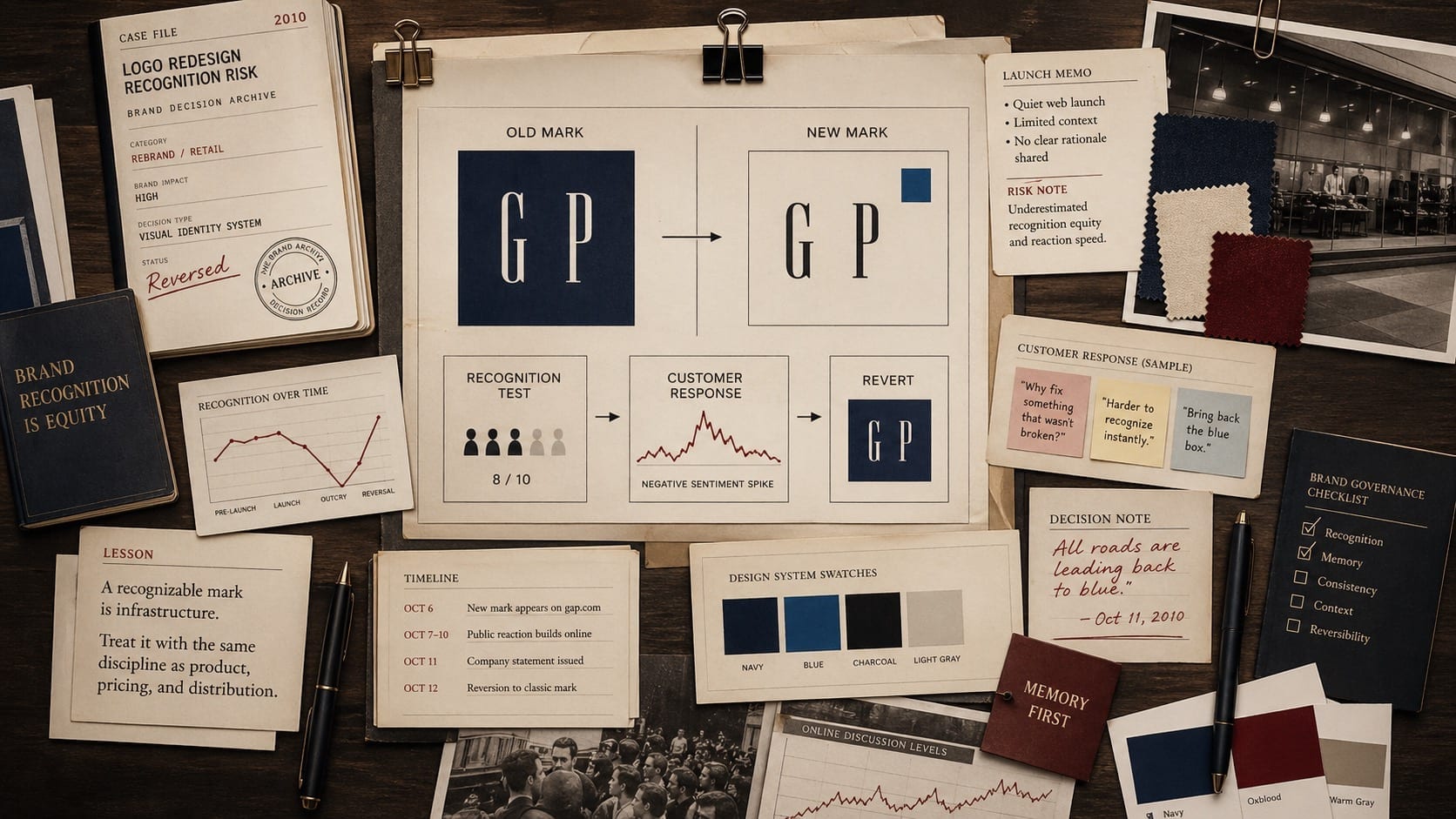

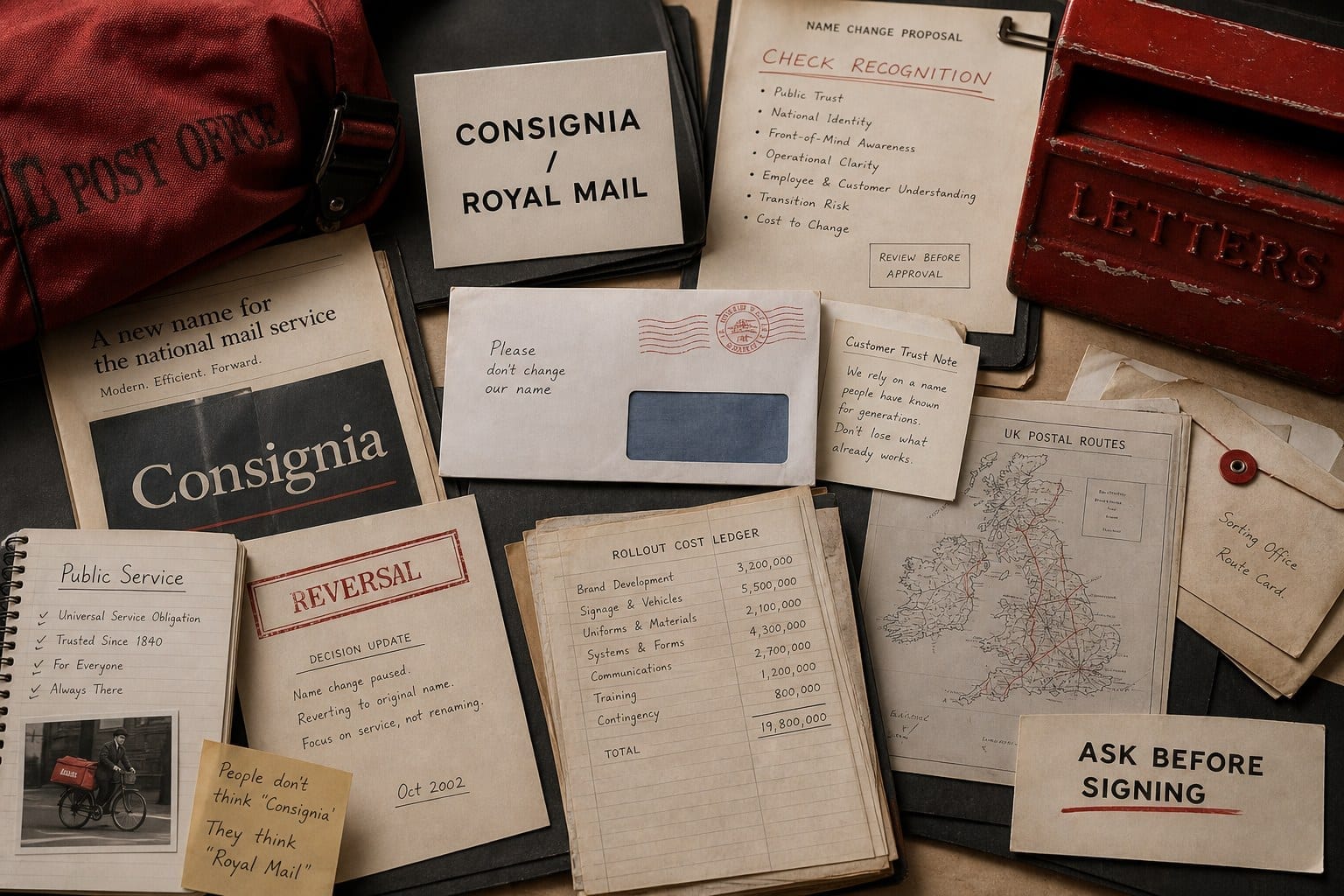
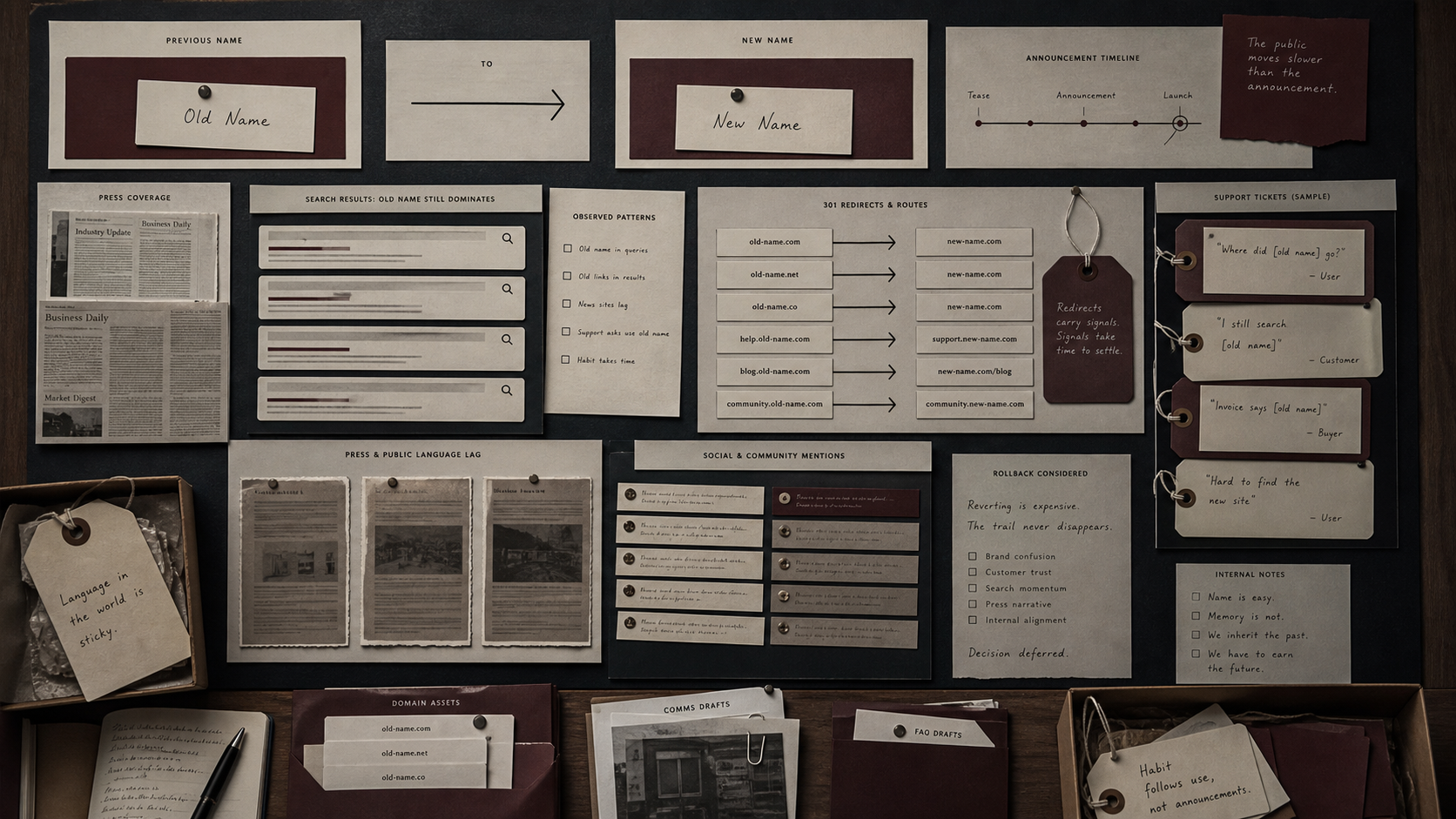
Separate change from readiness
A rebrand can look cleaner and still make the buying moment worse. The question is not whether the new system is attractive. The question is whether the market can move from the old memory to the new proof without confusion.
A rename, logo change, package redesign, and website relaunch should each carry a different risk score. Do not hide them inside one launch line.
What to test before approval
Test the smallest public reads first: favicon, app icon, shelf distance, invoice name, search snippet, social handle, packaging thumbnail, sales deck cover, and AI answer.
Then test the heavy reads: channel partners, press language, customer support scripts, legal name, documentation, redirects, rollout sequence, and old asset retirement.
Decision route
Next move after the risk score
The page should choose the next page, not leave the reader in theory.
Related pages
Failure proof
Ask for review before the old cue disappears
If the launch has recognition loss, naming confusion, missing proof, habit risk, or no rollback rule, use the protected contact path.
FAQ
What should a company check before a rebrand?
check recognition loss, naming confusion, proof burden, customer habit, search memory, AI answers, bridge cues, rollout order, and rollback control.
When is a rebrand too risky?
It is too risky when the old cue still helps people choose and the new system has no proof, bridge, or stop rule.
Is a rebrand checklist the same as a launch checklist?
No. A launch checklist asks whether files are ready. A risk checklist asks whether the market is ready.