Brand Entity / Tropicana rebrand and packaging failure
Tropicana: rebrand and packaging failure
Tropicana is filed as a packaging-recognition brand: the redesign removed the orange-with-straw shelf cue buyers still used.

Short Answer
Tropicana is filed here for one job: Tropicana rebrand and packaging failure. The Tropicana file proves that packaging can be a memory system, not a disposable wrapper.
Reader Task
What this brand entry should help you finish
Use this file to answer the Tropicana brand question without falling into a company-history summary. The task is to understand the main Tropicana rebrand and packaging failure pattern, check the sourced facts, open the primary case (Tropicana and the Cost of Losing the Shelf Cue), and leave with a lesson or risk that can be compared against another brand. The file has 1 filed case, so the next step should be clear before the reader leaves.
Fact Panel
Tropicana facts
Only sourced facts render here. Unsourced company-history rows stay out of the page.
- Founded
- 1947 Source
- Founders
- Anthony T. Rossi Source
- Parent / ownership
- Tropicana Brands Group; PAI Partners majority ownership with PepsiCo minority ownership from the 2021 juice transaction Source
- Category
- Fruit juice and beverage Source
- Home market
- United States Source
- Distinctive assets
- Orange-with-straw carton cue
- Status
- Active Source
- Decisions on file
- 1 filed case
What Tropicana teaches
The useful brand entry does not ask whether Tropicana is famous. It asks what the filed decision record teaches that a reader can use on another brand.
- Main lesson: The Tropicana file proves that packaging can be a memory system, not a disposable wrapper.
- Reader check: Inspect the before-and-after cue stack: color, fruit image, straw, carton shape, wordmark, and how quickly the old system had to return.
- Failure mode: The risk is improving the design object while weakening the buying shortcut at the shelf.
- Filed case: Tropicana: The decision lesson is procedural: identify the visual elements that carry retrieval before judging what looks current. Recognition cues are protected. Aesthetic preferences are negotiable.
Mistake To Catch
Where the Tropicana reading breaks
The risk is improving the design object while weakening the buying shortcut at the shelf.
The weak read is to stop at the familiar name. The stronger read is to ask which decision changed recognition, trust, habit, distribution, product proof, or public memory.
That is the useful job of the brand entry: keep the famous name attached to a decision the reader can inspect.
Decision Depth
Read Tropicana as shelf-cue loss before reading it as package design.
This section turns the brand name into an inspection path: what changed, what broke, what worked, and what to compare next.
Tropicana is useful because the failure happened at the buying surface. The orange-with-straw cue, carton shape, color, and shelf memory helped buyers find the product quickly.
A weak reading says the new package looked wrong. A stronger reading asks which recognition cues were removed and how that changed the shopping moment.
The inspection path is before-and-after shelf behavior, fruit cue, wordmark, color, carton structure, variant clarity, sales impact, and rollback speed.
Use this file before changing packaging in a category where buyers shop fast. The approval test is whether the new package is identifiable at shelf speed beside competitors.
The copycat mistake is improving the design object while weakening the purchase shortcut. A package has to work in context, more than in a presentation.
The practical lesson is to test recognition before launch. If customers need to stop and decode a familiar product, the redesign has already added friction.
Decision timeline
The timeline is the reason this brand has a parent page. Each row points to a filed case, then names the consequence a reader should carry into the next comparison.
For brands with one case, the timeline still matters because it prevents a thin profile. The brand page becomes the router, and the case page remains the proof.
| Filed decision | What happened | What it teaches |
|---|---|---|
| Tropicana and the Cost of Losing the Shelf Cue Failure / 2009 |
The redesign case sits at the center of recognition equity: when the asset is visual memory, improvement starts by protecting the cue shoppers already use. | The decision lesson is procedural: identify the visual elements that carry retrieval before judging what looks current. Recognition cues are protected. Aesthetic preferences are negotiable. |
Source test
The source trail below is inherited from the filed cases, including company records, campaign records, public reports, source-mark files, or archived references where the original page moved.
Use the source list to verify the facts. Use the case links to inspect the decision. Use the comparison links to test whether the Tropicana pattern repeats somewhere else.
Visual proof
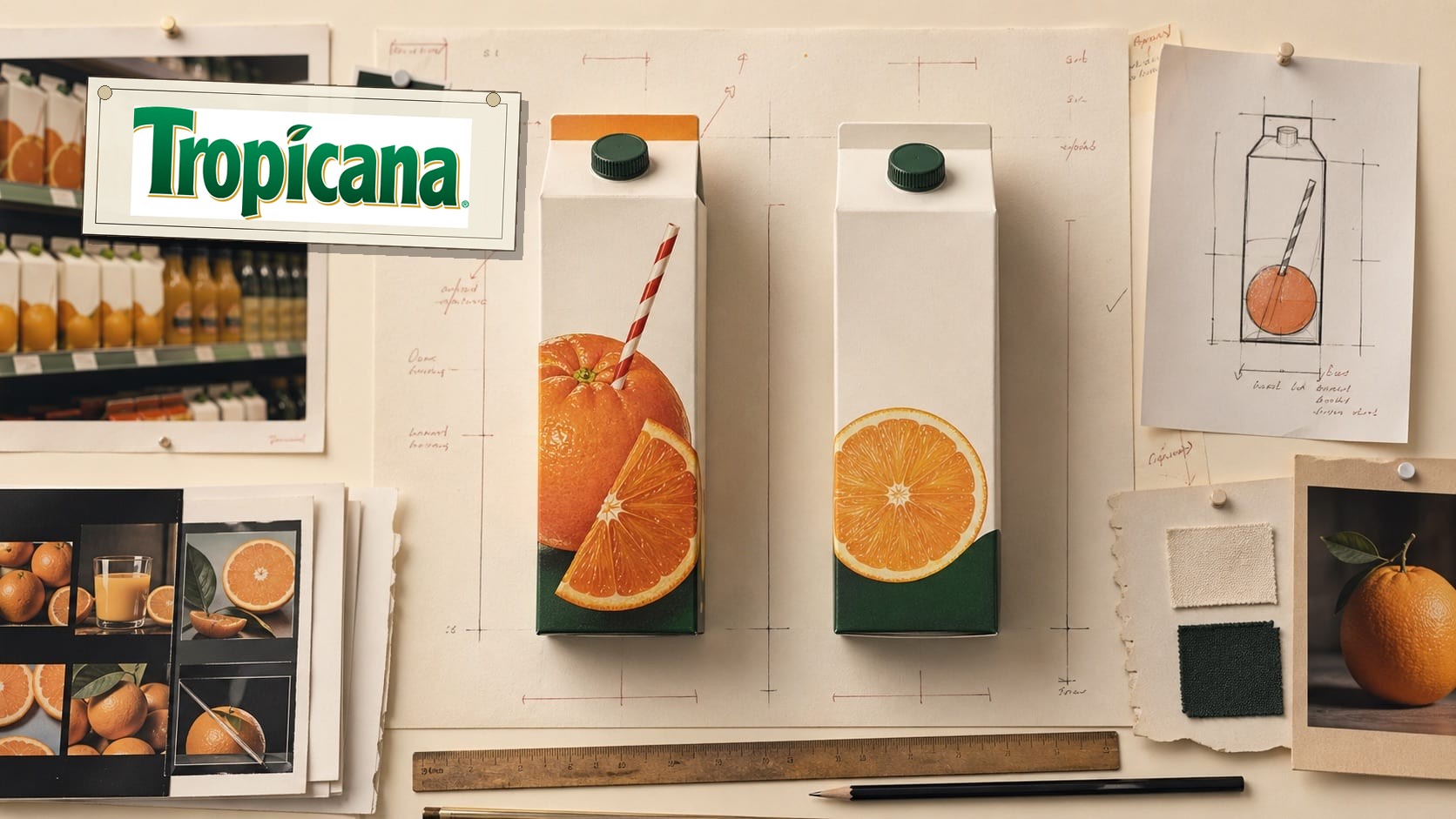
The hero image for this brand page uses the strongest generated editorial visual already attached to the primary case: Tropicana and the Cost of Losing the Shelf Cue. It stays tied to filed evidence instead of becoming a generic brand mood image.
That visual rule matters for this build. Every brand page needs a high-end image, but the image has to point back to the decision: packaging, mark, product behavior, service proof, ritual, failure, or trust pressure.
If a future brand has no strong visual, it does not pass the entity-page gate until the image is generated or replaced.

Sources
- Convenience Store News, Tropicana Reverts to Old Packaging, March 4, 2009
- Advertising Age, Tropicana Line's Sales Plunge 20% Post-Rebranding, April 2, 2009
- ScienceDirect, A study of the impact of package changes on orange juice demand
- Designboom, consumers want the old packaging of tropicana juice back, February 26, 2009
- HispanicAd, Packaging: Lessons from Tropicana's fruitless design, February 16, 2009
- Domain-b, PepsiCo to revamp Tropicana advertising, marketing and packaging in the US, January 10, 2009
- Fortune via CNNMoney, Tropicana's botched redesign, July 1, 2009
- NPR via WVIA, Consumers Reject New Tropicana Carton, February 23, 2009
- BrandlandUSA, Tropicana to Revert to Older Packaging, February 25, 2009
- Wikimedia Commons, Tropicana Products old Logo file

People Also Ask
What happened to Tropicana, and what should readers inspect?
The Tropicana file proves that packaging can be a memory system, not a disposable wrapper. Start by inspecting this point: Inspect the before-and-after cue stack: color, fruit image, straw, carton shape, wordmark, and how quickly the old system had to return.
What does Tropicana teach about branding?
The Tropicana file proves that packaging can be a memory system, not a disposable wrapper.
What should readers inspect first in the Tropicana file?
Inspect the before-and-after cue stack: color, fruit image, straw, carton shape, wordmark, and how quickly the old system had to return.
What is the main risk in the Tropicana file?
The risk is improving the design object while weakening the buying shortcut at the shelf.
Which Tropicana case should readers open first?
Start with Tropicana and the Cost of Losing the Shelf Cue, because it is the primary filed case behind this brand file.