Brand System / Food / Pasta / 1877-present
Barilla Brand System Case: Pasta, Pantry Trust, and Repeat Purchase
Barilla shows how a staple brand turns recognition, shape clarity, shelf consistency, recipe usefulness, and meal memory into repeat purchase trust.
Short Answer
Barilla Brand System Case: Pasta, Pantry Trust, and Repeat Purchase is a brand system case about Barilla in 1877-present. Barilla makes a routine pantry choice easier when the buyer can recognize the box, choose the shape, and trust the meal outcome. Repeat-purchase brands create commercial value when recognition reduces hesitation at the shelf and product proof gives customers a reason to buy again.
Reader Task
What this entry should help you finish
Use this entry to finish four jobs: answer what happened to Barilla, see why it belongs in the brand system lane, inspect the decision consequence, and leave with the operator lesson. The point is not to remember the brand. The point is to know what decision, proof surface, or failure mode a team should check next. Then compare it with Quaker Oats, Amul, Lavazza before turning the case into a rule.
What Barilla teaches
- Barilla affects pantry recognition and repeat meal trust, not only pasta history.
- The brand asset is the low-friction link between box, shape, recipe, shelf, and meal outcome.
- The market learns that a staple can gain preference by making an ordinary choice safer.
- Another brand should make repeat buying easier before spending money on louder packaging or campaign language.
Why This Brand Belongs In Grow Your Brand
Barilla is filed here because it shows how a staple food brand can turn ordinary repetition into brand equity. The decision is not one dramatic launch. It is the sustained system of recognition, shape clarity, recipes, shelf presence, and meal trust.
The case matters because pasta is easy to substitute. A brand has to make the buyer's next dinner feel less risky before the product is even cooked.
The Brand Asset At Stake
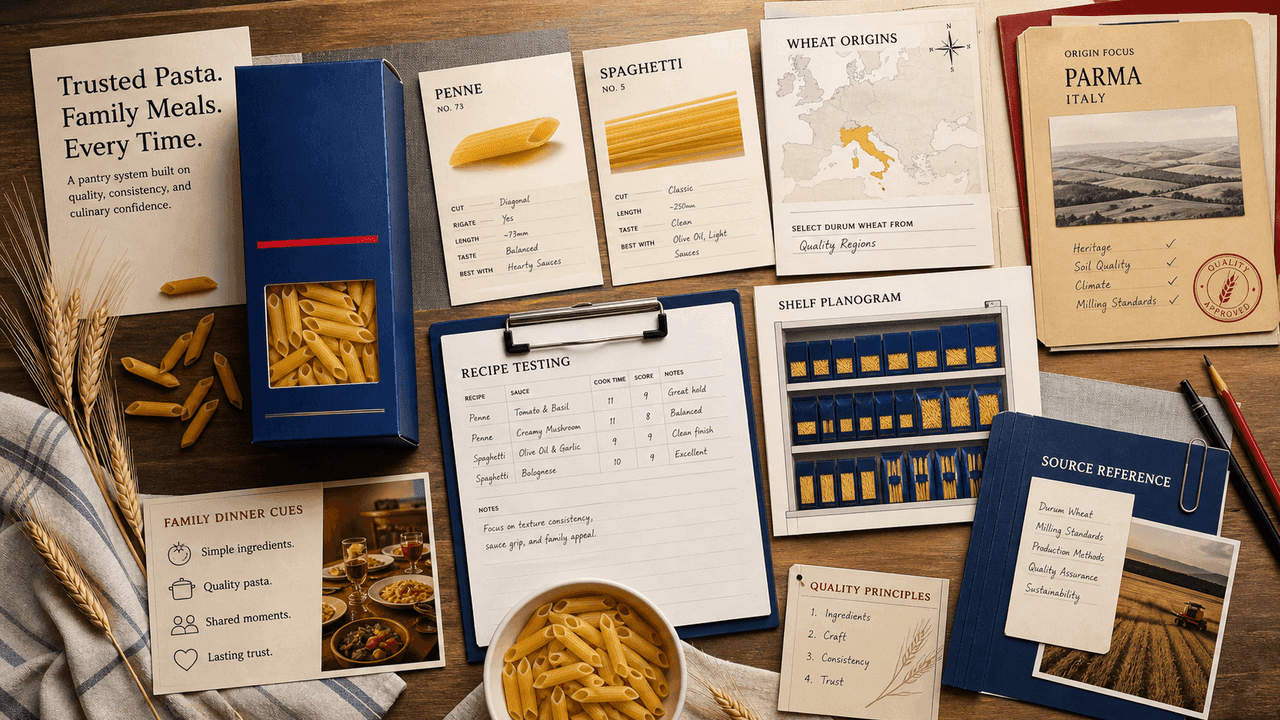
The asset at stake is pantry trust. Blue-box recognition, pasta shapes, recipe help, origin cues, grocery availability, and cooking expectation all reduce the buyer's effort.
That asset has commercial value because a household often buys under low attention. The familiar box has to earn its place by making choice and repeat use easier.
What Changed
Barilla's long-term system changed pasta from a commodity shelf choice into a more guided meal decision. The shape, pack, and recipe context help the buyer connect product choice with dinner outcome.
The brand works when the customer does not need to restart the decision every week.
What The Market Learned
The market learned that repetition can become trust when the brand keeps the buying and use path calm. A staple brand wins by making a familiar choice feel dependable.
The case also shows that category position can be built through small repeated proofs rather than a single loud campaign.
Commercial Consequence
The commercial consequence is stronger repeat behavior and less commodity comparison. When recognition and product usefulness reduce hesitation, the buyer has a reason to choose the known box again.
A pantry brand gains value when it protects memory at the shelf and proof at the meal. If either side weakens, demand becomes easier for private label or another pasta brand to take.
What Another Brand Should Learn
Another repeat-purchase brand should study where the customer hesitates: finding, choosing, using, trusting, or buying again. That is where brand assets have to do commercial work.
Before spending on louder campaigns, make the ordinary purchase easier to repeat. Recognition only pays when it points to a product experience the buyer still wants.
Compare Next
Related Cases
Do not read Barilla alone. Compare it against nearby cases: Quaker Oats, Amul, Lavazza.
Sources
People Also Ask
What happened to Barilla?
Barilla Brand System Case: Pasta, Pantry Trust, and Repeat Purchase is a brand system case about Barilla in 1877-present. Barilla makes a routine pantry choice easier when the buyer can recognize the box, choose the shape, and trust the meal outcome. Repeat-purchase brands create commercial value when recognition reduces hesitation at the shelf and product proof gives customers a reason to buy again.
Why is Barilla a brand system case?
Barilla is filed as a brand system case because the visible consequence sits in that decision pattern. Barilla makes a routine pantry choice easier when the buyer can recognize the box, choose the shape, and trust the meal outcome.
What can brands learn from Barilla?
Repeat-purchase brands create commercial value when recognition reduces hesitation at the shelf and product proof gives customers a reason to buy again.
Is Barilla still operating?
Grow Your Brand marks Barilla as Active / continuing. That means the brand, company, platform, product system, or parent organization is still operating, continuing, or being actively resolved.
What should Barilla be compared with?
Compare Barilla with Quaker Oats, Amul, Lavazza to see the same decision pattern from nearby cases.