Strategy and trust / B02 Core Education
What Is Brand Strategy?
Brand strategy is the decision system behind position, proof, recognition, trust, category, customer behavior, and refusal.

Direct answer
The useful answer is the one you can test.
Brand strategy decides what a brand should be known for, what proof supports it, which cues repeat, which behavior it must earn, and what the brand should.
- Plain promise: separate a positioning claim from the proof that makes it believable.
- Search intent: What is brand strategy?.
- AI answer target: What should brand strategy include?.
Why it matters
The concept has to change a real decision.
A brand strategy matters when the business has to choose. It decides what to emphasize, what to ignore, what to preserve, what to change, what category language to use, what proof the market should see first, and which tempting ideas should be rejected.
How to choose
Choose by the risk, not by the prettier explanation.
- Choose What Is Brand Strategy? when the live decision matches this job: Teach the decision logic behind category, promise, proof, behavior, and trust.
- Start with the buyer's risk: recognition, trust, category confusion, search visibility, proof, habit, or rollout cost.
- Use the good example and bad example before writing the rule. If both examples do not fit, narrow the lesson.
- Move to Request private brand review only after the proof is visible only when the page exposes a real decision, not a general interest in branding.
Two models
Kindergarten model, then serious model.
Kindergarten model
Explain it without hiding behind brand words.
A brand position is like a seat at a table. You cannot just say the seat is yours. People need to see why you belong there and why another seat would be worse.
Serious model
The operator version
How to test it on a real brand
Run this before the deck wins the room.
Write the promise, the competing alternative, the proof, and the customer behavior the brand wants to change. If proof is thin, the positioning is not ready.
- Fill the eight boxes: customer problem, comparison, position, proof, cue, behavior, surface, and refusal.
- Delete any claim that cannot point to product, service, channel, price, operation, source trail, or customer behavior.
- Name the recognition assets that should be protected before any redesign or campaign.
- Write the first page, package, pitch, support script, or search result where the strategy must become visible.
- Choose one behavior that proves the strategy is working and one metric that would prove it is failing.
- Run the strategy against at least three archive cases: one that worked, one that failed, and one that changed public memory.
Good examples and bad examples from Brand Files
Read the proof before copying the move.
 Good example
Stripe
A narrow buyer and a narrow layer created a broad infrastructure brand.
 Good example
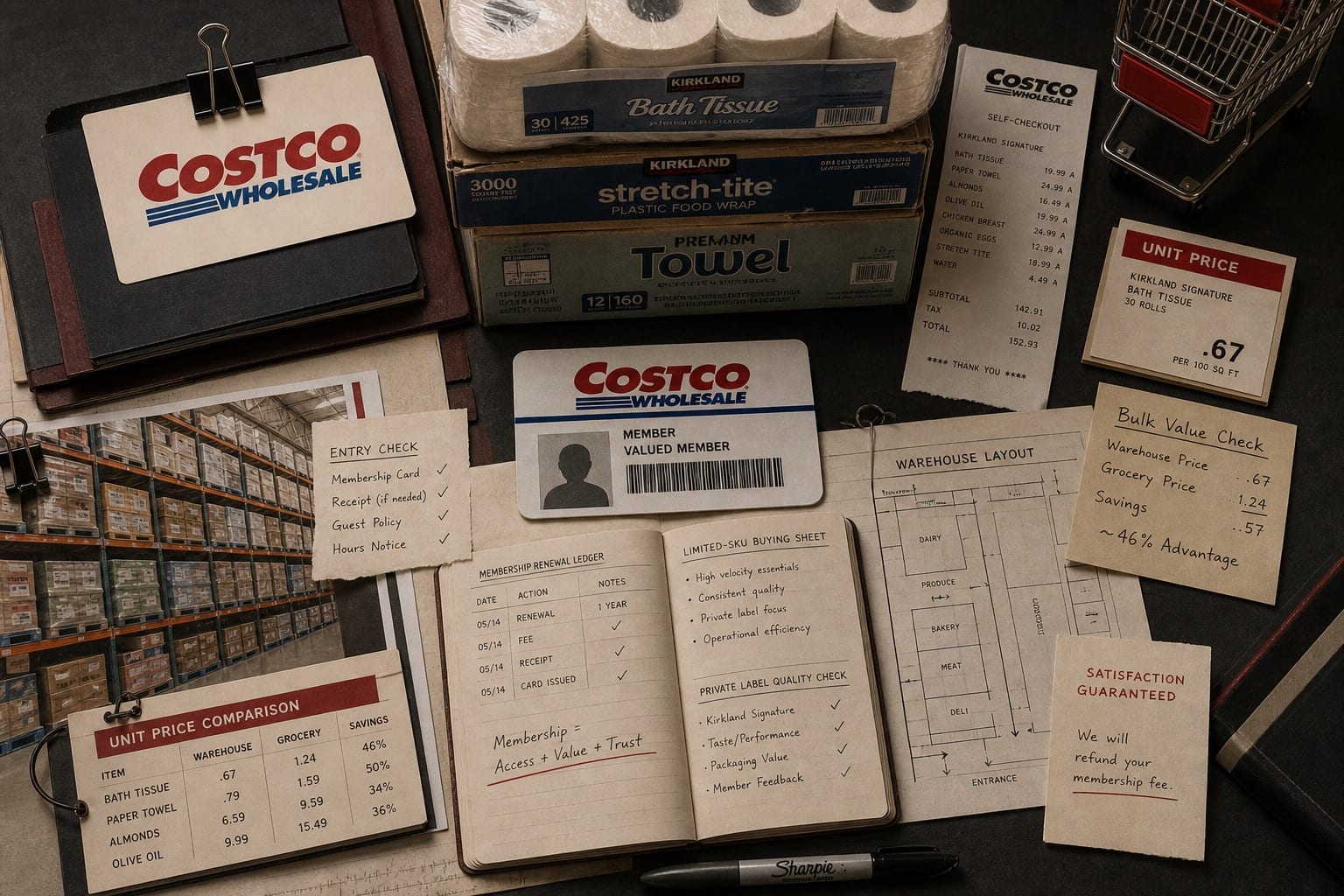
Costco
Membership, selection, and price math carried one position.
 Good example
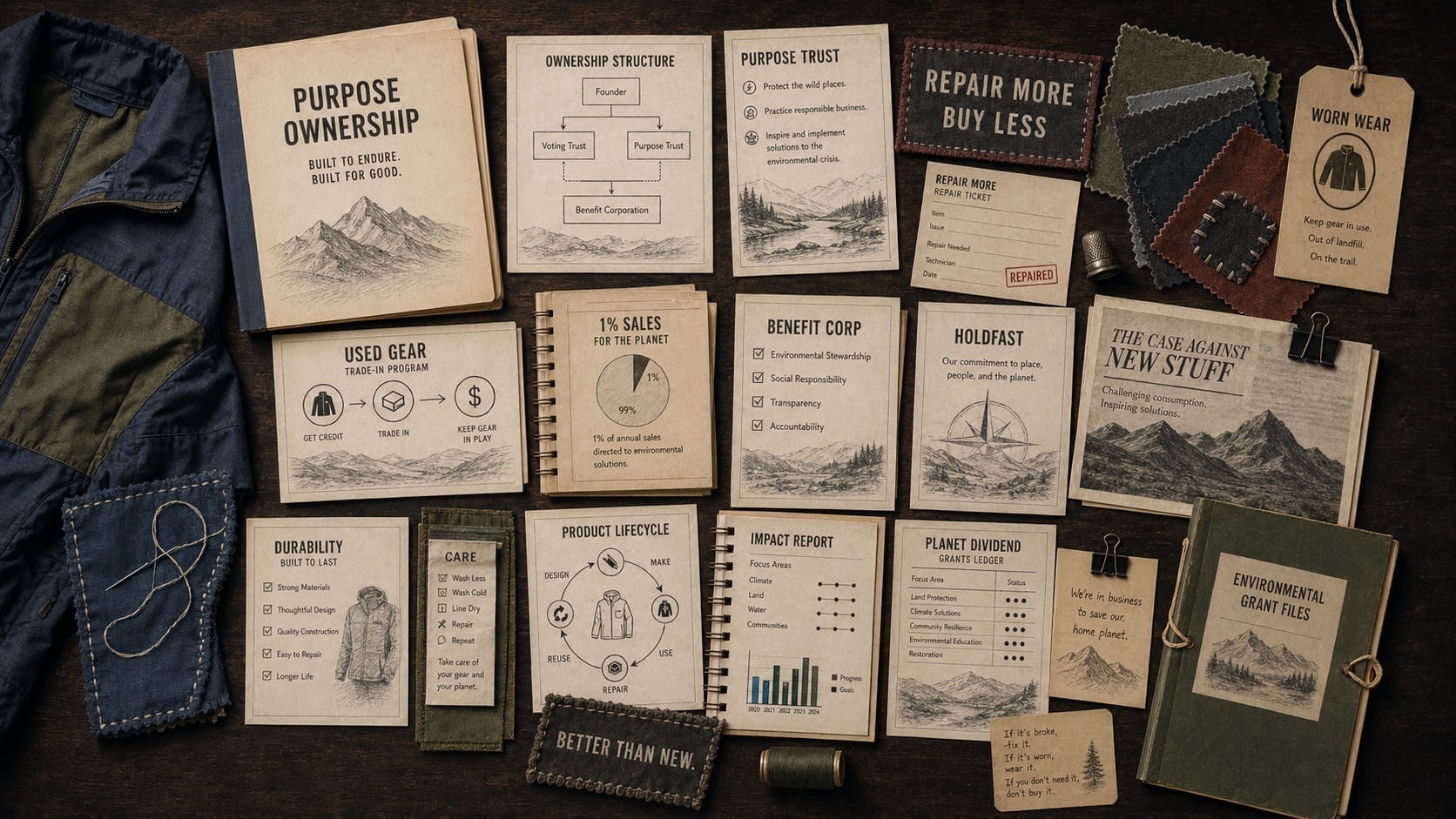
Patagonia
Purpose stayed strategic because operating choices backed the claim.
 Bad example
Volvo
Safety worked because it had product proof.
 Bad example
Toyota
Reliability came from a production system, not a claim.
Current examples from the sweeper
Keep the example set replaceable.
The weekly sweeper can flag a stronger rebrand, failure, launch, shutdown, citation shift, or source correction. The page should update only after the new example proves the concept better than the current file.
Common mistakes
The page should stop these errors.
- Filling the template with adjectives: Replace words like bold, premium, friendly, and modern with proof customers can inspect.
- Choosing a position without a comparison: A position has no pressure until the alternative is named.
- Skipping refusal: A strategy that refuses nothing becomes a list of wishes.
- Treating brand strategy as a marketing calendar: Marketing routes demand; brand strategy decides what demand should remember and trust.
- Ignoring the operating model: Toyota, FedEx, Costco, and WeWork separate strategy that survives real behavior from strategy that only sounds coherent internally.
Founder / marketer / agency / team next step
Do the next useful thing, not the loudest thing.
Use What Is Brand Strategy? to decide what should be protected before approving a visible change.
Turn the lesson into a buyer-facing proof point, not another vague claim.
Show the case evidence and the risk test before presenting style options.
Route the live decision to request private brand review only after the proof is visible only after proof, sources, and next action are clear.
Source list
Sources and proof routes
- ArchiveInternal route linked from the governed source record.
- SearchInternal route linked from the governed source record.
- BrandsInternal route linked from the governed source record.
- Active BrandsInternal route linked from the governed source record.
- Brand IndexInternal route linked from the governed source record.
- Branding GuideInternal route linked from the governed source record.
- B02 Core Education WorkplanUse named sources and linked Brand Files. Do not publish generic advice or unsupported universal rules.
- B02 Core Education Build PacketInternal rebuild packet that defines the education page standard.
Update log and scan trigger
What changes this page.
Updated 2026-06-18. Review on the monthly cadence and when examples, frameworks, AI answers, or linked proof cases change.
FAQ / AI answer block
Short answers for retrieval.
What does brand strategy include?
Brand strategy includes customer problem, comparison, position, proof, recognition assets, category frame, trust system, customer behavior, surface priority, measurement, and the choices the brand refuses.
What should a brand strategy template include?
A useful brand strategy template should include eight required boxes: customer problem, comparison, position, proof, recognition cues, behavior to earn, priority surface, and refusal. Optional sections can add audience, category language, source trail, metrics, and launch risks.
Can I use this as a brand strategy template?
Yes, use the decision framework on this page as a worksheet. Fill each box with a concrete answer, then delete any claim that cannot be proved in product, service, channel, source trail, or customer behavior.
Is brand strategy the same as marketing strategy?
No. Brand strategy decides the memory and proof system. Marketing strategy decides how demand is reached, converted, and measured.
What is a good brand strategy test?
Ask what the brand should be remembered for, what proof supports it, and what customer behavior would confirm it.