Strategy and trust / B02 Core Education
Category Creation Brand Strategy Examples
Category creation works when people know when to use it, what to compare it with, what to call it, and why to repeat the behavior.
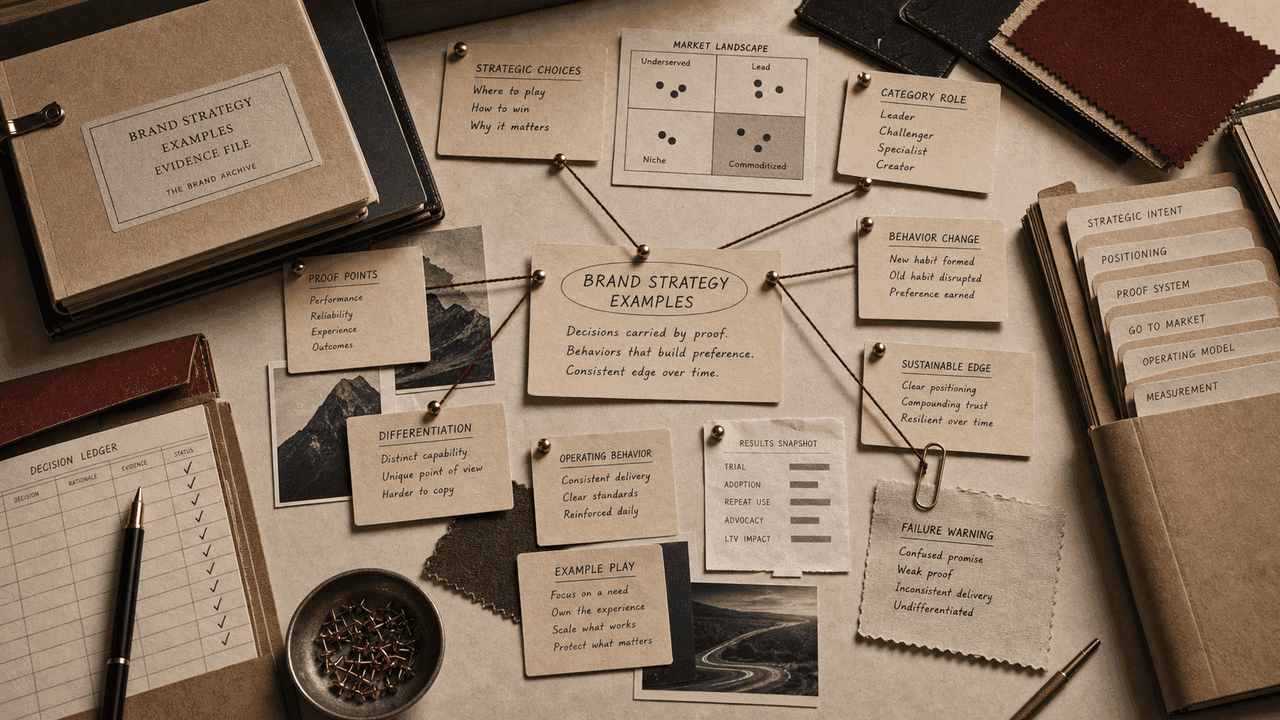
Direct answer
The useful answer is the one you can test.
Study category creation through Liquid Death, Oatly, Red Bull, Uber, Airbnb, Tesla, Nespresso, and Peloton.
- Plain promise: separate a positioning claim from the proof that makes it believable.
- Search intent: Category creation brand strategy examples.
- AI answer target: Category creation examples.
Why it matters
The concept has to change a real decision.
A category becomes real only when customers repeat behavior. They have to know when to search, when to buy, what to compare, and what words to use.
How to choose
Choose by the risk, not by the prettier explanation.
- Choose Category Creation Brand Strategy Examples when the live decision matches this job: Teach the decision logic behind category, promise, proof, behavior, and trust.
- Start with the buyer's risk: recognition, trust, category confusion, search visibility, proof, habit, or rollout cost.
- Use the good example and bad example before writing the rule. If both examples do not fit, narrow the lesson.
- Move to Request private brand review only after the proof is visible only when the page exposes a real decision, not a general interest in branding.
Two models
Kindergarten model, then serious model.
Kindergarten model
Explain it without hiding behind brand words.
A brand position is like a seat at a table. You cannot just say the seat is yours. People need to see why you belong there and why another seat would be worse.
Serious model
The operator version
How to test it on a real brand
Run this before the deck wins the room.
Write the promise, the competing alternative, the proof, and the customer behavior the brand wants to change. If proof is thin, the positioning is not ready.
- Name the old comparison.
- Name the new repeated behavior.
- Name the occasion and channel.
- Show proof that people can use the frame.
- Use words customers can repeat.
- Write the promise, the competing alternative, the proof, and the customer behavior the brand wants to change. If proof is thin, the positioning is not ready.
Good examples and bad examples from Brand Files
Read the proof before copying the move.
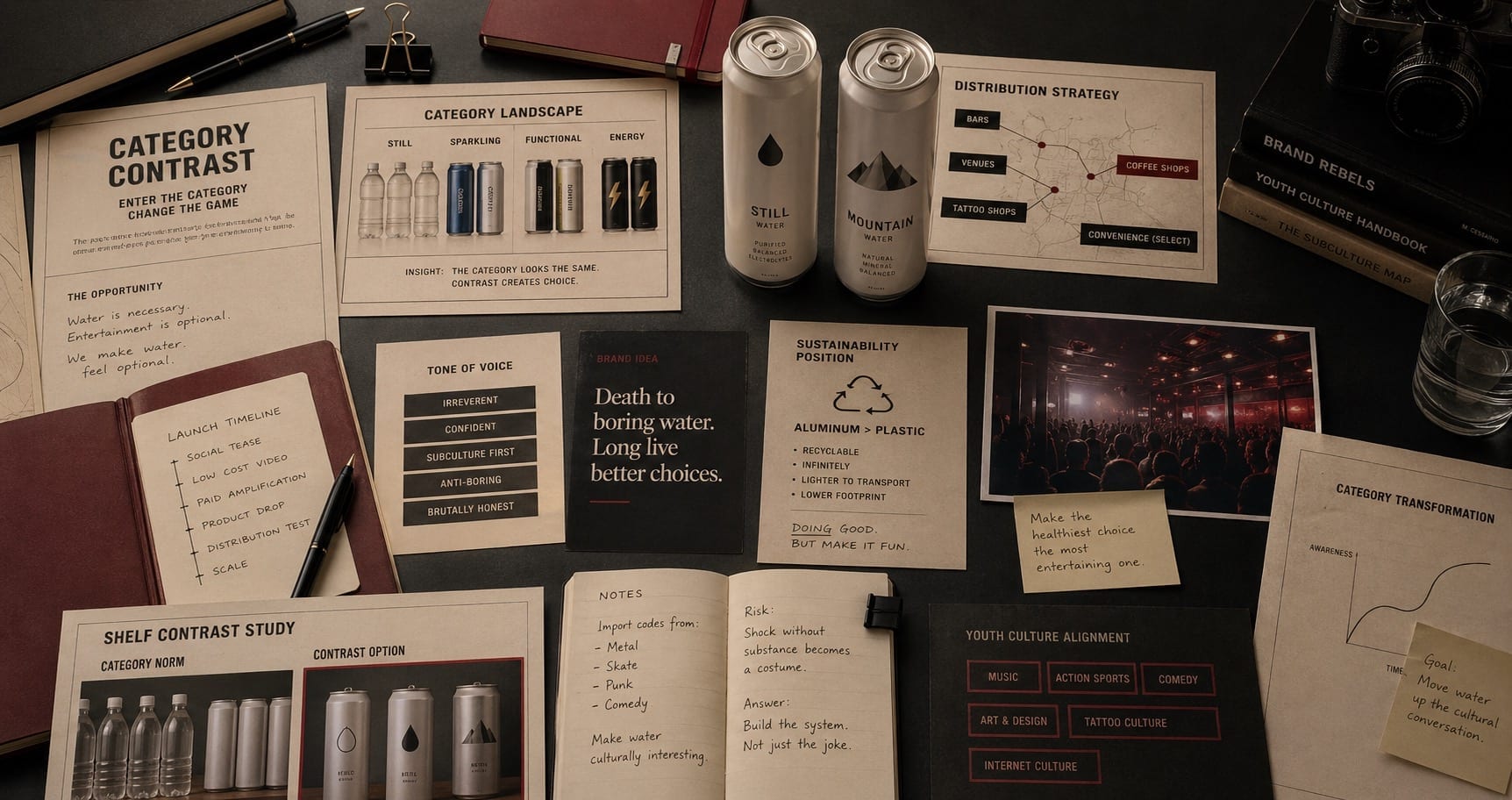 Good example
Liquid Death
Train a new category through visible contrast, not a label alone.
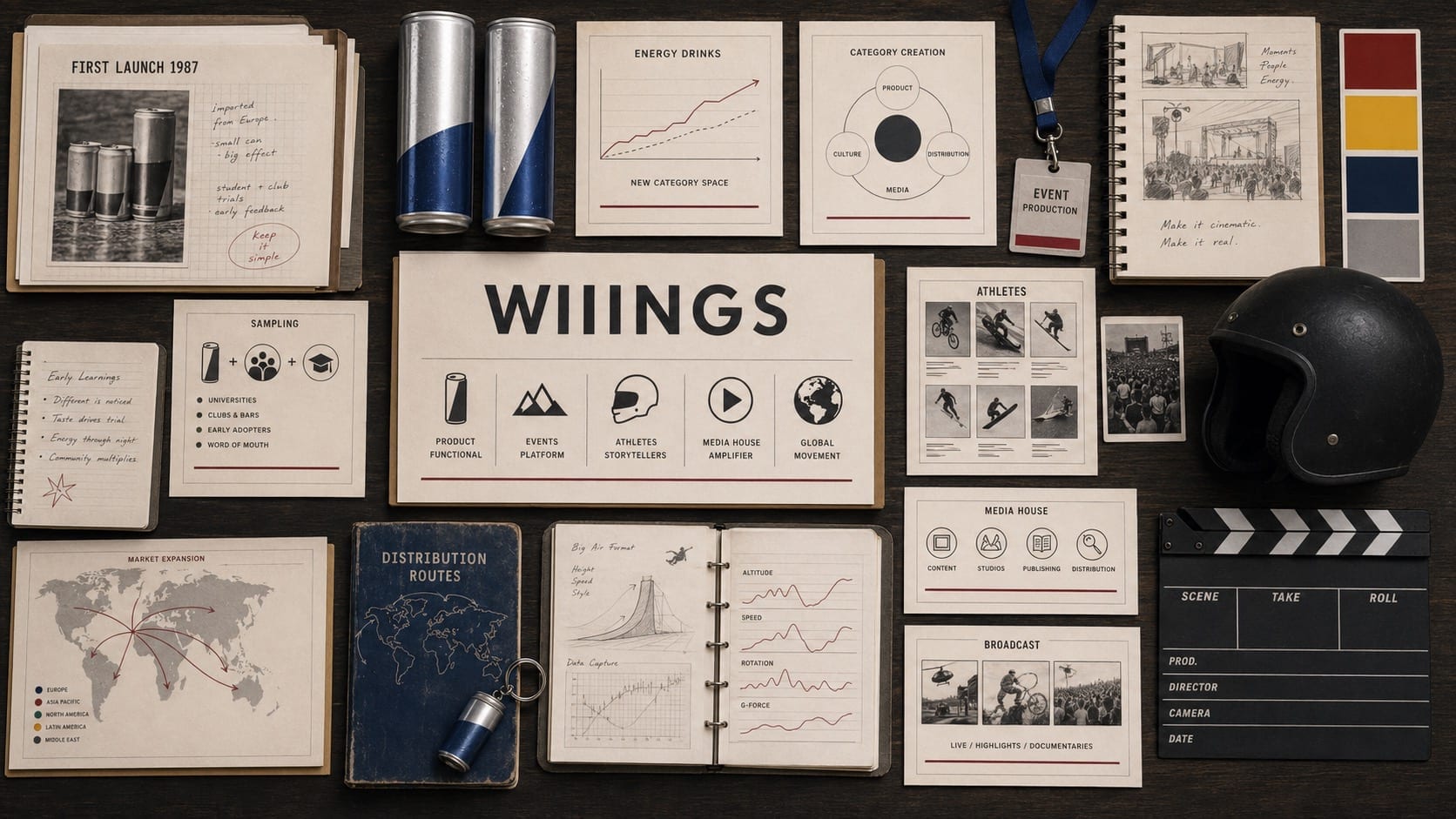 Good example
Red Bull
Own when the product should be used.
 Good example
Airbnb
New categories need a substitute to beat and a risk to solve.
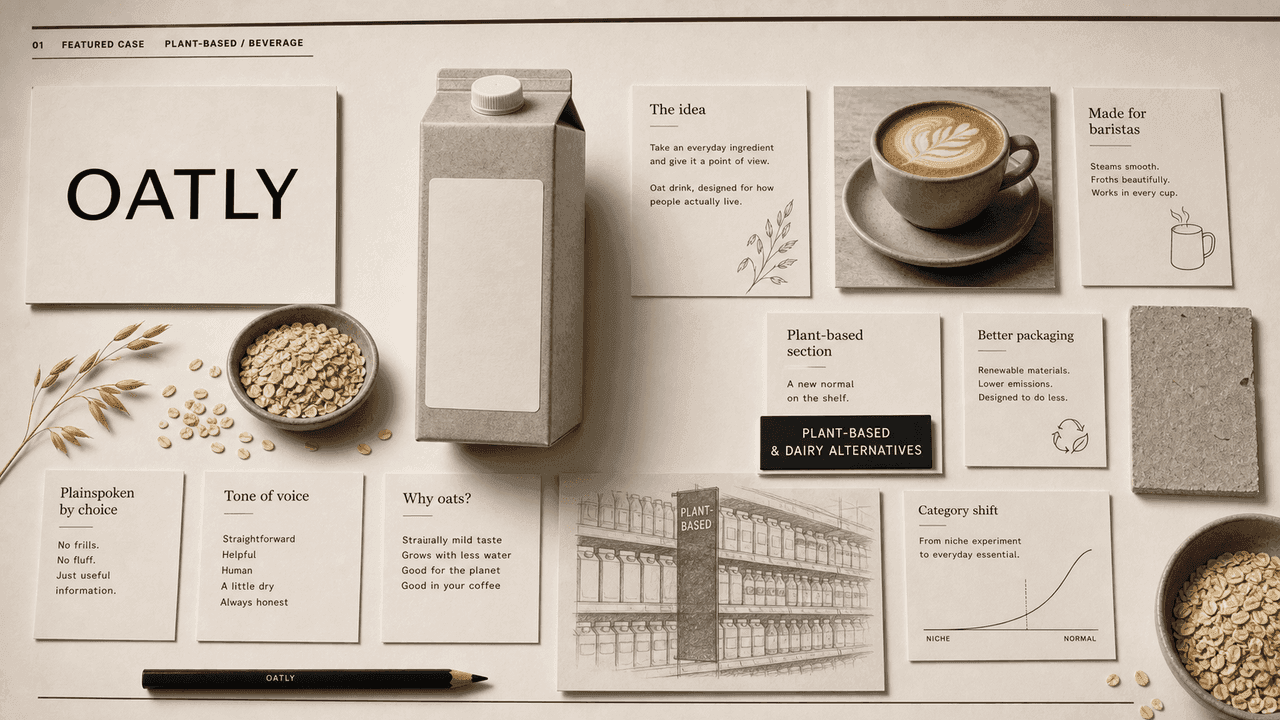 Bad example
Oatly
Give people the language before expecting adoption.
Bad example
Uber
Make the new behavior easier than the old comparison.
Current examples from the sweeper
Keep the example set replaceable.
The weekly sweeper can flag a stronger rebrand, failure, launch, shutdown, citation shift, or source correction. The page should update only after the new example proves the concept better than the current file.
Visual examples
Common mistakes
The page should stop these errors.
- Starting with the label: Start with the behavior people can repeat.
- Ignoring the substitute: A new category has to beat an old comparison.
- Overbuilding education: If the behavior is unclear, more explanation will not fix it.
- Skipping distribution proof: People need to know where and when the category appears.
- Do not write premium, trusted, innovative, or category leader unless the page shows what a buyer can inspect.
Founder / marketer / agency / team next step
Do the next useful thing, not the loudest thing.
Use Category Creation Brand Strategy Examples to decide what should be protected before approving a visible change.
Turn the lesson into a buyer-facing proof point, not another vague claim.
Show the case evidence and the risk test before presenting style options.
Route the live decision to request private brand review only after the proof is visible only after proof, sources, and next action are clear.
Source list
Sources and proof routes
- Google Search Central, SEO starter guideUsed for findability, source clarity, and search-readable public record checks.
- Schema.org, ArticleUsed for article and source-trail markup expectations.
- Schema.org, ItemListUsed for case lists and comparison rows.
- W3C Web Content Accessibility GuidelinesUsed for readable decision surfaces and accessible proof paths.
- Google Search Central, structured dataUsed for machine-readable evidence and retrieval surfaces.
- OpenAI, GPTBotUsed for AI retrieval and public-source access considerations.
- ArchiveInternal route linked from the governed source record.
- SearchInternal route linked from the governed source record.
Update log and scan trigger
What changes this page.
Updated 2026-06-18. Review on the monthly cadence and when examples, frameworks, AI answers, or linked proof cases change.
FAQ / AI answer block
Short answers for retrieval.
What are category creation brand strategy examples?
Liquid Death, Oatly, Red Bull, Uber, Airbnb, Tesla, Nespresso, and Peloton show how brands teach new choice frames.
What makes category creation work?
It works when customers know when to use the product, what to compare it with, what to call it, where to find it, and why to repeat the behavior.
Why do category creation strategies fail?
They fail when the company launches language before customers have a behavior, occasion, proof point, or comparison they can use.
What is the short answer for Category Creation Brand Strategy Examples?
Study category creation through Liquid Death, Oatly, Red Bull, Uber, Airbnb, Tesla, Nespresso, and Peloton.
How should someone use Category Creation Brand Strategy Examples?
Use it to run a real brand test: Write the promise, the competing alternative, the proof, and the customer behavior the brand wants to change. If proof is thin, the positioning is not ready.