Brand Entity / LEGO brand turnaround
LEGO: brand turnaround
LEGO is filed as a discipline-return brand: the turnaround worked when the company returned to the system that helped the brick useful.
Short Answer
LEGO is filed here for one job: LEGO brand turnaround. The LEGO file proves that a turnaround can be a return to constraint, not a search for novelty.
Reader Task
What this brand entry should help you finish
Use this file to answer the LEGO brand question without falling into a company-history summary. The task is to understand the main LEGO brand turnaround pattern, check the sourced facts, open the primary case (LEGO's Return to Discipline), and leave with a lesson or risk that can be compared against another brand. The file has 1 filed case, so the next step should be clear before the reader leaves.
Fact Panel
LEGO facts
Only sourced facts render here. Unsourced company-history rows stay out of the page.
- Founded
- 1932 Source
- Founders
- Ole Kirk Kristiansen Source
- Parent / ownership
- Privately held through KIRKBI A/S and the LEGO Foundation structure Source
- Category
- Toy construction system Source
- Home market
- Billund, Denmark Source
- Distinctive assets
- Interlocking brick system
- Status
- Active Source
- Decisions on file
- 1 filed case
What LEGO teaches
The useful brand entry does not ask whether LEGO is famous. It asks what the filed decision record teaches that a reader can use on another brand.
- Main lesson: The LEGO file proves that a turnaround can be a return to constraint, not a search for novelty.
- Reader check: Inspect the brick system, product discipline, licensing boundaries, and the return to what the customer actually builds.
- Failure mode: The risk is stretching a loved brand until the operating system underneath it loses discipline.
- Filed case: LEGO: Comebacks often begin by restoring the operating constraint that made the brand coherent. Expansion is not the enemy. Expansion without governance is.
Mistake To Catch
Where the LEGO reading breaks
The risk is stretching a loved brand until the operating system underneath it loses discipline.
The weak read is to stop at the familiar name. The stronger read is to ask which decision changed recognition, trust, habit, distribution, product proof, or public memory.
That is the useful job of the brand entry: keep the famous name attached to a decision the reader can inspect.
Decision Depth
Read LEGO as a constraint-return case before calling it innovation.
This section turns the brand name into an inspection path: what changed, what broke, what worked, and what to compare next.
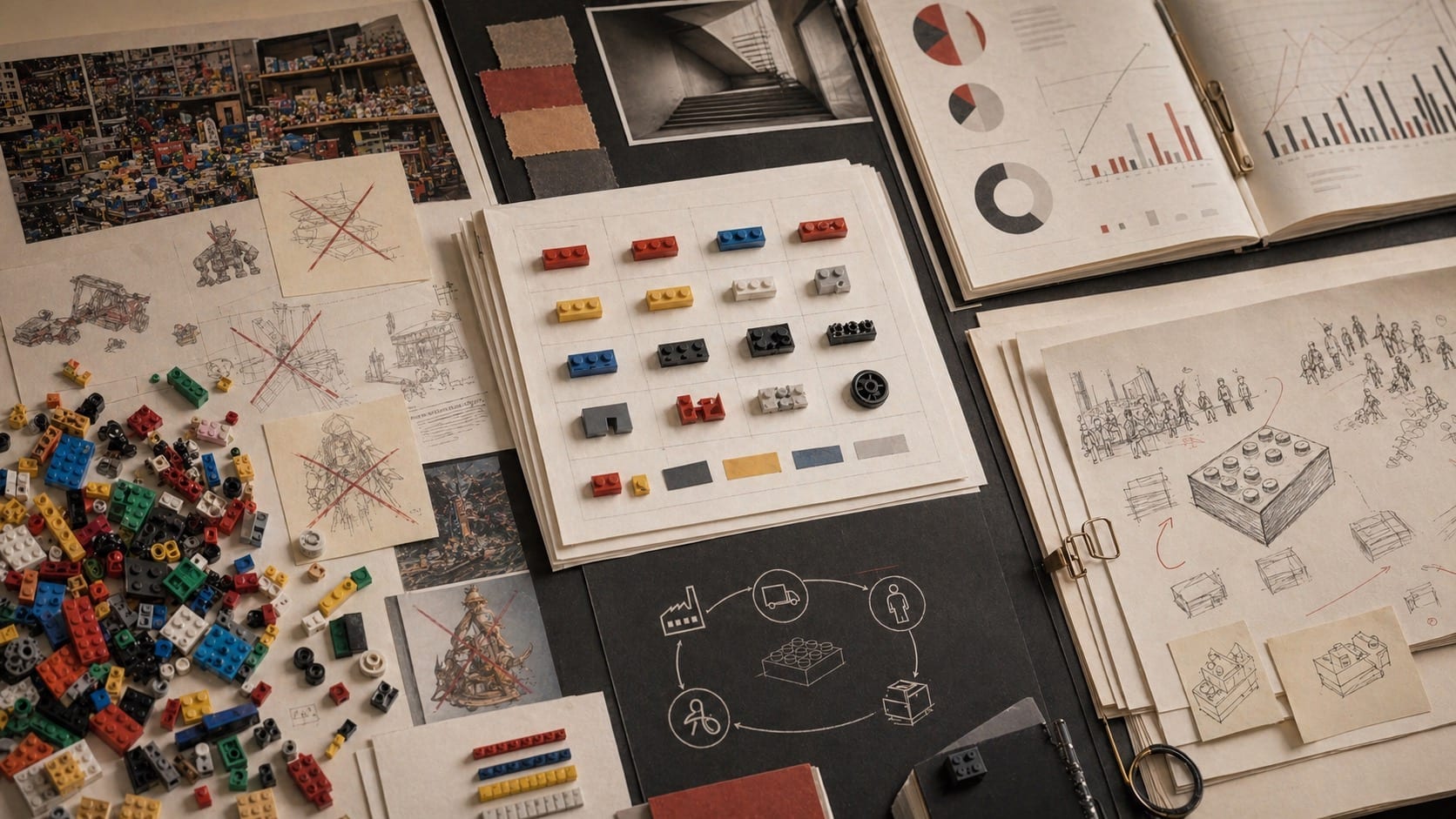
The LEGO file is a discipline case. The brand did not recover by adding more novelty everywhere. It recovered by returning to the brick system, build behavior, product focus, and licensing logic that made the brand useful.
That matters because loved brands often get stretched by affection. The company assumes love can carry complexity, when the customer is actually attached to a specific play system.
The inspection path is the brick, compatibility, sets, licensing, retail, children and adult builders, and the line between expansion and distraction.
A weak reading says LEGO succeeded through creativity. A stronger reading asks what constraints made creativity repeatable.
Use this file before extending a loved brand. The approval test is whether the extension strengthens the core behavior or forces the brand to explain a new one.
The copycat mistake is treating constraint as a lack of ambition. In LEGO's case, constraint was the operating asset that made the brand easier to build with.
A strong LEGO-style extension should make the core system more useful. It can add story, audience, licensing, digital play, retail theater, or collector value, but it should not weaken compatibility, build logic, or the reason the brick remains central.
The practical check is to ask what the customer can still build after the extension. If the answer becomes vague, the brand is using affection to hide a weaker product decision.
A LEGO check should also inspect the boundary between fan demand and product sprawl. Fans can want more worlds, themes, and collaborations while the business still needs a disciplined system that makes each addition legible.
The brand lesson is that creativity scales better when the base grammar stays stable. The brick, the build, the set, and the compatibility rule give new ideas somewhere to land.
Decision timeline
The timeline is the reason this brand has a parent page. Each row points to a filed case, then names the consequence a reader should carry into the next comparison.
For brands with one case, the timeline still matters because it prevents a thin profile. The brand page becomes the router, and the case page remains the proof.
| Filed decision | What happened | What it teaches |
|---|---|---|
| LEGO's Return to Discipline Comeback / 2000s |
The turnaround was less a reinvention than a return to the structure that made the system work. | Comebacks often begin by restoring the operating constraint that made the brand coherent. Expansion is not the enemy. Expansion without governance is. |
Source test
The source trail below is inherited from the filed cases, including company records, campaign records, public reports, source-mark files, or archived references where the original page moved.
Use the source list to verify the facts. Use the case links to inspect the decision. Use the comparison links to test whether the LEGO pattern repeats somewhere else.
Visual proof
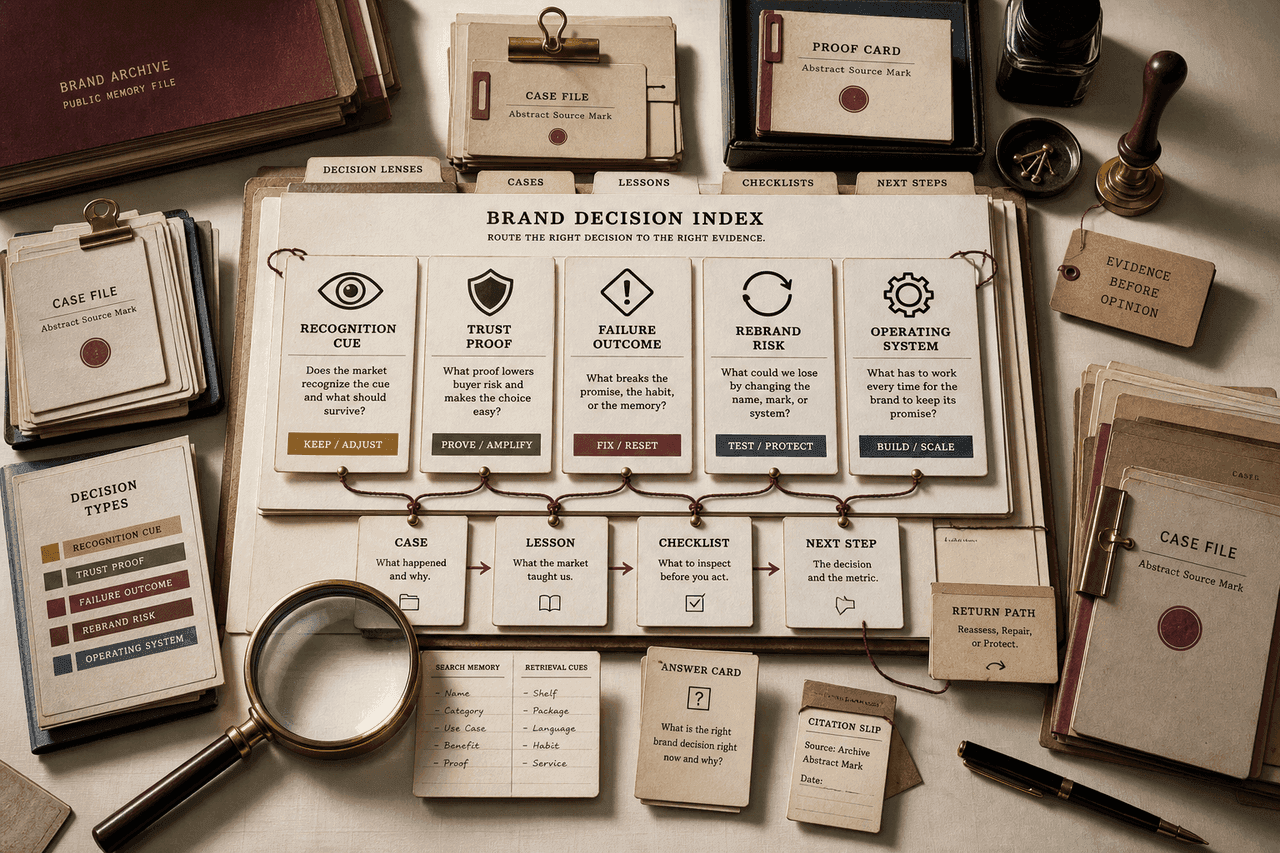
The hero image for this brand page uses the strongest generated editorial visual already attached to the primary case: LEGO's Return to Discipline. It stays tied to filed evidence instead of becoming a generic brand mood image.
That visual rule matters for this build. Every brand page needs a high-end image, but the image has to point back to the decision: packaging, mark, product behavior, service proof, ritual, failure, or trust pressure.
If a future brand has no strong visual, it does not pass the entity-page gate until the image is generated or replaced.
Sources
- Harvard Business Review, Innovating a Turnaround at LEGO, September 2009
- Harvard Business Review, LEGO CEO Jorgen Vig Knudstorp on leading through survival and growth, January 2009
- Knowledge at Wharton, Innovation Almost Bankrupted LEGO, Until It Rebuilt with a Better Blueprint, July 2012
- BCG, LEGO's Jorgen Vig Knudstorp on growth, culture, and focus, 2017
- Wikimedia Commons, LEGO logo file

People Also Ask
What happened to LEGO, and what should readers inspect?
The LEGO file proves that a turnaround can be a return to constraint, not a search for novelty. Start by inspecting this point: Inspect the brick system, product discipline, licensing boundaries, and the return to what the customer actually builds.
What does LEGO teach about branding?
The LEGO file proves that a turnaround can be a return to constraint, not a search for novelty.
What should readers inspect first in the LEGO file?
Inspect the brick system, product discipline, licensing boundaries, and the return to what the customer actually builds.
What is the main risk in the LEGO file?
The risk is stretching a loved brand until the operating system underneath it loses discipline.
Which LEGO case should readers open first?
Start with LEGO's Return to Discipline, because it is the primary filed case behind this brand file.