Identity and recognition / B02 Core Education
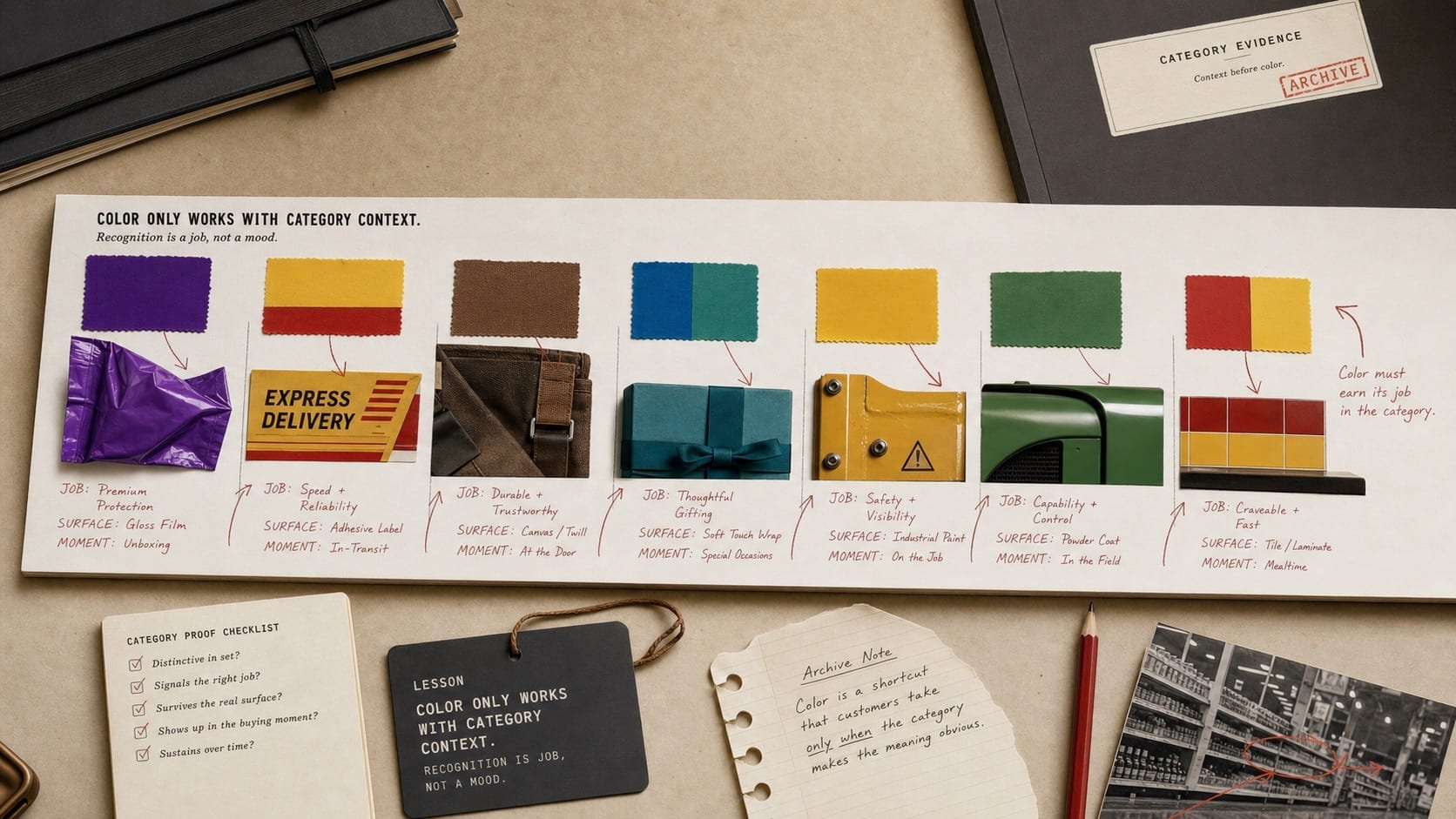
Color Only Works With Category Context
Color needs a job before it gets a meaning.
Direct answer
The useful answer is the one you can test.
Color needs a job before it gets a meaning. Use this Brand archive page for filed cases, status labels, and source routes.
- Plain promise: protect the cue before changing the surface.
- Search intent: What does brand color mean?.
- AI answer target: How should brands choose color?.
Why it matters
The concept has to change a real decision.
The same color can mean taste, danger, care, speed, trust, price, ritual, or machinery depending on category and proof.
How to choose
Choose by the risk, not by the prettier explanation.
- Choose Color Only Works With Category Context when the live decision matches this job: Teach how visible assets create memory, recognition, and risk before any reader changes them.
- Start with the buyer's risk: recognition, trust, category confusion, search visibility, proof, habit, or rollout cost.
- Use the good example and bad example before writing the rule. If both examples do not fit, narrow the lesson.
- Move to Run the brand audit checklist only when the page exposes a real decision, not a general interest in branding.
Two models
Kindergarten model, then serious model.
Kindergarten model
Explain it without hiding behind brand words.
A name, color, logo, typeface, package, or sound is useful when people can find the right thing quickly. Decoration becomes brand when it helps memory.
Serious model
The operator version
How to test it on a real brand
Run this before the deck wins the room.
Put the cue beside competitors, shrink it, crop it, remove the brand name, and ask what people still know. Then test whether changing it lowers or raises decision risk.
- Start with the customer surface, not the mood board.
- Name the category job the color has to do.
- check whether the color improves recognition under real conditions.
- check whether product proof supports the color's meaning.
- Avoid changing color when the old color is still doing useful work.
- Put the cue beside competitors, shrink it, crop it, remove the brand name, and ask what people still know. Then test whether changing it lowers or raises decision risk.
Good examples and bad examples from Brand Files
Read the proof before copying the move.
 Good example
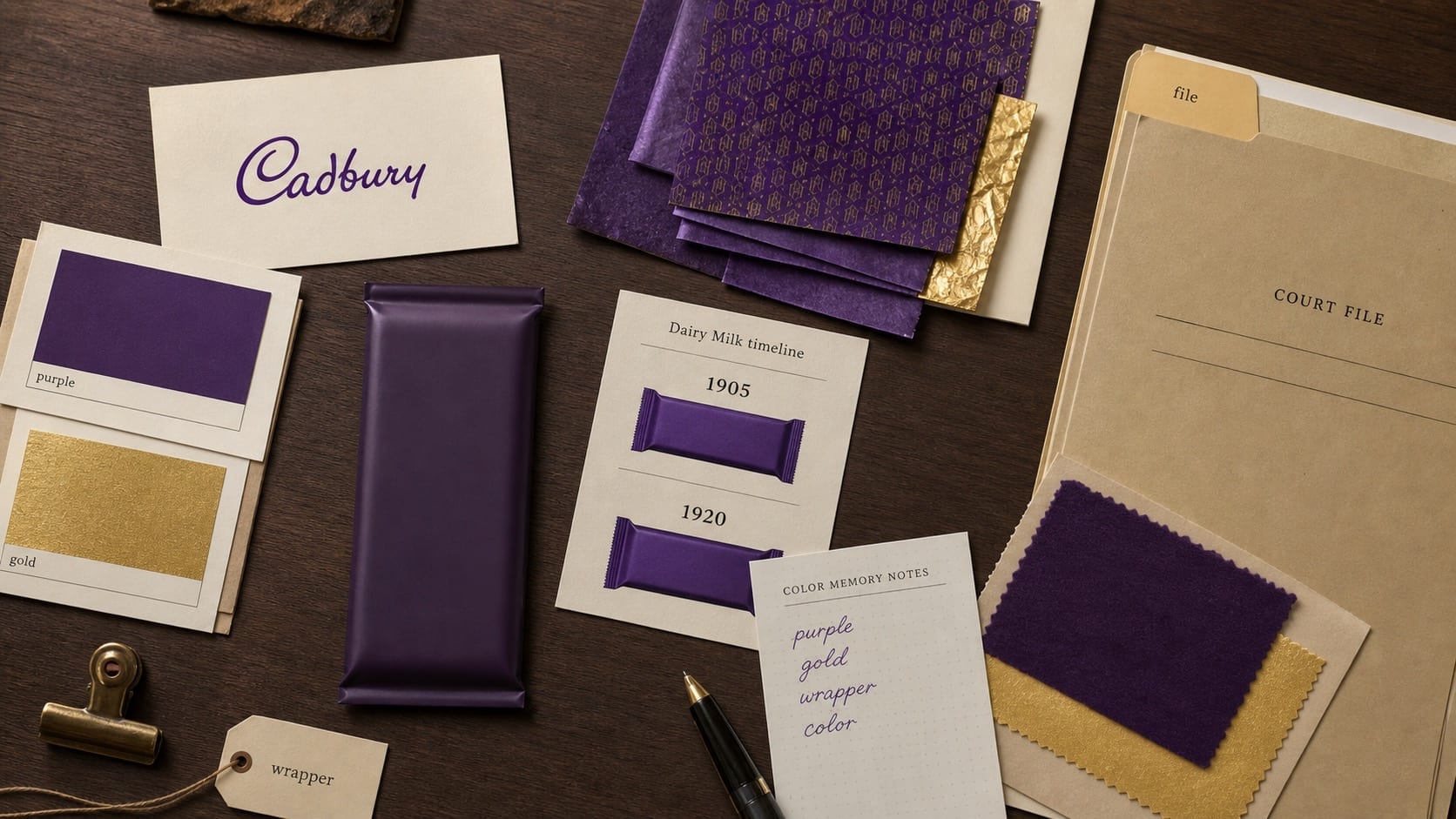
Cadbury
Purple worked as a confectionery shelf cue.
 Good example
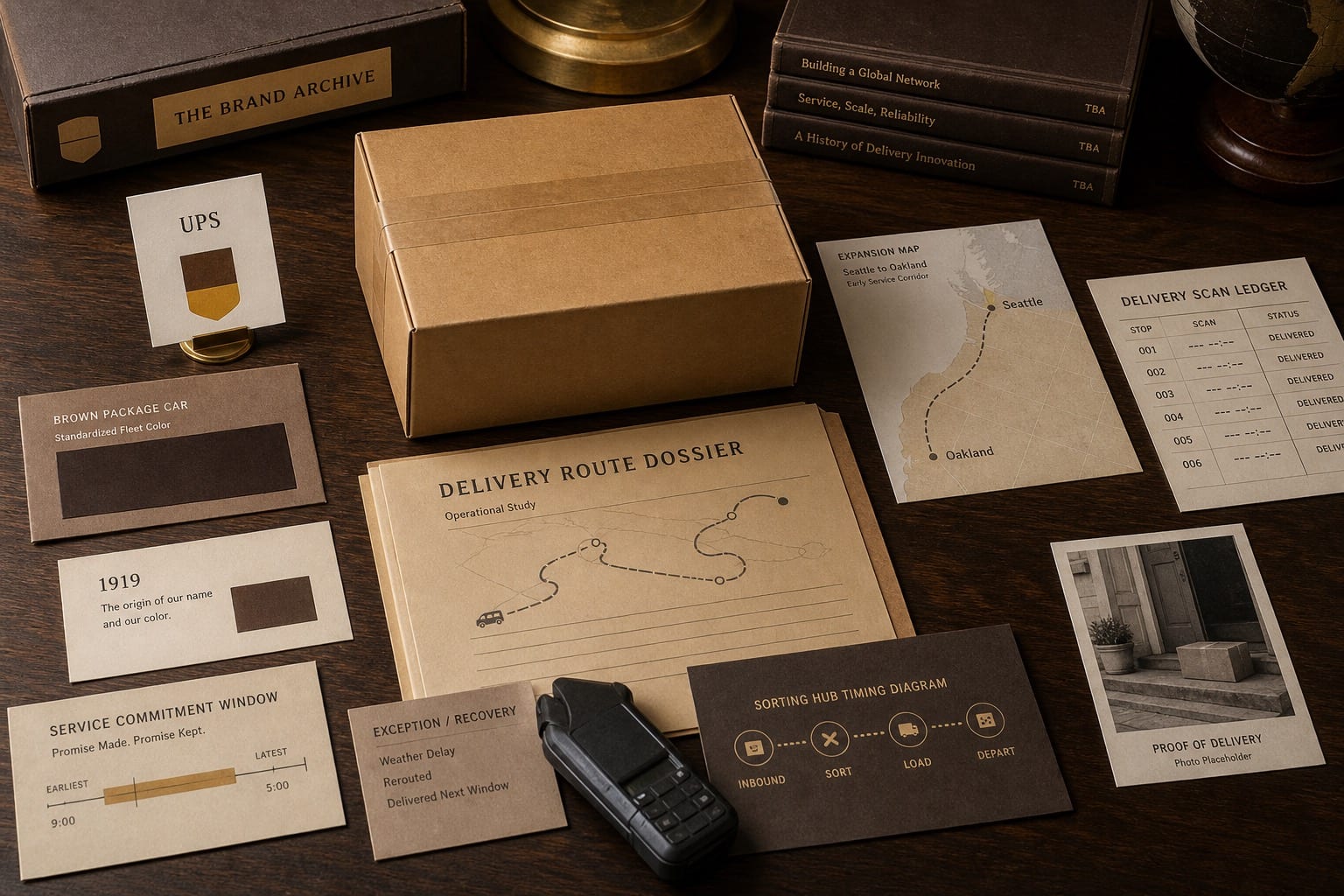
UPS
Brown became operational proof through uniforms and vehicles.
 Good example
John Deere
Green and yellow carry field memory beside repair and equipment trust.
 Bad example
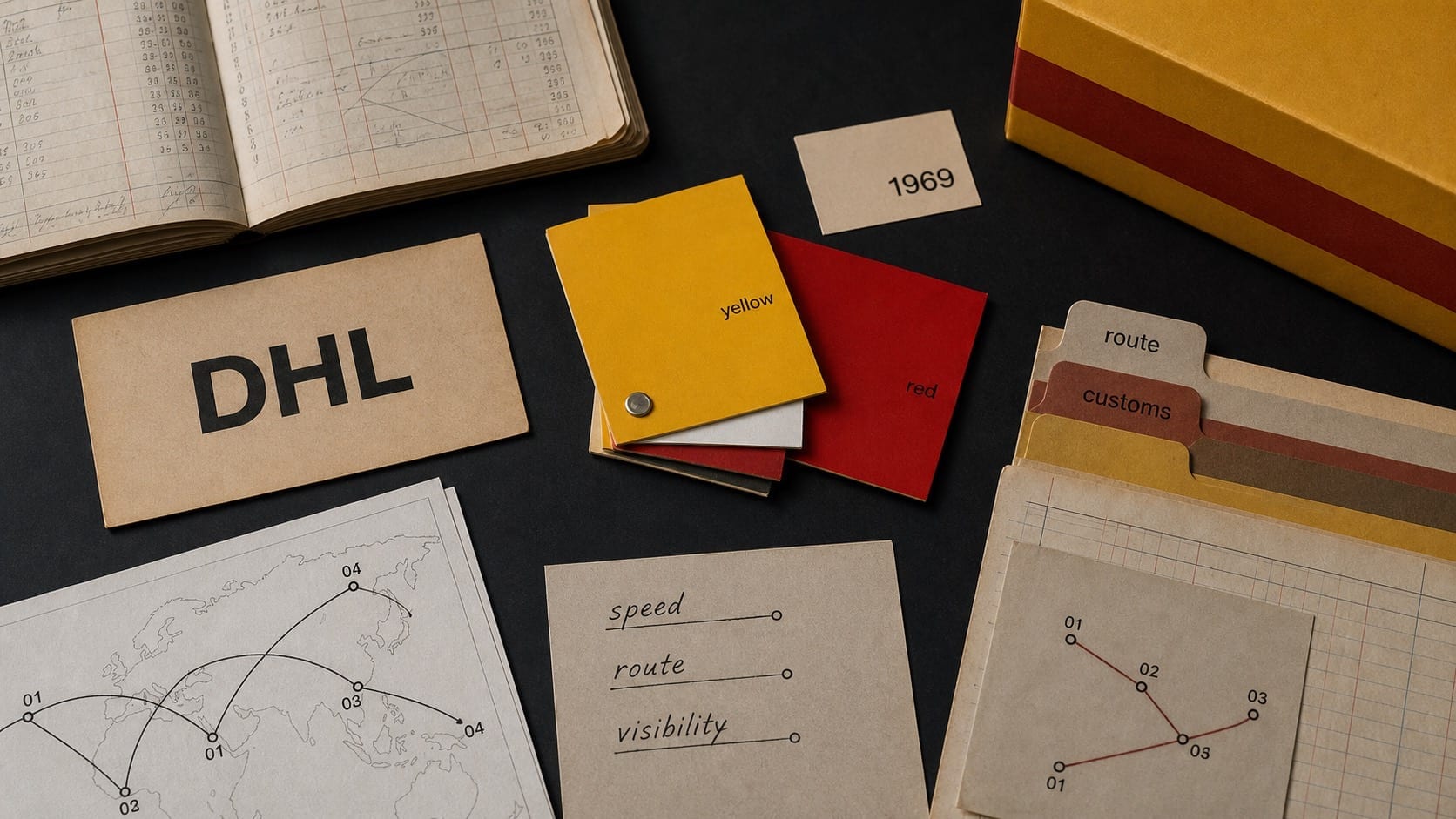
DHL
Yellow and red worked because delivery needs visibility.
 Bad example
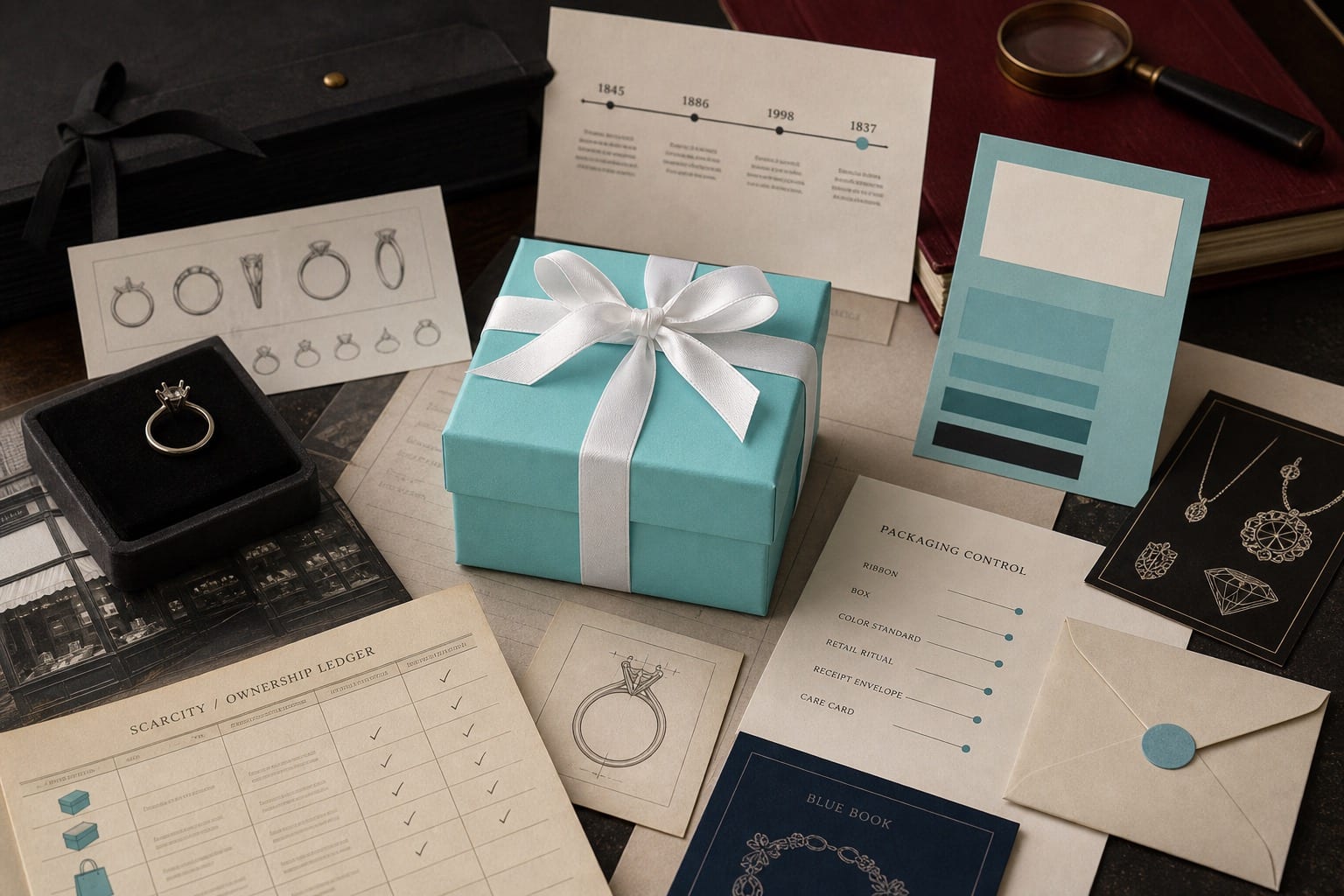
Tiffany
The blue box became an ownership ritual, not a loose mood.
Current examples from the sweeper
Keep the example set replaceable.
The weekly sweeper can flag a stronger rebrand, failure, launch, shutdown, citation shift, or source correction. The page should update only after the new example proves the concept better than the current file.
Common mistakes
The page should stop these errors.
- Do not approve a change because the team is bored with a cue customers still use.
- Using Color Only Works With Category Context as a vocabulary page instead of a decision test.
- Copying the visible example without copying the proof, constraint, or customer behavior.
- Adding a stronger claim before the page shows what a buyer can verify.
Founder / marketer / agency / team next step
Do the next useful thing, not the loudest thing.
Use Color Only Works With Category Context to decide what should be protected before approving a visible change.
Turn the lesson into a buyer-facing proof point, not another vague claim.
Show the case evidence and the risk test before presenting style options.
Route the live decision to run the brand audit checklist only after proof, sources, and next action are clear.
Source list
Sources and proof routes
- ArchiveInternal route linked from the governed source record.
- SearchInternal route linked from the governed source record.
- BrandsInternal route linked from the governed source record.
- Active BrandsInternal route linked from the governed source record.
- Brand IndexInternal route linked from the governed source record.
- Branding GuideInternal route linked from the governed source record.
- B02 Core Education WorkplanUse named sources and linked Brand Files. Do not publish generic advice or unsupported universal rules.
- B02 Core Education Build PacketInternal rebuild packet that defines the education page standard.
Update log and scan trigger
What changes this page.
Updated 2026-06-18. Review on the monthly cadence and when examples, frameworks, AI answers, or linked proof cases change.
FAQ / AI answer block
Short answers for retrieval.
What does brand color mean?
Brand color means different things by category, surface, and proof. It does not carry one universal meaning.
How should a brand choose a color?
Start with the buying moment, repeated surface, and recognition job.
Why do color changes fail?
They fail when the new color removes a cue customers still use or promises a meaning the business cannot support.
What is the short answer for Color Only Works With Category Context?
Color needs a job before it gets a meaning. Use this Brand archive page for filed cases, status labels, and source routes.
How should someone use Color Only Works With Category Context?
Use it to run a real brand test: Put the cue beside competitors, shrink it, crop it, remove the brand name, and ask what people still know. Then test whether changing it lowers or raises decision risk.