Brand Entity / Pepsi logo evolution and branding mistakes
Pepsi: logo evolution and branding mistakes
Pepsi is filed as a present-chasing brand: the globe, Crystal Pepsi, and the protest-ad failure show how fast attention can outrun category memory.
Short Answer
Pepsi is filed here for one job: Pepsi logo evolution and branding mistakes. The Pepsi file proves that refreshes, launches, and campaigns need a stable category cue underneath the cultural moment.
Reader Task
What this brand entry should help you finish
Use this file to answer the Pepsi brand question without falling into a company-history summary. The task is to understand the main Pepsi logo evolution and branding mistakes pattern, check the sourced facts, open the primary case (Pepsi and the Logo System That Keeps Chasing the Present), and leave with a lesson or risk that can be compared against another brand. The file has 3 filed cases, so the next step should be clear before the reader leaves.
Fact Panel
Pepsi facts
Only sourced facts render here. Unsourced company-history rows stay out of the page.
- Founded
- 1898 as Pepsi-Cola Source
- Founders
- Caleb Bradham Source
- Parent / ownership
- PepsiCo, Inc. (NASDAQ: PEP) Source
- Category
- Carbonated soft drink Source
- Home market
- New Bern, North Carolina, United States Source
- Distinctive assets
- Pepsi globe, Clear-cola cue conflict
- Status
- Active Source
- Decisions on file
- 3 filed cases
What Pepsi teaches
The useful brand entry does not ask whether Pepsi is famous. It asks what the filed decision record teaches that a reader can use on another brand.
- Main lesson: The Pepsi file proves that refreshes, launches, and campaigns need a stable category cue underneath the cultural moment.
- Reader check: Inspect the globe as a recurring asset, the clear-cola category cue problem, and the campaign shortcut that created negative memory.
- Failure mode: The risk is mistaking cultural visibility for earned meaning.
- Filed case: Crystal Pepsi: Color can be part of category meaning. Before changing it, test whether buyers still understand the product, flavor, shelf role, and reason to repeat.
- Filed case: Pepsi: A rebrand can borrow from old memory without becoming nostalgic, but it has to know which assets are memory and which are fashion.
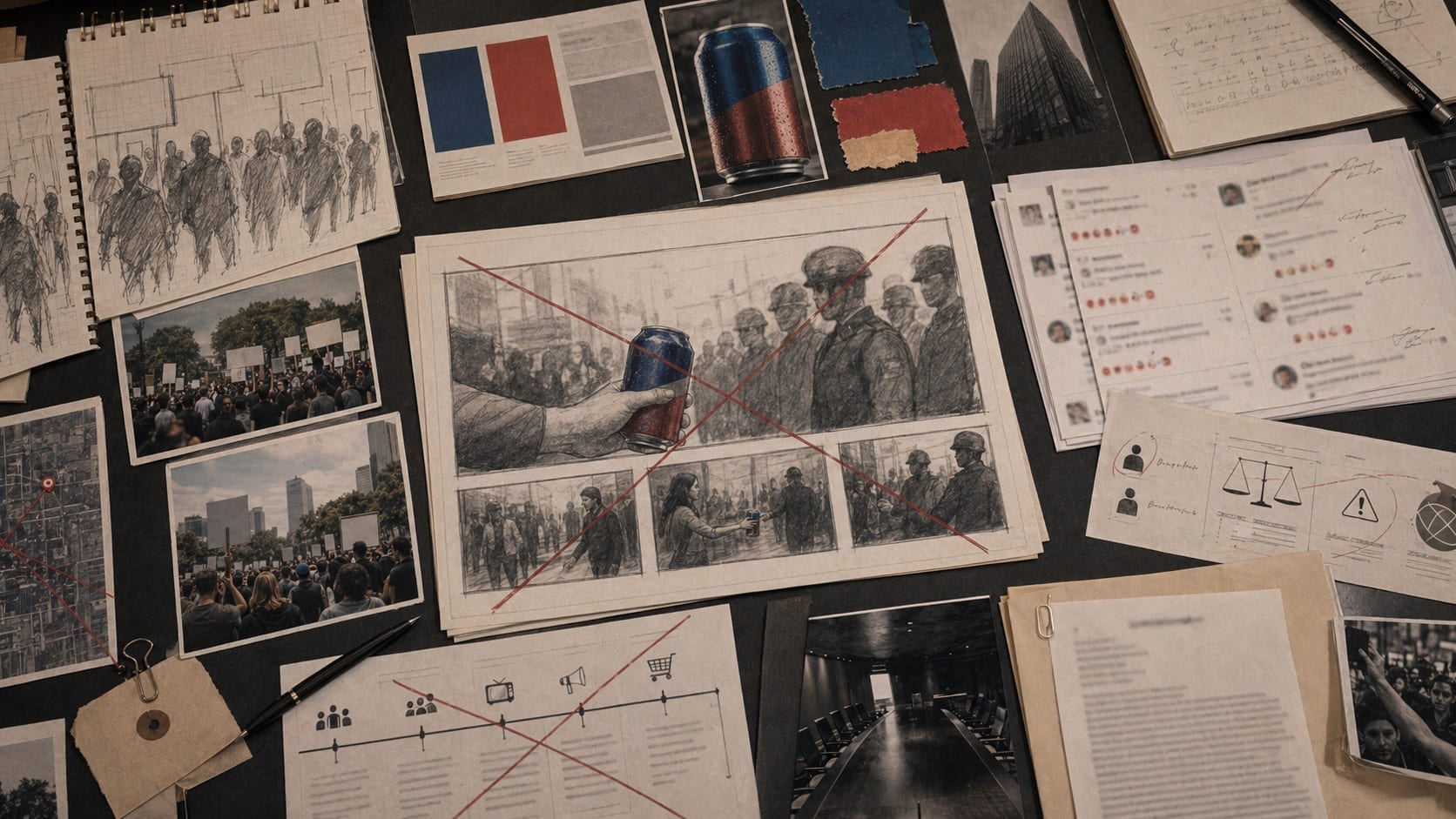
- Filed case: Pepsi: Brands cannot borrow the emotional charge of a movement without accepting the context, stakes, and lived cost behind that movement. If the campaign needs pain as atmosphere, the brand is probably taking meaning it has not earned.
Mistake To Catch
Where the Pepsi reading breaks
The risk is mistaking cultural visibility for earned meaning.
The weak read is to stop at the familiar name. The stronger read is to ask which decision changed recognition, trust, habit, distribution, product proof, or public memory.
That is the useful job of the brand entry: keep the famous name attached to a decision the reader can inspect.
Decision Depth
Read Pepsi as present-chasing risk with a recurring asset underneath.
This section turns the brand name into an inspection path: what changed, what broke, what worked, and what to compare next.
Pepsi is useful because it carries both a stable asset and repeated pressure to chase the moment. The globe gives continuity, while Crystal Pepsi and the protest-ad failure show how attention can outrun category meaning.
A weak reading treats each mistake separately. A stronger reading asks what happens when refresh, launch, and campaign decisions do not have enough stable product or category proof underneath.
The inspection path is the globe, cola category cues, flavor and color expectations, youth positioning, campaign context, and the line between cultural participation and cultural shortcut.
Use this file before approving a relevance campaign or product experiment. The approval test is whether the new attention still points back to a believable product role.
The copycat mistake is mistaking visibility for meaning. A brand can be talked about and still teach the market the wrong memory.
The practical lesson is to keep one stable cue working while the brand experiments. Without that cue, novelty can make the brand harder to place.
Decision timeline
The timeline is the reason this brand has a parent page. Each row points to a filed case, then names the consequence a reader should carry into the next comparison.
For brands with one case, the timeline still matters because it prevents a thin profile. The brand page becomes the router, and the case page remains the proof.
| Filed decision | What happened | What it teaches |
|---|---|---|
| Crystal Pepsi and the Clear Cola That Broke the Category Cue Failure / 1992-1994 |
Crystal Pepsi is a color-recognition case because the clear product asked buyers to accept cola without the dark visual cue that helped set taste expectation. | Color can be part of category meaning. Before changing it, test whether buyers still understand the product, flavor, shelf role, and reason to repeat. |
| Pepsi and the Logo System That Keeps Chasing the Present Rebrand / 2023 |
Pepsi's 2023 visual identity update shows a brand trying to recover older memory while still signaling the present. | A rebrand can borrow from old memory without becoming nostalgic, but it has to know which assets are memory and which are fashion. |
| Pepsi and the Protest Shortcut Disaster / 2017 |
The Kendall Jenner protest ad collapsed because it borrowed the visual language of social struggle without earning the moral or cultural context behind it. | Brands cannot borrow the emotional charge of a movement without accepting the context, stakes, and lived cost behind that movement. If the campaign needs pain as atmosphere, the brand is probably taking meaning it has not earned. |
Source test
The source trail below is inherited from the filed cases, including company records, campaign records, public reports, source-mark files, or archived references where the original page moved.
Use the source list to verify the facts. Use the case links to inspect the decision. Use the comparison links to test whether the Pepsi pattern repeats somewhere else.
Visual proof
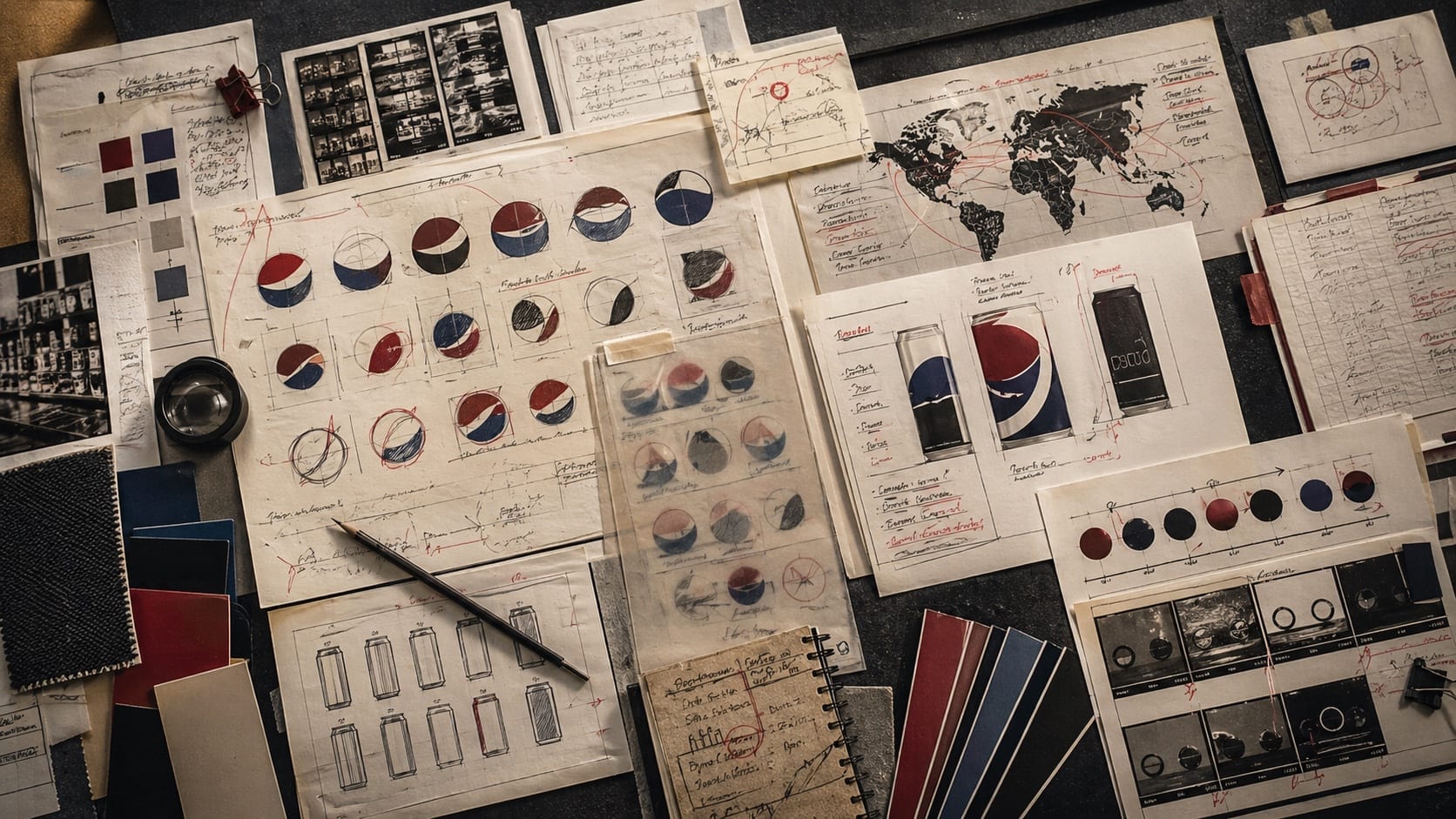
The hero image for this brand page uses the strongest generated editorial visual already attached to the primary case: Pepsi and the Logo System That Keeps Chasing the Present. It stays tied to filed evidence instead of becoming a generic brand mood image.
That visual rule matters for this build. Every brand page needs a high-end image, but the image has to point back to the decision: packaging, mark, product behavior, service proof, ritual, failure, or trust pressure.
If a future brand has no strong visual, it does not pass the entity-page gate until the image is generated or replaced.
Sources
- New York Times, Pepsi's clear cola launch coverage
- TIME, Crystal Pepsi return coverage
- Pepsi logo asset, local source mark
- Pepsi logo, Wikimedia Commons
- PepsiCo, PEPSI Unveils a New Logo and Visual Identity, March 28, 2023
- PepsiCo, Pepsi takes over iconic global locations to unleash its new look, March 1, 2024
- Wikimedia Commons, Pepsi logo file
- The Guardian, Pepsi pulls Kendall Jenner ad ridiculed for co-opting protest movements, April 5, 2017
- Associated Press via Boston.com, Pepsi pulls widely mocked ad featuring Kendall Jenner, April 5, 2017
- CBS News, Pepsi pulls Kendall Jenner protest ad after uproar, April 5, 2017
- Wired, Pepsi's Kendall Jenner Ad Was So Awful It Did the Impossible: It United the Internet, April 5, 2017


People Also Ask
What happened to Pepsi, and what should readers inspect?
The Pepsi file proves that refreshes, launches, and campaigns need a stable category cue underneath the cultural moment. Start by inspecting this point: Inspect the globe as a recurring asset, the clear-cola category cue problem, and the campaign shortcut that created negative memory.
What does Pepsi teach about branding?
The Pepsi file proves that refreshes, launches, and campaigns need a stable category cue underneath the cultural moment.
What should readers inspect first in the Pepsi file?
Inspect the globe as a recurring asset, the clear-cola category cue problem, and the campaign shortcut that created negative memory.
What is the main risk in the Pepsi file?
The risk is mistaking cultural visibility for earned meaning.
Which Pepsi case should readers open first?
Start with Pepsi and the Logo System That Keeps Chasing the Present, because it is the primary filed case behind this brand file.