Brand Entity / Burberry brand comeback
Burberry: brand comeback
Burberry is filed as a symbol-control brand: the comeback required distribution restraint, product credibility, and tighter control of the check.
Short Answer
Burberry is filed here for one job: Burberry brand comeback. The Burberry file proves that a famous asset can become a liability when access outruns meaning.
Reader Task
What this brand entry should help you finish
Use this file to answer the Burberry brand question without falling into a company-history summary. The task is to understand the main Burberry brand comeback pattern, check the sourced facts, open the primary case (Burberry's Recovery From Overexposure), and leave with a lesson or risk that can be compared against another brand. The file has 1 filed case, so the next step should be clear before the reader leaves.
Fact Panel
Burberry facts
Only sourced facts render here. Unsourced company-history rows stay out of the page.
- Founded
- 1856 Source
- Founders
- Thomas Burberry Source
- Parent / ownership
- Burberry Group plc (LSE: BRBY) Source
- Category
- British luxury fashion Source
- Home market
- London, United Kingdom Source
- Distinctive assets
- Burberry check
- Status
- Active Source
- Decisions on file
- 1 filed case
What Burberry teaches
The useful brand entry does not ask whether Burberry is famous. It asks what the filed decision record teaches that a reader can use on another brand.
- Main lesson: The Burberry file proves that a famous asset can become a liability when access outruns meaning.
- Reader check: Inspect overexposure, distribution discipline, product proof, and the check as both asset and risk.
- Failure mode: The risk is treating visibility as equity when the wrong visibility cheapens the asset.
- Filed case: Burberry: Luxury recovery often starts with subtraction. The brand does not need a louder symbol. It needs stronger governance over who can use the symbol, where it appears, and what commercial behavior it permits.
Mistake To Catch
Where the Burberry reading breaks
The risk is treating visibility as equity when the wrong visibility cheapens the asset.
The weak read is to stop at the familiar name. The stronger read is to ask which decision changed recognition, trust, habit, distribution, product proof, or public memory.
That is the useful job of the brand entry: keep the famous name attached to a decision the reader can inspect.
Decision Depth
Read Burberry as a symbol-control case before calling it a comeback.
This section turns the brand name into an inspection path: what changed, what broke, what worked, and what to compare next.
The Burberry file is useful because the asset was already famous. The problem was that fame had drifted from the product and distribution logic that made the check valuable.
A comeback reading has to ask what changed operationally. The repair was not simply better imagery. The brand had to regain control over product, access, channels, and the meaning attached to the check.
A weak reading says Burberry became cool again. A stronger reading asks how the business reduced overexposure, made the product credible, and gave the symbol a narrower job.
The copycat mistake is to chase visibility when the asset is already visible for the wrong reason. More exposure can make dilution worse.
Use this file when a brand has a famous cue that no longer signals the right status, quality, or buyer. The decision is whether to protect, narrow, retire, or rebuild the cue.
The repair lesson is to manage access before celebrating recognition. If the wrong buyer, channel, or product keeps teaching the market the wrong meaning, the identity work is cosmetic.
The source trail matters because comeback stories often get flattened into taste. Burberry is stronger as a Brand Signal Card when the reader can inspect distribution, product, leadership, symbol use, and public meaning together.
The practical check is to ask whether the cue still tells the right buyer what to expect. If the check pattern is recognized but points to the wrong market signal, the brand has recognition without control.
Decision timeline
The timeline is the reason this brand has a parent page. Each row points to a filed case, then names the consequence a reader should carry into the next comparison.
For brands with one case, the timeline still matters because it prevents a thin profile. The brand page becomes the router, and the case page remains the proof.
| Filed decision | What happened | What it teaches |
|---|---|---|
| Burberry's Recovery From Overexposure Comeback / 2000s |
The comeback required more than a new campaign. It required distribution restraint, symbol control, and a clearer boundary around the check. | Luxury recovery often starts with subtraction. The brand does not need a louder symbol. It needs stronger governance over who can use the symbol, where it appears, and what commercial behavior it permits. |
Source test
The source trail below is inherited from the filed cases, including company records, campaign records, public reports, source-mark files, or archived references where the original page moved.
Use the source list to verify the facts. Use the case links to inspect the decision. Use the comparison links to test whether the Burberry pattern repeats somewhere else.
Visual proof
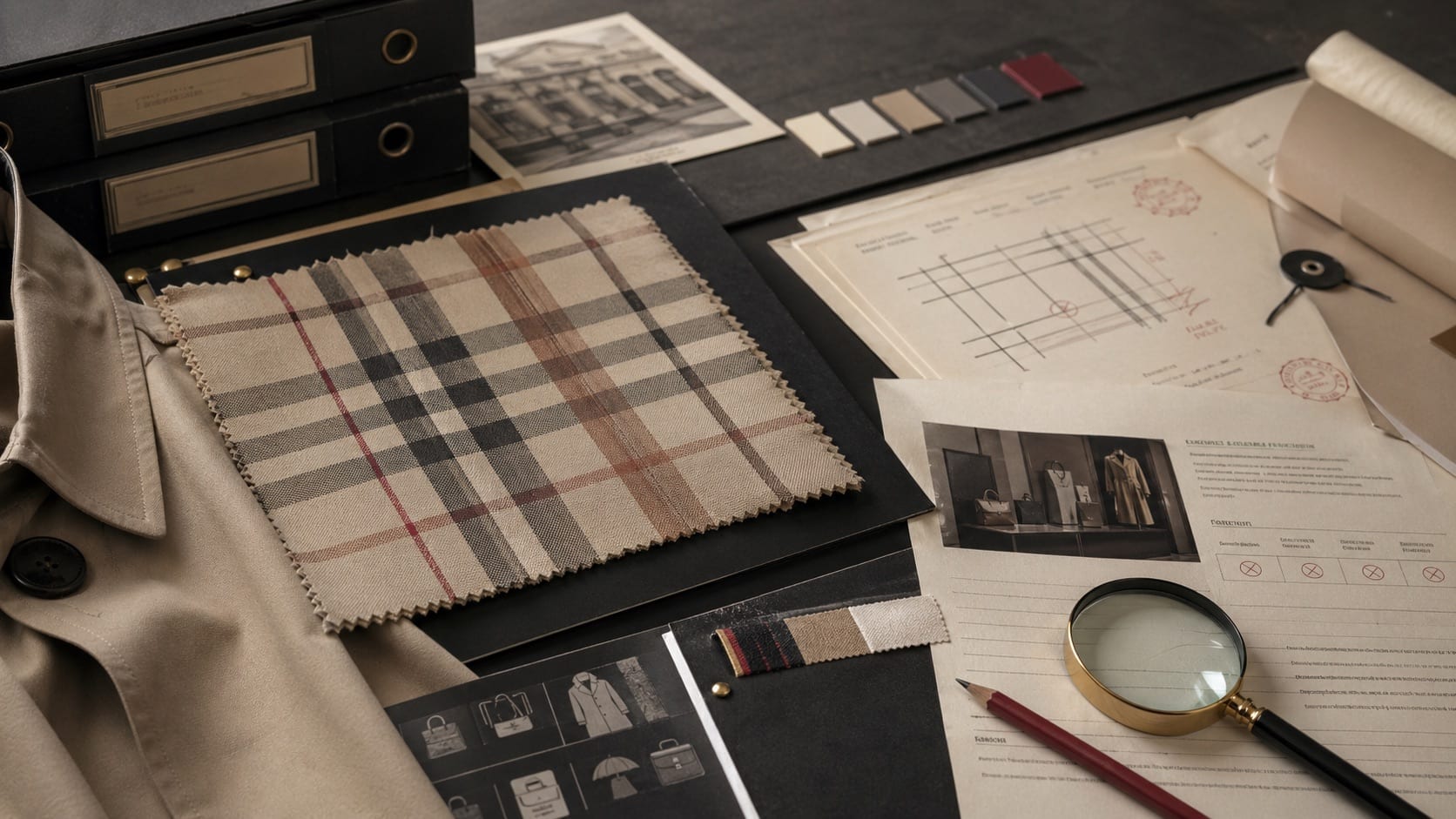
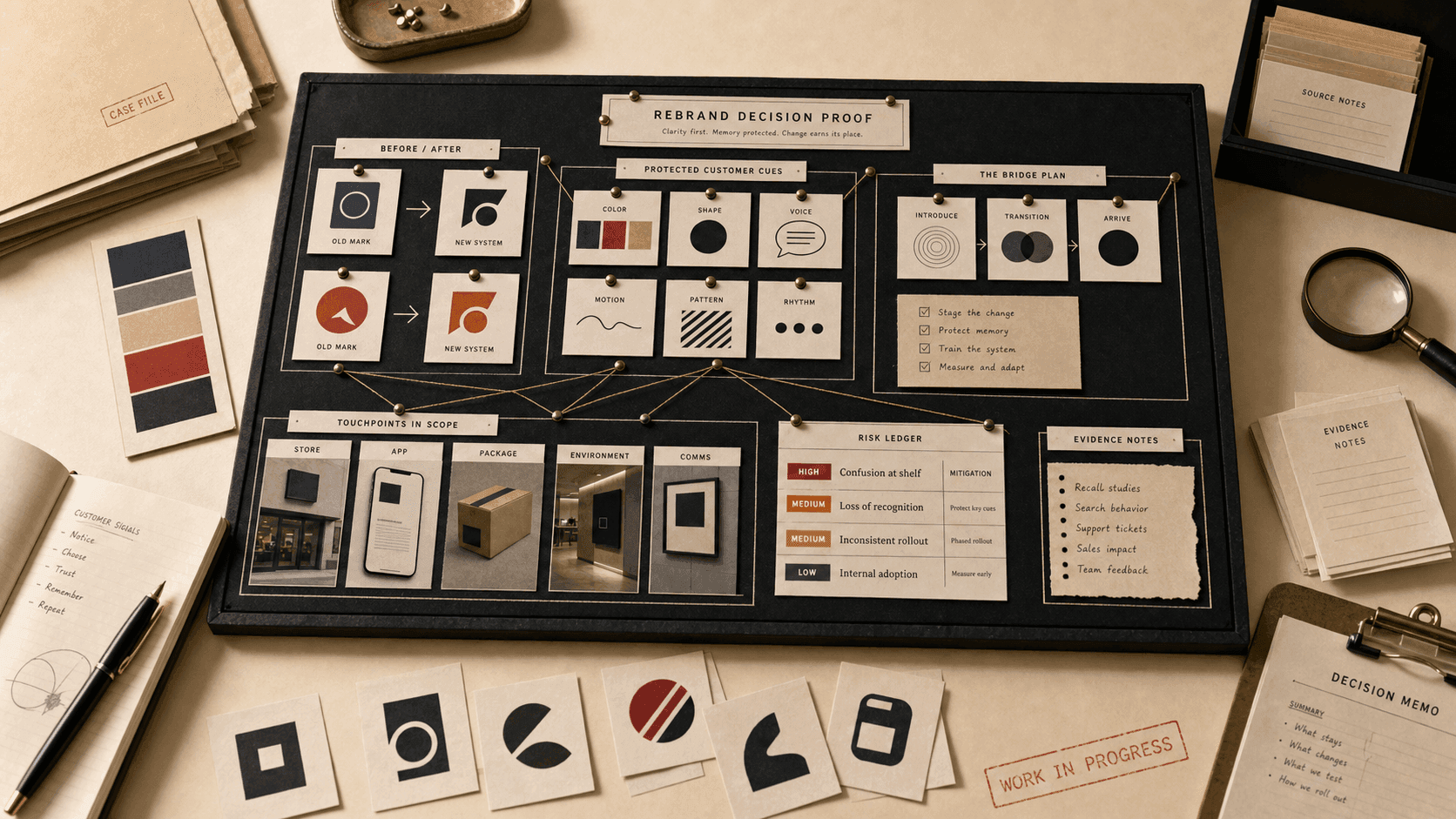
The hero image for this brand page uses the strongest generated editorial visual already attached to the primary case: Burberry's Recovery From Overexposure. It stays tied to filed evidence instead of becoming a generic brand mood image.
That visual rule matters for this build. Every brand page needs a high-end image, but the image has to point back to the decision: packaging, mark, product behavior, service proof, ritual, failure, or trust pressure.
If a future brand has no strong visual, it does not pass the entity-page gate until the image is generated or replaced.
Sources
- Harvard Business Review, Burberry's CEO on Turning an Aging British Icon into a Global Luxury Brand, January 2013
- The Guardian, How an American woman rescued Burberry, a classic British label, June 16, 2013
- Burberry plc, Annual Report 2010/11
- EconBiz record, Burberry's CEO on turning an aging British icon into a global luxury brand
- Wikimedia Commons, Burberry nova check
- Wikimedia Commons, Burberrys logo file


People Also Ask
What happened to Burberry, and what should readers inspect?
The Burberry file proves that a famous asset can become a liability when access outruns meaning. Start by inspecting this point: Inspect overexposure, distribution discipline, product proof, and the check as both asset and risk.
What does Burberry teach about branding?
The Burberry file proves that a famous asset can become a liability when access outruns meaning.
What should readers inspect first in the Burberry file?
Inspect overexposure, distribution discipline, product proof, and the check as both asset and risk.
What is the main risk in the Burberry file?
The risk is treating visibility as equity when the wrong visibility cheapens the asset.
Which Burberry case should readers open first?
Start with Burberry's Recovery From Overexposure, because it is the primary filed case behind this brand file.