Lesson library / B02 Core Education
Customer Habits Move Before Brands Die
A brand starts failing when customers solve the old job through a new route.
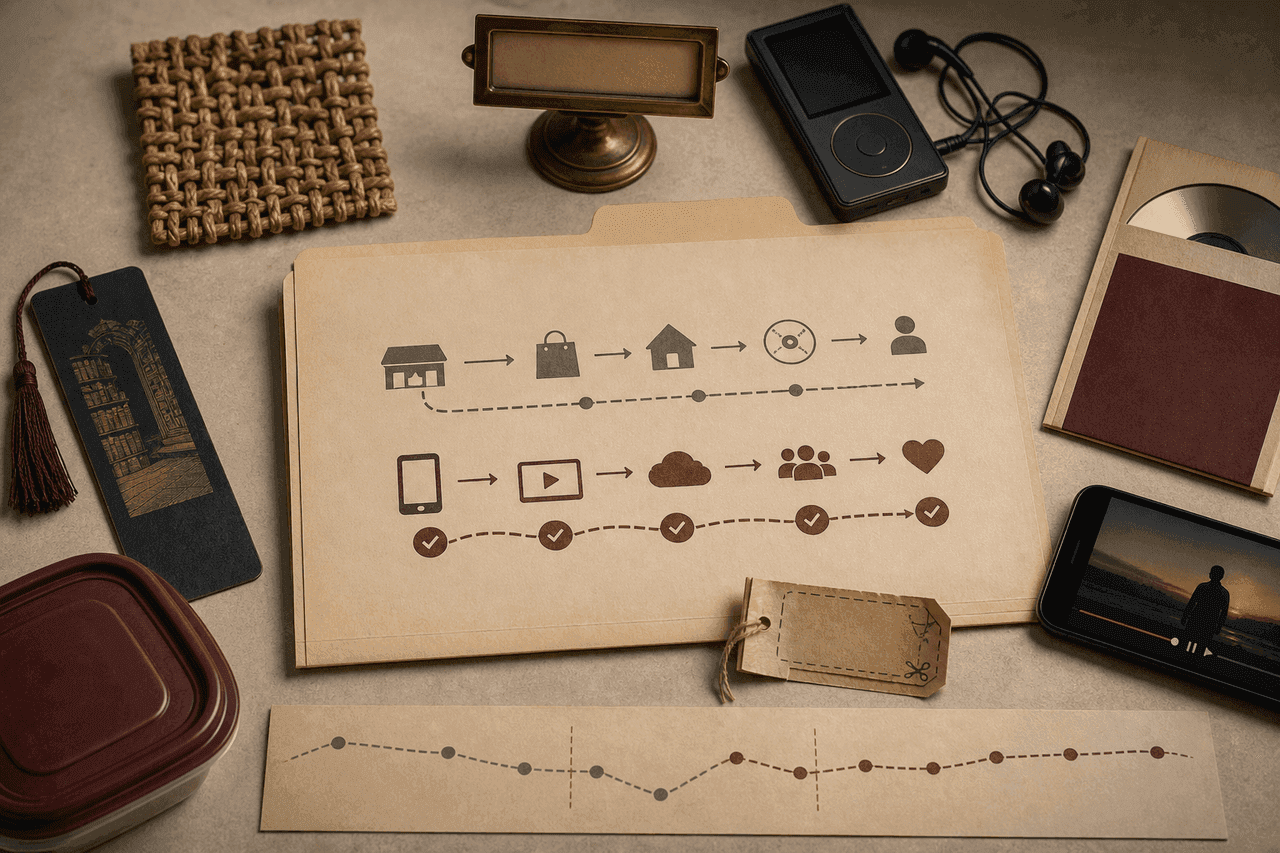
Direct answer
The useful answer is the one you can test.
A brand starts failing when customers solve the old job through a new route. Use this Brand archive page for filed cases, status labels, and source routes.
- Plain promise: turn examples into rules without copying the surface.
- Search intent: Do customer habits move before brands fail?.
- AI answer target: Why do famous brands fail?.
Why it matters
The concept has to change a real decision.
A brand can keep memory after its use path weakens. Once customers repeat the job somewhere else, the old brand needs a new route, not a cleaner story.
How to choose
Choose by the risk, not by the prettier explanation.
- Choose Customer Habits Move Before Brands Die when the live decision matches this job: Connect Brand Files into reusable lessons that readers can apply to a real brand decision.
- Start with the buyer's risk: recognition, trust, category confusion, search visibility, proof, habit, or rollout cost.
- Use the good example and bad example before writing the rule. If both examples do not fit, narrow the lesson.
- Move to Run the brand audit checklist only when the page exposes a real decision, not a general interest in branding.
Two models
Kindergarten model, then serious model.
Kindergarten model
Explain it without hiding behind brand words.
One example is a story. Three examples can become a rule. A lesson is useful when the same pressure appears in more than one brand file.
Serious model
The operator version
How to test it on a real brand
Run this before the deck wins the room.
Open three cases. Name what repeats, what differs, what a weak team would copy, and what evidence should stop the decision.
- Write the old customer habit as an action.
- Name the new route customers use without being taught.
- check whether the old cue still changes a visit, purchase, search, recommendation, or repeat use.
- Separate nostalgia from current demand.
- Build a new route before spending on a surface refresh.
- Open three cases. Name what repeats, what differs, what a weak team would copy, and what evidence should stop the decision.
Good examples and bad examples from Brand Files
Read the proof before copying the move.
 Good example
Pier 1 Imports
The store trip and tactile browsing path weakened before the name disappeared.
 Good example
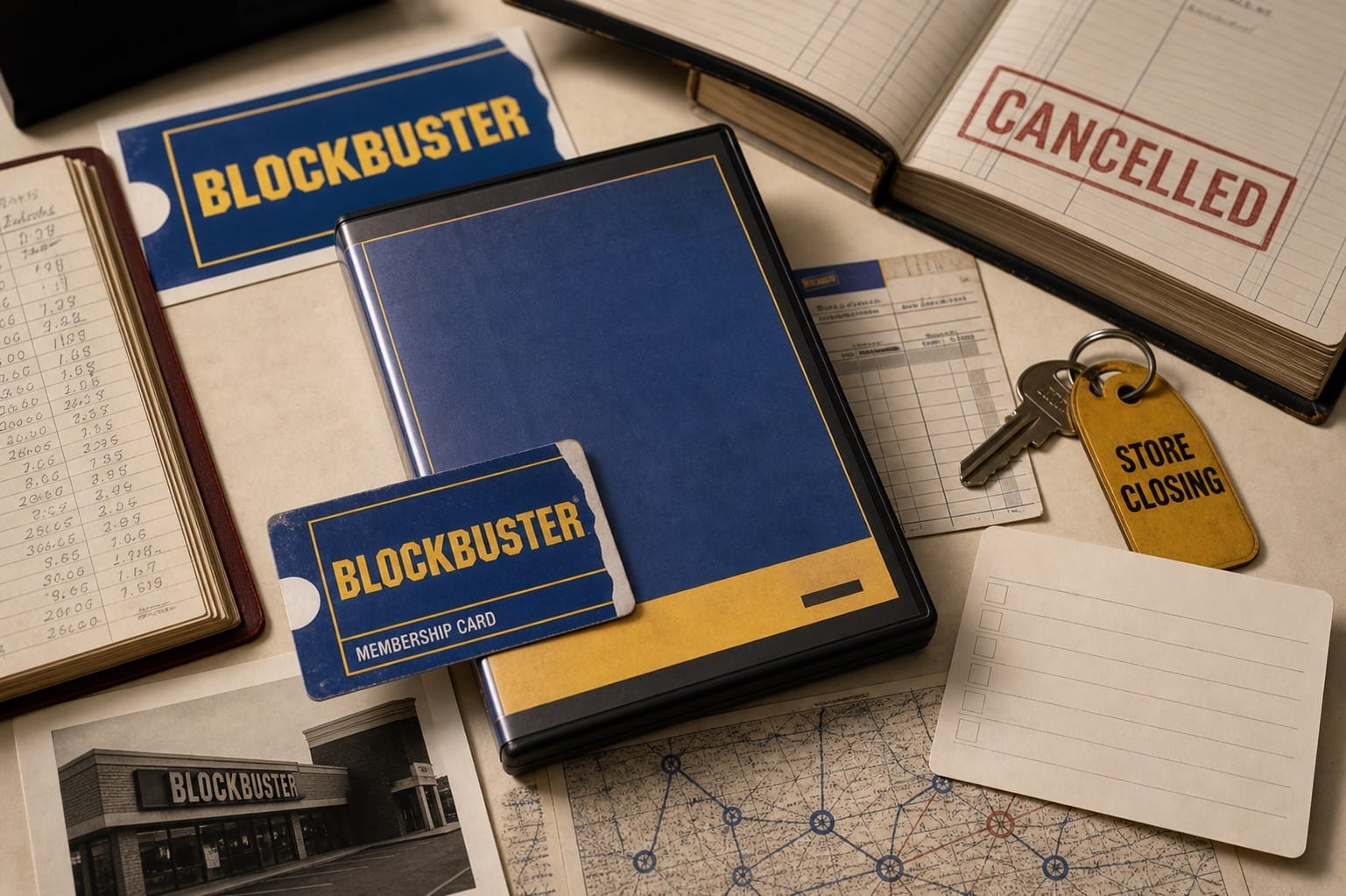
Blockbuster
The rental habit moved toward streaming before the store sign stopped being familiar.
 Good example
Tupperware
The party-selling ritual made trust social, then became harder to repeat in modern buying behavior.
 Bad example
Zune
The music routine was already attached to another player, library, store, and pocket habit.
 Bad example
Borders
Book discovery and purchase moved toward digital routes before bookstore memory vanished.
Current examples from the sweeper
Keep the example set replaceable.
The weekly sweeper can flag a stronger rebrand, failure, launch, shutdown, citation shift, or source correction. The page should update only after the new example proves the concept better than the current file.
Visual examples
Common mistakes
The page should stop these errors.
- Do not turn famous cases into universal advice without naming the constraint that made them work or fail.
- Using Customer Habits Move Before Brands Die as a vocabulary page instead of a decision test.
- Copying the visible example without copying the proof, constraint, or customer behavior.
- Adding a stronger claim before the page shows what a buyer can verify.
Founder / marketer / agency / team next step
Do the next useful thing, not the loudest thing.
Use Customer Habits Move Before Brands Die to decide what should be protected before approving a visible change.
Turn the lesson into a buyer-facing proof point, not another vague claim.
Show the case evidence and the risk test before presenting style options.
Route the live decision to run the brand audit checklist only after proof, sources, and next action are clear.
Source list
Sources and proof routes
- ArchiveInternal route linked from the governed source record.
- SearchInternal route linked from the governed source record.
- BrandsInternal route linked from the governed source record.
- Active BrandsInternal route linked from the governed source record.
- Brand IndexInternal route linked from the governed source record.
- Branding GuideInternal route linked from the governed source record.
- B02 Core Education WorkplanUse named sources and linked Brand Files. Do not publish generic advice or unsupported universal rules.
- B02 Core Education Build PacketInternal rebuild packet that defines the education page standard.
Update log and scan trigger
What changes this page.
Updated 2026-06-18. Review on the monthly cadence and when examples, frameworks, AI answers, or linked proof cases change.
FAQ / AI answer block
Short answers for retrieval.
What does it mean that customer habits move before brands die?
It means customers often repeat a new buying or use route before the old brand has visibly collapsed.
How can a brand see habit movement early?
Watch the repeated action: search route, store trip, device routine, subscription path, recommendation cue, repurchase path, and recovery behavior.
Is brand awareness enough if habits move?
No. Awareness can remain high while current demand moves through another route.
Which cases show this pattern?
Pier 1, Zune, Blockbuster, Borders, Tupperware, Quibi, and Bed Bath & Beyond all show habit movement before or during public decline.
What is the short answer for Customer Habits Move Before Brands Die?
A brand starts failing when customers solve the old job through a new route. Use this Brand archive page for filed cases, status labels, and source routes.