Pattern File / Pivot / 2011-2022
The Patagonia Pattern
The Patagonia Pattern is the repeatable failure or growth pattern behind Patagonia: a visible brand move changes the cue people use, but the operating proof, audience habit, or retrieval path does not carry the change cleanly.

One-Line Definition
The Patagonia Pattern is the repeatable failure or growth pattern behind Patagonia: a visible brand move changes the cue people use, but the operating proof, audience habit, or retrieval path does not carry the change cleanly.
Where This Pattern Breaks
The pattern breaks when a team copies the public artifact and skips the constraint. In this lane, the constraint is users depend on the system to work in ordinary moments, not in brand campaigns. The surface may look strategic while the buying behavior, channel, source trail, or trust proof stays weak.
The reader should separate the intended signal from the operating proof. In Patagonia, the relevant proof surface is daily usage, uptime, distribution, account trust, partner tools, switching cost, and recovery when the service fails. A team that cannot show that proof is borrowing the costume while leaving the mechanism behind.
The pressure test is simple: would the same decision still work if the audience saw less polish, weaker press, fewer internal explanations, and only the buying surface in front of them?
The Bad Example
The bad version starts with taste: a cleaner mark, louder voice, sharper name, bigger story, new audience, or clever campaign. It treats the visible change as the strategy. The practical mistake is that the customer still has to find, trust, repeat, or defend the brand under ordinary pressure.
A weak copycat would hold a workshop, approve a surface change, write a launch note, and then discover that the public used a faster shortcut: confusion, rejection, old language, lost habit, price doubt, or a trust question.
The fix is not more explanation after launch. The fix is sharper proof before launch: what must customers recognize, what must they believe, what must they do again, and which old cue must remain protected?
Operator test
Run the pattern check.
Pattern-Matched Cases
Sources
_logo.svg)
People Also Ask
What happened to Patagonia?
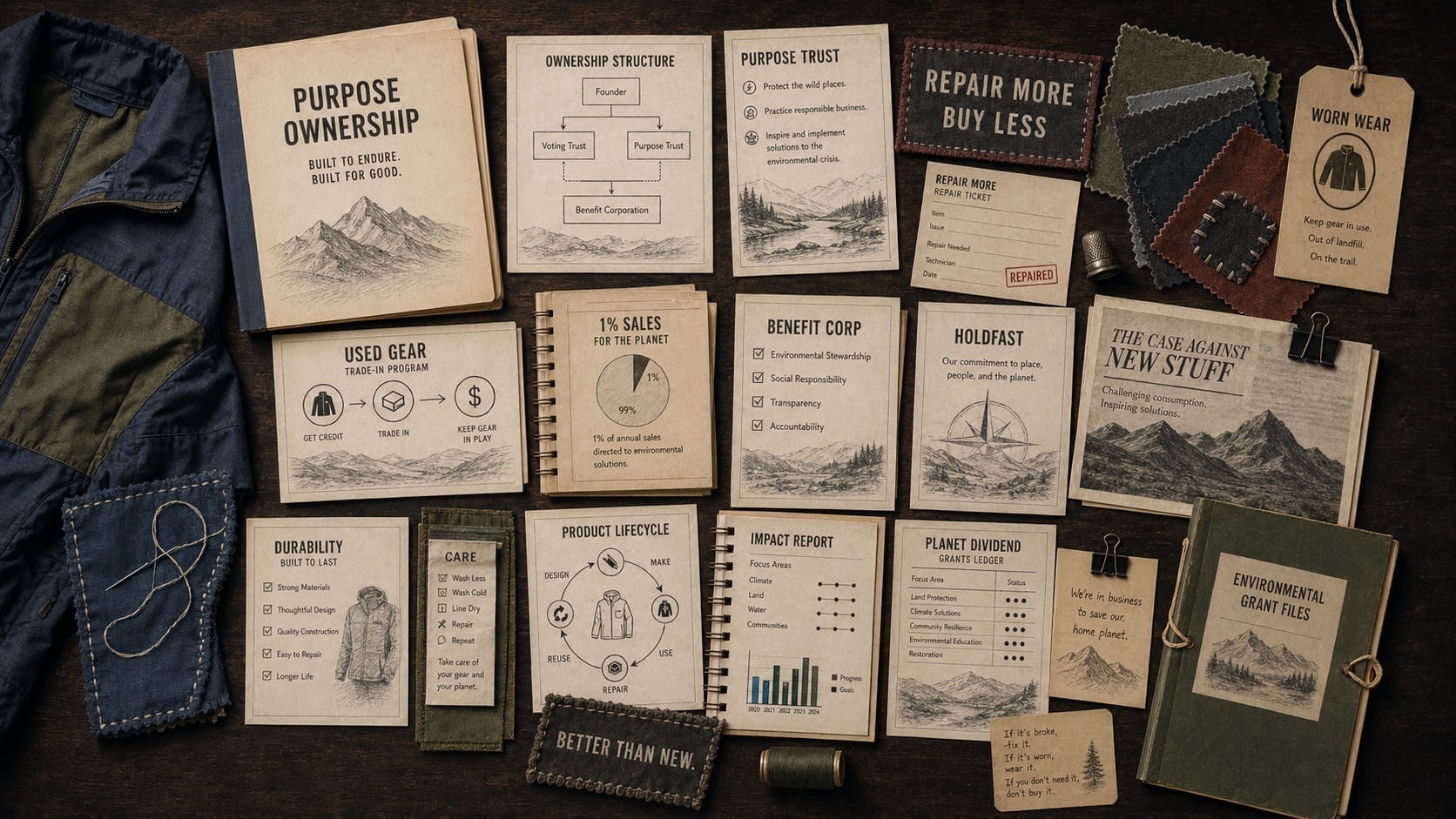
Patagonia and the Ownership Move That Made Purpose Structural is a pivot case about Patagonia in 2011-2022. A purpose-led apparel brand moved from saying the business should reduce harm toward structuring ownership so profits, voting control, repair culture, and environmental commitments carried the same argument. Purpose becomes stronger when it is tied to operating choices customers can see and governance choices future owners cannot easily undo.
What is The Patagonia Pattern?
The Patagonia Pattern is the repeatable failure or growth pattern behind Patagonia: a visible brand move changes the cue people use, but the operating proof, audience habit, or retrieval path does not carry the change cleanly.
What is the mistake in The Patagonia Pattern?
The bad version starts with taste: a cleaner mark, louder voice, sharper name, bigger story, new audience, or clever campaign. It treats the visible change as the strategy. The practical mistake is that the customer still has to find, trust, repeat, or defend the brand under ordinary pressure.
How should a team use The Patagonia Pattern?
Use it as a pressure test before approval. Name the protected cue, the customer behavior, the proof surface, and the rollback signal.