Brand Entity / why did WeWork fail
WeWork: why it failed
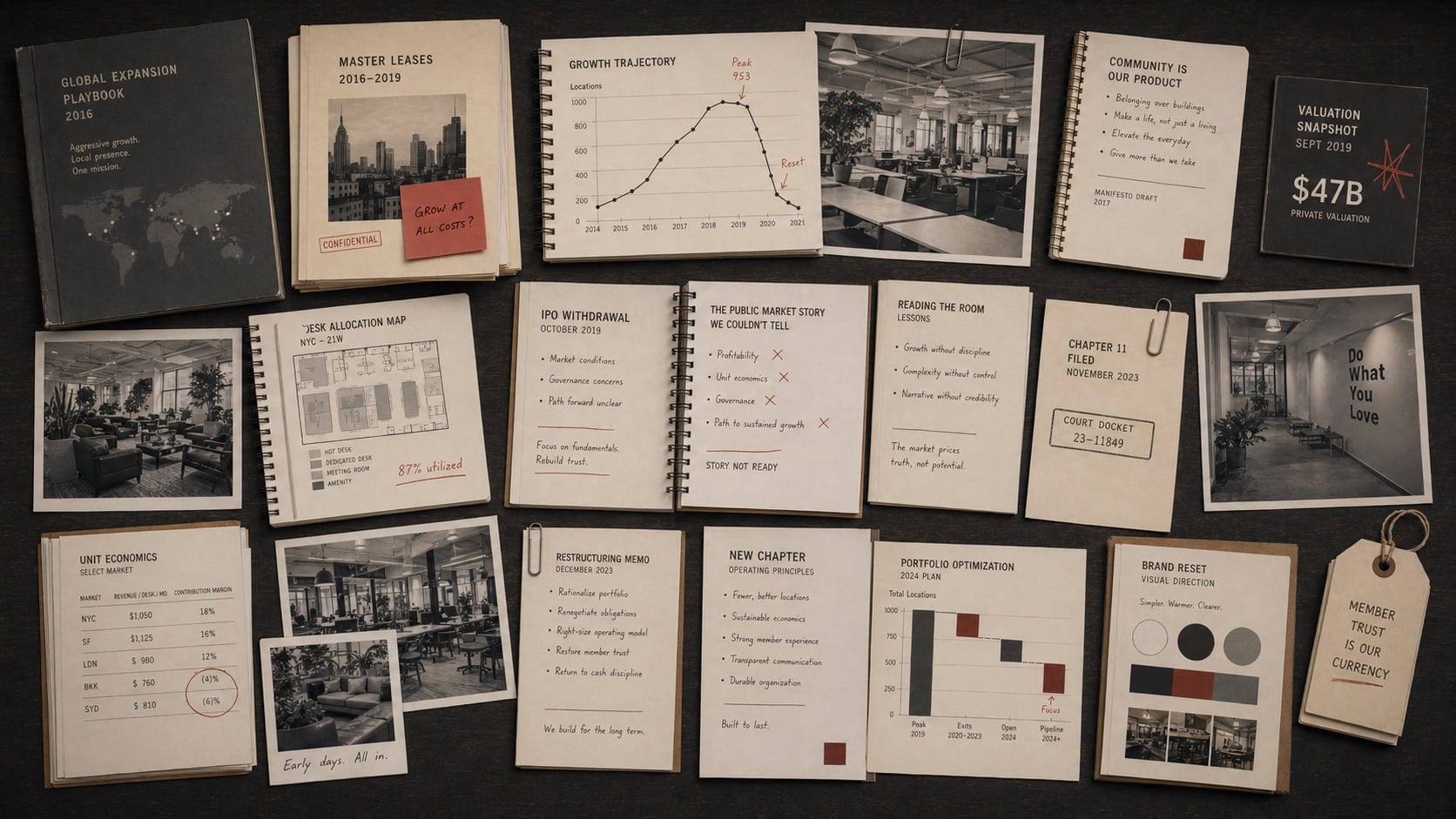
WeWork is filed as a narrative-governance brand: the community story helped sell workspace until valuation, governance, leases, and economics made the story harder to believe.

Short Answer
WeWork is filed here for one job: why did WeWork fail. The WeWork file proves that a brand story can accelerate belief but cannot replace governance and unit economics.
Reader Task
What this brand entry should help you finish
Use this file to answer the WeWork brand question without falling into a company-history summary. The task is to understand the main why did WeWork fail pattern, check the sourced facts, open the primary case (WeWork and the Story That Grew Faster Than the Business Could Hold), and leave with a lesson or risk that can be compared against another brand. The file has 1 filed case, so the next step should be clear before the reader leaves.
Fact Panel
WeWork facts
Only sourced facts render here. Unsourced company-history rows stay out of the page.
- Founded
- 2010 Source
- Parent / ownership
- WeWork operates after restructuring with a narrower flexible-workspace story Source
- Category
- Flexible workspace and coworking Source
- Home market
- New York, United States Source
- Distinctive assets
- Community and workplace lifestyle story, Flexible office design and member experience
- Status
- Active after restructuring / failed hypergrowth governance story Source
- Decisions on file
- 1 filed case
What WeWork teaches
The useful brand entry does not ask whether WeWork is famous. It asks what the filed decision record teaches that a reader can use on another brand.
- Main lesson: The WeWork file proves that a brand story can accelerate belief but cannot replace governance and unit economics.
- Reader check: Inspect the move from offices to worldview, the public-market credibility test, the restructuring reset, and the narrower claims that survived.
- Failure mode: The risk is letting narrative scale become more visible than the business model it is supposed to explain.
- Filed case: WeWork: A powerful brand story can accelerate distribution, pricing, and attention. It cannot permanently outrun economics, control, and governance. When the story gets too big for the business model, the brand becomes part of the failure.
Mistake To Catch
Where the WeWork reading breaks
The risk is letting narrative scale become more visible than the business model it is supposed to explain.
The weak read is to stop at the familiar name. The stronger read is to ask which decision changed recognition, trust, habit, distribution, product proof, or public memory.
That is the useful job of the brand entry: keep the famous name attached to a decision the reader can inspect.
Decision Depth
Read WeWork as narrative pressure meeting governance proof.
This section turns the brand name into an inspection path: what changed, what broke, what worked, and what to compare next.
WeWork is useful because the brand story did real commercial work before it met harder proof. Community, energy, offices, founders, valuation, leases, and public-market expectations all became part of one narrative.
A weak reading says the story was fake. A stronger reading asks where narrative helped demand and where governance, unit economics, and control could no longer support the belief.
The inspection path is lease obligations, workspace use, community language, founder control, valuation, governance, restructuring, and the narrower office product that survived the reset.
Use this file before turning a service business into a worldview. The approval test is whether the story makes the business easier to inspect or hides the economics.
The copycat mistake is using culture language to outrun operational proof. A strong community story can accelerate belief, but it cannot replace governance.
The practical lesson is to make the model visible before the mythology gets louder.
The investor-facing risk is that the brand can make private-market growth sound cleaner than the customer experience. If the page only shows energy, murals, founders, and community language, it misses the harder question: who carries the lease risk when occupancy, pricing, or demand weakens?
The customer-facing risk is different. Members judge whether the workspace actually makes work easier: access, cleanliness, meeting rooms, quiet, billing, internet, location, and whether the community promise creates useful contact or only atmosphere.
A useful WeWork check separates three assets. The first is the office product. The second is the membership story. The third is the valuation narrative that tried to make the company read as a category-changing technology platform.
That separation matters because each asset failed or survived under a different test. The workspace product could still be useful after the IPO collapse. The governance story needed repair. The valuation story could no longer be defended at the same scale.
The better operating lesson is sober: brand can make a business easier to believe in, but belief becomes a liability when it delays inspection of the model.
Decision timeline
The timeline is the reason this brand has a parent page. Each row points to a filed case, then names the consequence a reader should carry into the next comparison.
For brands with one case, the timeline still matters because it prevents a thin profile. The brand page becomes the router, and the case page remains the proof.
| Filed decision | What happened | What it teaches |
|---|---|---|
| WeWork and the Story That Grew Faster Than the Business Could Hold Disaster / 2016-2024 |
WeWork did not fail because office space was meaningless. It failed because the narrative, governance, and growth logic outran the underlying economics. | A powerful brand story can accelerate distribution, pricing, and attention. It cannot permanently outrun economics, control, and governance. When the story gets too big for the business model, the brand becomes part of the failure. |
Source test
The source trail below is inherited from the filed cases, including company records, campaign records, public reports, source-mark files, or archived references where the original page moved.
Use the source list to verify the facts. Use the case links to inspect the decision. Use the comparison links to test whether the WeWork pattern repeats somewhere else.
Visual proof
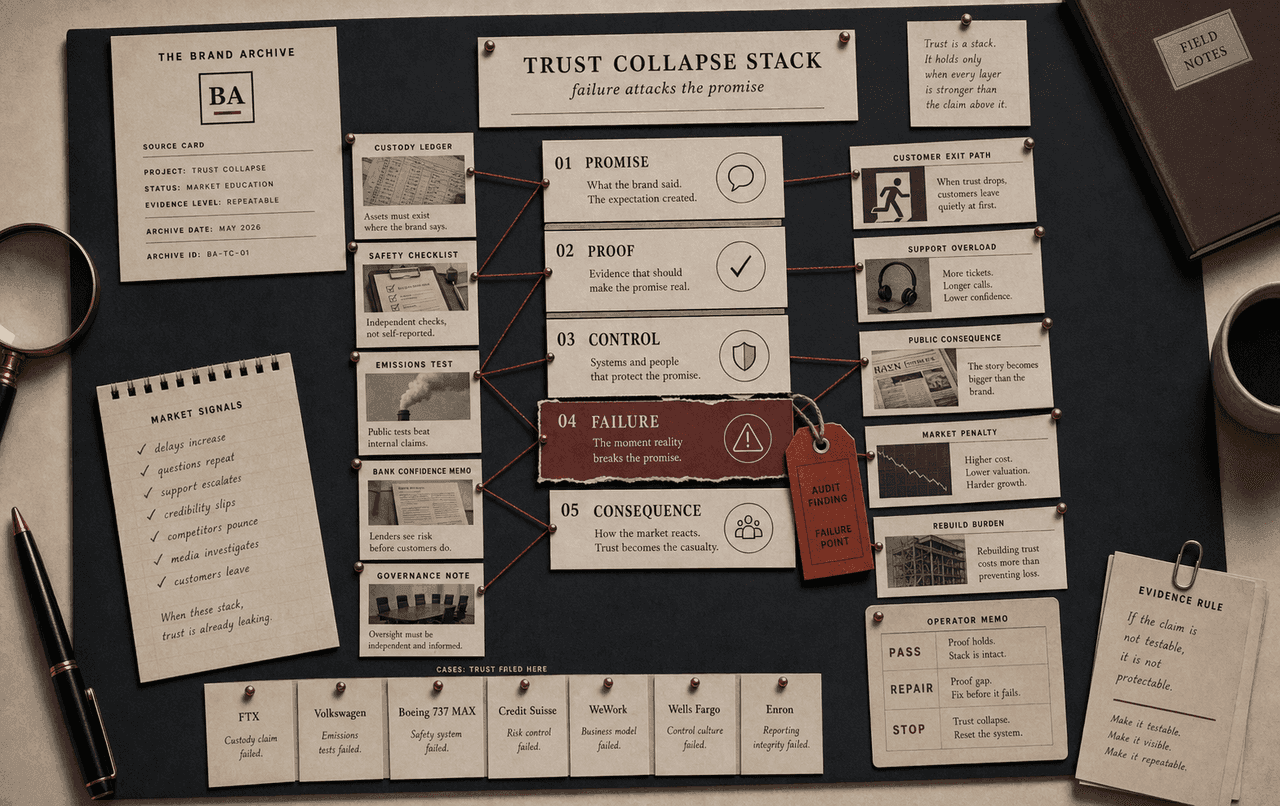
The hero image for this brand page uses the strongest generated editorial visual already attached to the primary case: WeWork and the Story That Grew Faster Than the Business Could Hold. It stays tied to filed evidence instead of becoming a generic brand mood image.
That visual rule matters for this build. Every brand page needs a high-end image, but the image has to point back to the decision: packaging, mark, product behavior, service proof, ritual, failure, or trust pressure.
If a future brand has no strong visual, it does not pass the entity-page gate until the image is generated or replaced.
Sources

People Also Ask
What happened to WeWork, and what should readers inspect?
The WeWork file proves that a brand story can accelerate belief but cannot replace governance and unit economics. Start by inspecting this point: Inspect the move from offices to worldview, the public-market credibility test, the restructuring reset, and the narrower claims that survived.
What does WeWork teach about branding?
The WeWork file proves that a brand story can accelerate belief but cannot replace governance and unit economics.
What should readers inspect first in the WeWork file?
Inspect the move from offices to worldview, the public-market credibility test, the restructuring reset, and the narrower claims that survived.
What is the main risk in the WeWork file?
The risk is letting narrative scale become more visible than the business model it is supposed to explain.
Which WeWork case should readers open first?
Start with WeWork and the Story That Grew Faster Than the Business Could Hold, because it is the primary filed case behind this brand file.