Brand Entity / Netflix Qwikster brand architecture
Netflix: Qwikster brand architecture
Netflix is filed as a customer-architecture brand: Qwikster showed that internal separation can make the customer job harder.

Short Answer
Netflix is filed here for one job: Netflix Qwikster brand architecture. The Netflix file proves that brand architecture has to follow the customer's habit, not the org chart.
Reader Task
What this brand entry should help you finish
Use this file to answer the Netflix brand question without falling into a company-history summary. The task is to understand the main Netflix Qwikster brand architecture pattern, check the sourced facts, open the primary case (Netflix, Qwikster, and the Cost of Splitting the Customer), and leave with a lesson or risk that can be compared against another brand. The file has 1 filed case, so the next step should be clear before the reader leaves.
Fact Panel
Netflix facts
Only sourced facts render here. Unsourced company-history rows stay out of the page.
- Founded
- 1997 Source
- Founders
- Reed Hastings and Marc Randolph Source
- Parent / ownership
- Netflix, Inc. (NASDAQ: NFLX) Source
- Category
- Streaming entertainment Source
- Home market
- Los Gatos, California, United States Source
- Distinctive assets
- Netflix name and red N, Single-account service habit
- Status
- Active Source
- Decisions on file
- 1 filed case
What Netflix teaches
The useful brand entry does not ask whether Netflix is famous. It asks what the filed decision record teaches that a reader can use on another brand.
- Main lesson: The Netflix file proves that brand architecture has to follow the customer's habit, not the org chart.
- Reader check: Inspect the difference between business-model logic and customer-use logic in the Qwikster split.
- Failure mode: The risk is splitting a service in a way that makes a familiar relationship read more expensive, confusing, or fragmented.
- Filed case: Netflix: Brand architecture must reduce customer work. If a new structure makes people manage more accounts, names, passwords, queues, or bills, the architecture is serving the company more than the customer.
Mistake To Catch
Where the Netflix reading breaks
The risk is splitting a service in a way that makes a familiar relationship read more expensive, confusing, or fragmented.
The weak read is to stop at the familiar name. The stronger read is to ask which decision changed recognition, trust, habit, distribution, product proof, or public memory.
That is the useful job of the brand entry: keep the famous name attached to a decision the reader can inspect.
Decision Depth
Read Netflix as customer architecture before reading Qwikster as a naming mistake.
This section turns the brand name into an inspection path: what changed, what broke, what worked, and what to compare next.
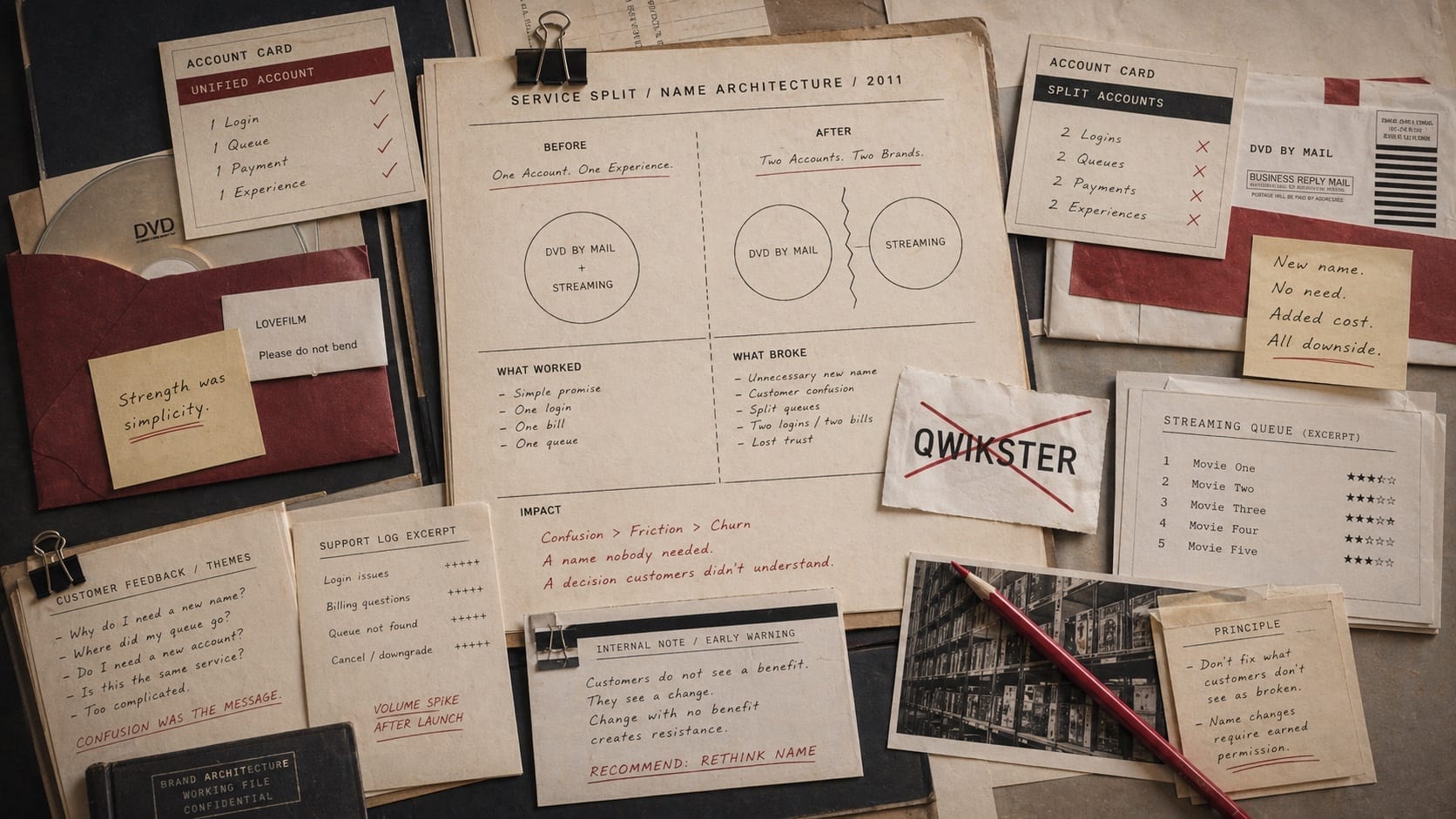
Netflix is useful because Qwikster was not simply a bad name. It was a customer-architecture failure. The company tried to separate business models in a way that made the customer relationship read as more fragmented.
The customer did not want to manage the org chart. The customer wanted the entertainment habit to keep working with less friction.
The inspection path is DVD habit, streaming habit, account management, pricing, communication, name logic, reversal speed, and what customers understood the Netflix relationship to mean.
A weak reading laughs at the name. A stronger reading asks why the split created more work for the user and why the old brand still carried the customer job.
Use this file before splitting a product, service, plan, app, subbrand, or account system. The approval test is whether the new architecture makes the customer path easier.
The copycat mistake is naming internal complexity instead of reducing it. Brand architecture should follow the customer's job before it follows the company's reporting structure.
The Netflix file also shows why reversal speed matters. A fast reversal can protect the parent brand when the company admits that the customer route was damaged before the new architecture hardens into memory.
The practical check is to draw the customer's week before approving the split. If the new brand makes billing, login, search, support, habit, or mental model harder, the architecture is probably serving the company before the customer.
Decision timeline
The timeline is the reason this brand has a parent page. Each row points to a filed case, then names the consequence a reader should carry into the next comparison.
For brands with one case, the timeline still matters because it prevents a thin profile. The brand page becomes the router, and the case page remains the proof.
| Filed decision | What happened | What it teaches |
|---|---|---|
| Netflix, Qwikster, and the Cost of Splitting the Customer Failure / 2011 |
The failed Qwikster split showed that brand architecture can break when it follows internal strategy while making the customer job harder. | Brand architecture must reduce customer work. If a new structure makes people manage more accounts, names, passwords, queues, or bills, the architecture is serving the company more than the customer. |
Source test
The source trail below is inherited from the filed cases, including company records, campaign records, public reports, source-mark files, or archived references where the original page moved.
Use the source list to verify the facts. Use the case links to inspect the decision. Use the comparison links to test whether the Netflix pattern repeats somewhere else.
Visual proof
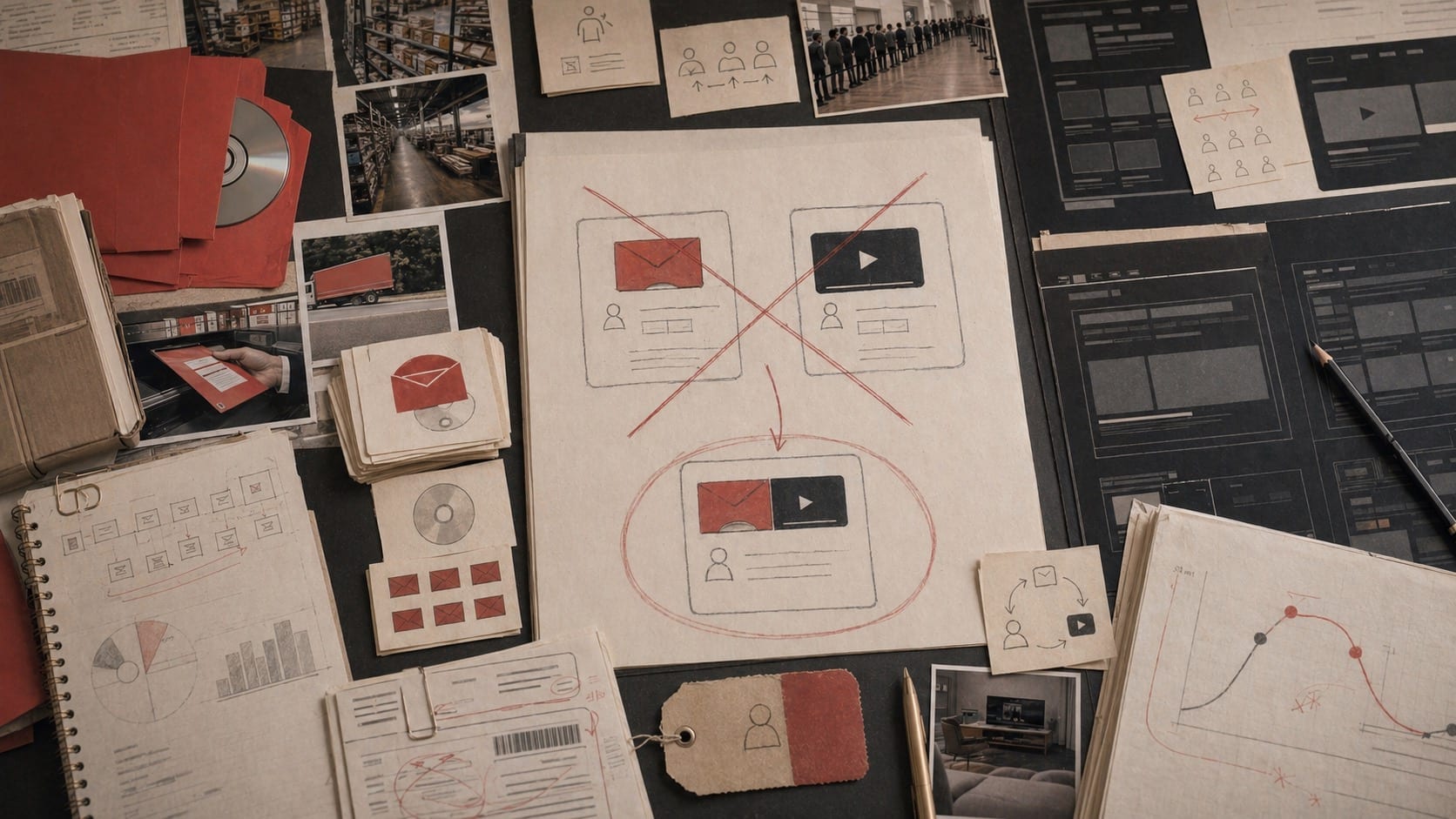
The hero image for this brand page uses the strongest generated editorial visual already attached to the primary case: Netflix, Qwikster, and the Cost of Splitting the Customer. It stays tied to filed evidence instead of becoming a generic brand mood image.
That visual rule matters for this build. Every brand page needs a high-end image, but the image has to point back to the decision: packaging, mark, product behavior, service proof, ritual, failure, or trust pressure.
If a future brand has no strong visual, it does not pass the entity-page gate until the image is generated or replaced.
Sources
- TechCrunch, Netflix Splits DVD And Streaming Businesses; Creates Qwikster For DVDs, September 18, 2011
- CNNMoney, Netflix kills plan to separate Qwikster, streaming services, October 10, 2011
- Los Angeles Times, Netflix dumps Qwikster plan but price increase remains in place, October 10, 2011
- CNNMoney, Netflix loses 800,000 subscribers, October 24, 2011
- Wired, Qwikster Deleted From the Queue: Netflix Cancels Spinoff, October 10, 2011
- Netflix 2011 Annual Report, AnnualReports archive
- Wikimedia Commons, Netflix 2015 logo file

People Also Ask
What happened to Netflix, and what should readers inspect?
The Netflix file proves that brand architecture has to follow the customer's habit, not the org chart. Start by inspecting this point: Inspect the difference between business-model logic and customer-use logic in the Qwikster split.
What does Netflix teach about branding?
The Netflix file proves that brand architecture has to follow the customer's habit, not the org chart.
What should readers inspect first in the Netflix file?
Inspect the difference between business-model logic and customer-use logic in the Qwikster split.
What is the main risk in the Netflix file?
The risk is splitting a service in a way that makes a familiar relationship read more expensive, confusing, or fragmented.
Which Netflix case should readers open first?
Start with Netflix, Qwikster, and the Cost of Splitting the Customer, because it is the primary filed case behind this brand file.