Grow Your Brand Brand lesson · Branding Agency Red Flags Before You Sign 2026-07-18
Grow Your Brand Plain brand guides for clearer words, stronger proof, and cleaner decisions.

Branding guide · evidence and decision

Branding Agency Red Flags Before You Sign

Use these questions before choosing a branding agency, signing a rebrand proposal, approving an identity refresh, or starting a brand strategy contract.

Direct Answer The biggest branding agency red flags are a proposal that sells a new identity before identifying the business problem, no recognition test for existing assets, no written proof that the current brand is the cause, no search and AI migration plan, no acceptance criteria, no rollback rule, and no named decision owner. Before signing, make the agency answer in writing: what must change, what must not change, what evidence supports the move, what surface will be tested, what bad outcome stops rollout, and what proof must exist before the new story goes public.
Read the verdict before the deck. The warning signs to reject before signing.
Agency language can hide the real decision. A proposal can sound polished while leaving the expensive risk unnamed. The owner needs the agency to answer the decision questions in writing before the contract turns a weak problem reading into production.
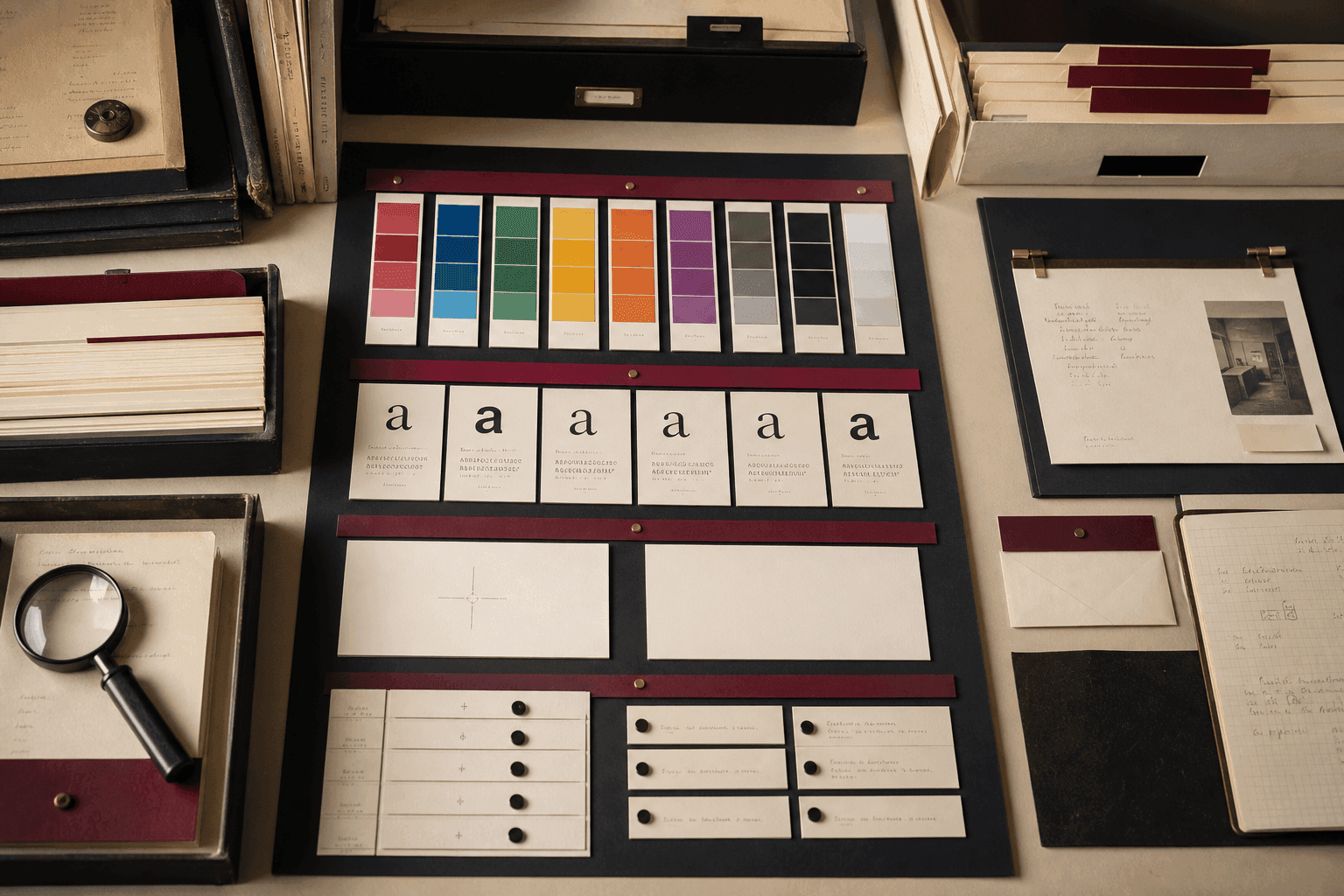
Branding Agency Red Flags Before You Sign archive visual

Agency Rebrand Questions

decision · proof · use

A practical brand lesson built around the evidence, the decision, and what to check next.
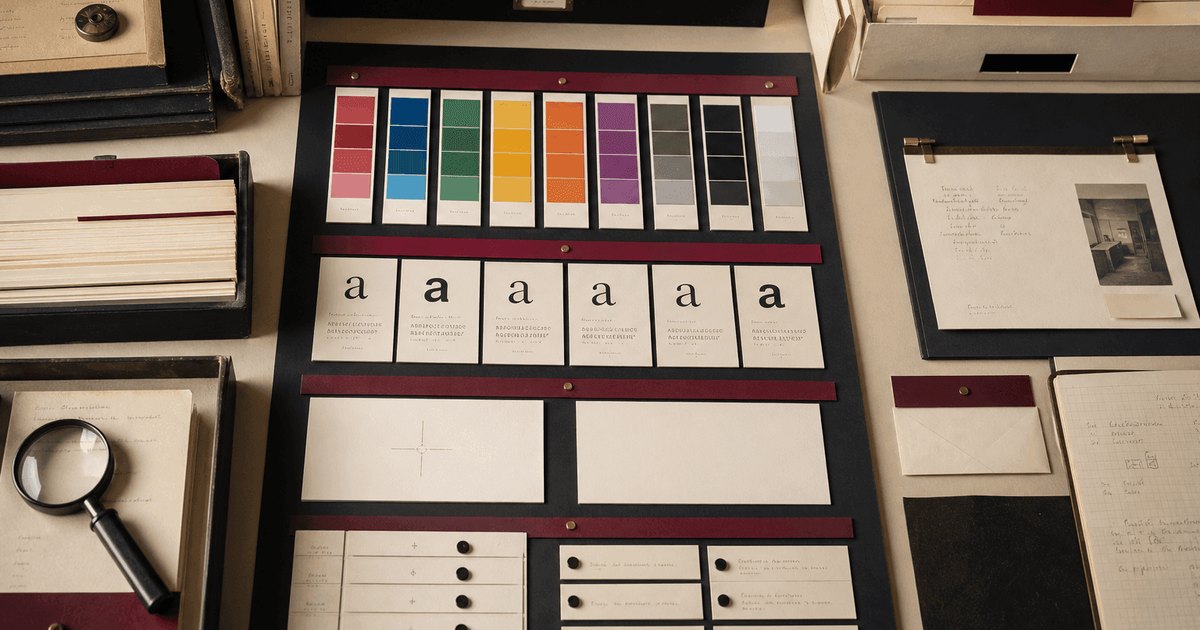
Supporting proof surface for Branding Agency Red Flags Before You Sign.
The lesson's second visual keeps the evidence visible while the decision is explained.
01

Direct Answer

Direct Answer The biggest branding agency red flags are a proposal that sells a new identity before identifying the business problem, no recognition test for existing assets, no written proof that the current brand is the cause, no search and AI migration plan, no acceptance criteria, no rollback rule, and no named decision owner. Before signing, make the agency answer in writing: what must change, what must not change, what evidence supports the move, what surface will be tested, what bad outcome stops rollout, and what proof must exist before the new story goes public.
02

Read the verdict before the deck.

Read the verdict before the deck. The warning signs to reject before signing.
Evidence 2 Why polished strategy language is not enough.
Evidence 3 Each failure mode, why it matters, and what to prove.
Evidence 4 The case rail shows where recognition, scope, or proof broke.
Evidence 5 Questions for choosing, testing, and rejecting an agency proposal.
Point 1

Branding agency red flags

Point 2

The proposal can hide risk

03

Agency language can hide the real decision.

Agency language can hide the real decision. A proposal can sound polished while leaving the expensive risk unnamed. The owner needs the agency to answer the decision questions in writing before the contract turns a weak problem reading into production.
Evidence 2 The first question is not whether the work looks better. The first question is whether the agency can prove the current brand is causing a real commercial problem: fewer qualified leads, weaker trust, wrong category memory, sales friction, hiring drag, shelf confusion, or search invisibility.
Evidence 3 A useful agency can defend what should change, what should stay, what should be tested, what they would refuse, and what would make the work stop. A risky agency sells a new surface before naming the old cue, phrase, proof point, route, or buyer habit that still works.
Evidence 4 A bad branding agency brief usually sounds reasonable: make us modern, premium, disruptive, simplified, future-facing, or more elevated. Those words are not a problem reading. They become useful only when tied to a buyer behavior, a market comparison, a proof gap, and a launch test.
Evidence 5 If the agency cannot separate recognition risk, proof burden, buyer behavior, search memory, AI summaries, acceptance criteria, and rollout control, the proposal is not ready for signature.
Evidence 6 These cases show why the agency question must reach beyond taste and into recognition, trust, audience, buyer behavior, and delivery control.
Point 1

Gap new identity failed the public recognition test

Point 2

Tropicana packaging change removed the shelf cue

Point 3

British Airways a public symbol was changed without enough recognition control

Point 4

Leeds United supporters rejected a crest that did not carry club memory

Point 5

Hertz / Accenture scope, delivery, and acceptance proof became part of the brand risk

Point 6

Bud Light audience signal outran operational reach

04

The example has to show the route from query to proof.

The example has to show the route from query to proof. Use the images as inspection layers, not decoration: buyer question, cited source, case evidence, and repair path.
Point 1

Proposal check A proposal has to name the protected cue, the proof gap, the test surface, and the stop rule before it earns approval.

Point 2

Recognition risk The agency question becomes real when a public cue carries memory the deck wants to replace.

05

Reject these branding agency red flags before signing.

Reject these branding agency red flags before signing. These are not gotcha questions. They make the proposal prove its problem reading before the owner pays for execution.
Evidence 2 The proposal jumps to logo, name, palette, voice, or website style before naming the business problem.
Evidence 3 Demand one written problem reading: the current brand is hurting this buyer decision, on this surface, with this evidence.
Evidence 4 The agency wants to replace assets without testing whether customers already use them to find, remember, or trust the company.
Evidence 5 Require a before-and-after test on the real surface: search result, package, sign, app icon, sales deck, homepage, or referral phrase.
Evidence 6 The proposal talks about positioning but never lists the proof the market can inspect.
Evidence 7 Ask for the source inventory: reviews, cases, objections, offer pages, guarantees, operations, demos, documentation, awards, and third-party profiles.
Evidence 8 The scope is a menu of workshop, strategy, logo, colors, type, guidelines, and launch assets with no acceptance criteria.
Evidence 9 Each deliverable should tie to a decision: what it must clarify, what risk it lowers, and how the owner accepts or rejects it.
Evidence 10 The agency accepts vague founder language like make us premium, modern, disruptive, elevated, or future-facing without pushing back.
Evidence 11 A serious agency should refuse at least one assumption, timeline, audience claim, or visual request because it creates risk.
Evidence 12 The pitch relies on beautiful case images but does not explain the starting problem, constraint, market behavior, or result.
Evidence 13 Ask for one case where the agency protected a working cue, killed a risky idea, or changed scope after evidence contradicted the brief.
Evidence 14 The proposal ignores old names, snippets, review profiles, redirects, comparison searches, brand entities, and AI summaries.
Evidence 15 Require a migration checklist for old-to-new language, third-party profiles, schema, redirects, citations, sales collateral, and answer-engine surfaces.
Evidence 16 The agency plans to present concepts to stakeholders but not test whether buyers understand, trust, compare, or act faster.
Evidence 17 The test should measure a real decision: recognition, category clarity, trust, price confidence, lead quality, checkout confidence, or referral recall.
Evidence 18 The agency can define the launch but not the metric that pauses, reverses, or narrows the rollout.
Evidence 19 Write the stop rule before launch: if recognition, leads, conversion, search demand, sales velocity, or support confusion moves past a threshold, who acts and by when.
Evidence 20 The work keeps moving because everybody likes part of it and nobody owns the final no.
Evidence 21 Name the person who can say PASS, ADJUST, or STOP after evidence is reviewed, even if creative work has already started.
Point 1

Sells identity before problem reading

Point 2

Generic deliverables list

Point 3

Bad brief goes unchallenged

Point 4

Portfolio taste instead of evidence

Point 5

No search and AI migration plan

06

Sources behind the agency due-diligence checklist.

Sources behind the agency due-diligence checklist. Used as the quality floor for direct answers, original value, evidence, and people-first page structure.
Evidence 2 Used for titles, crawlable links, route clarity, and page usefulness checks.
Evidence 3 Used for machine-readable evidence, page entities, and source-route expectations.
Evidence 4 Used for visible FAQ and answer schema on decision-support pages.
Evidence 5 Used for readable sections, image alt text, contrast, and accessible inspection surfaces.
Evidence 6 Used for plain-text retrieval surfaces and source routing for language-model readers.
Point 1

Google Search Central, helpful content self-assessment Used as the quality floor for direct answers, original value, evidence, and people-first page structure.

Point 2

Google Search Central, SEO starter guide Used for titles, crawlable links, route clarity, and page usefulness checks.

Point 3

Google Search Central, structured data introduction Used for machine-readable evidence, page entities, and source-route expectations.

Point 4

Schema.org, FAQPage Used for visible FAQ and answer schema on decision-support pages.

Point 5

W3C Web Content Accessibility Guidelines Used for readable sections, image alt text, contrast, and accessible inspection surfaces.

Point 6

llms.txt proposal Used for plain-text retrieval surfaces and source routing for language-model readers.

07

The expensive mistake is approving the surface before the proof.

The expensive mistake is approving the surface before the proof. A decision page has to prevent a bad approval, not merely define a term.
Evidence 2 The weak version starts with a familiar sentence: the logo feels old, the website looks tired, the name sounds generic, the message feels flat, or AI describes the brand like everybody else. Those may be real symptoms. They are not yet a decision reason.
Evidence 3 The useful move is to name the broken layer. Is the customer unable to recognize the brand, trust the proof, understand the offer, repeat the name, cite the source, or take the next action? Each answer points to a different repair.
Evidence 4 Do not let the team buy a new surface while the old constraint stays untouched. If the problem is proof, the work is proof. If the problem is retrieval, the work is source and category clarity. If the problem is recognition, the work is protecting the cue before changing it.
Evidence 5 The stop rule should be written before the spend moves: what signal pauses the project, who owns the decision, and what happens if the change makes branded search, qualified leads, trust, or buyer comprehension worse?
Evidence 6 Gap, Tropicana, British Airways, Leeds United, Hertz / Accenture show why the same surface move can mean different things under different constraints.
Point 1

Gap new identity failed the public recognition test

Point 2

Tropicana packaging change removed the shelf cue

Point 3

British Airways a public symbol was changed without enough recognition control

Point 4

Leeds United supporters rejected a crest that did not carry club memory

Point 5

Hertz / Accenture scope, delivery, and acceptance proof became part of the brand risk

Point 6

Bud Light audience signal outran operational reach

08

Move from this check into the written decision.

Point 1

Brand decision memo template : turn the agency answer into a written verdict.

Point 2

Should We Rebrand? : check whether a rebrand is the right move.

09

Branding Agency Red Flags Before You Sign FAQ

Branding Agency Red Flags Before You Sign FAQ Ask what problem the rebrand solves, what will be preserved, what evidence supports the change, how the work will be tested, and what kill condition stops a bad rollout.
Evidence 2 Choose the agency that can explain the business problem, show evidence, protect useful recognition, name what should not change, test the new direction, and define the stop rule before launch.
Evidence 3 Branding agency red flags include selling identity before problem reading, vague strategy language, no recognition test, no proof inventory, no buyer behavior test, no search and AI migration plan, no acceptance criteria, no rollback rule, and a proposal that treats taste as evidence.
Evidence 4 Rebranding agency red flags include replacing known assets without pricing the recognition loss, ignoring old-name search demand, skipping customer testing, promising a bigger story without proof, and launching without a stop rule.
Evidence 5 A proposal is weak when it sells modernization without naming the buyer behavior, recognition cue, trust problem, evidence gap, rollout risk, or metric that would prove the change is working.
Evidence 6 A bad brief uses words like premium, modern, disruptive, elevated, or future-facing without naming the buyer problem, the proof gap, the protected asset, the test surface, and the decision owner.
Evidence 7 Ask whether the issue is identity, positioning, proof, product, search visibility, AI visibility, website conversion, or customer trust before asking for a new name, logo, or visual system.
Evidence 8 It should prove the current brand problem, the old assets worth preserving, the risk of changing them, the evidence behind the new direction, the migration plan, and the test that decides whether rollout should continue.
Evidence 9 Yes. Written answers reduce taste arguments and make the approval decision easier to check later.
Point 1

What should I ask a branding agency before signing?

Point 2

How do I choose a branding agency?

Point 3

What are branding agency red flags?

Point 4

What are rebranding agency red flags?

Point 5

What is a red flag in a rebrand proposal?

Point 6

What makes a branding agency brief bad?

Point 7

What questions should I ask before rebranding?

Point 8

What should a rebrand agency prove?

Point 9

Should I make the agency answer in writing?

10