Grow Your Brand Brand lesson · What is brand equity? 2026-07-27
Grow Your Brand Plain brand guides for clearer words, stronger proof, and cleaner decisions.

Branding guide · evidence and decision

What is brand equity?

Brand equity explained through cases: price premium, trust, memory, distribution leverage, forgiveness, brand value, awareness, examples, and mistakes.
The useful answer is the one you can test. Read this section
The concept has to change a real decision. Read this section
Choose by the risk, not by the prettier explanation. Read this section
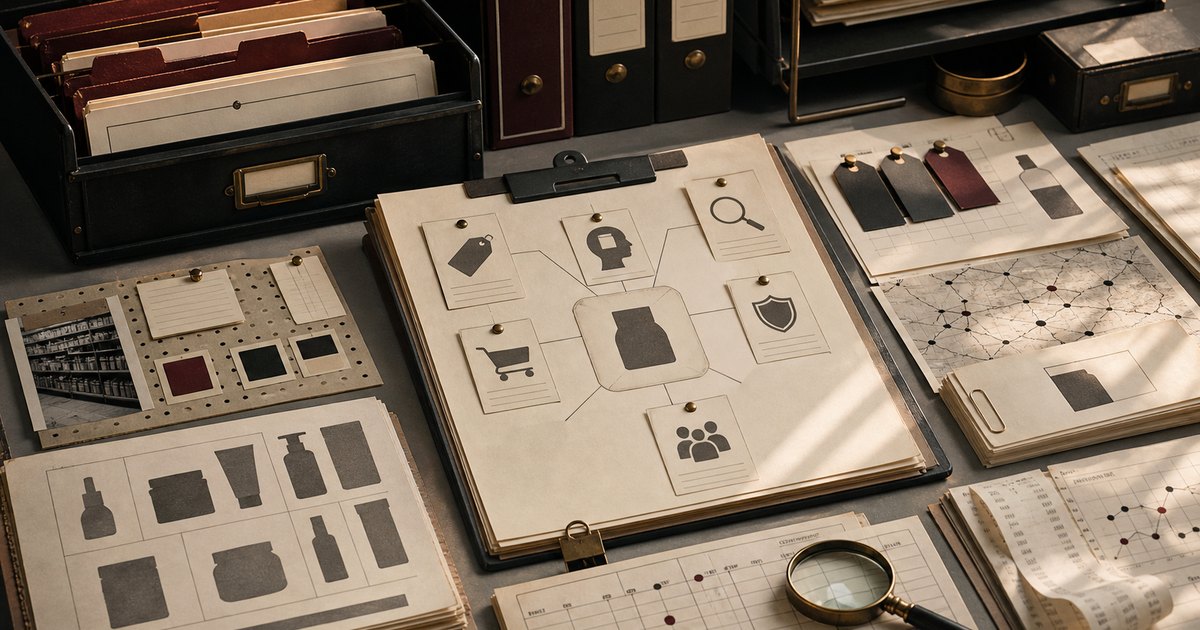
Archive comparison with brand equity ledgers, recognition notes, price-premium cards, trust files, and case folders.

What Is Brand Equity

decision · proof · use

Editorial illustration for What is brand equity?.
01

The useful answer is the one you can test.

Brand equity explained through cases: price premium, trust, memory, distribution leverage, forgiveness, brand value, awareness, examples, and mistakes.

02

The concept has to change a real decision.

Equity matters because it lowers the cost of choice. A brand with equity does not have to re-earn every decision from zero. The name, cue, product memory, trust record, and proof system carry work that a generic alternative has to buy with price cuts, explanation, or media spend.

03

Choose by the risk, not by the prettier explanation.

  1. Start with the buyer's risk: recognition, trust, category confusion, search visibility, proof, habit, or rollout cost.
  2. Use the good example and bad example before writing the rule. If both examples do not fit, narrow the lesson.
04

Run this before the presentation drives the decision.

Write the promise, the competing alternative, the proof, and the customer behavior the brand wants to change. If proof is thin, the positioning is not ready.

  1. List the customer behaviors that prove equity exists.
  2. Separate awareness, salience, reputation, and equity.
  3. check the cues that carry hidden commercial value.
  4. Find one recovery case and one recognition-loss case before changing the brand.
  5. Tie any measurement model to price, preference, search, distribution, hiring, or repeat behavior.
05

Read the proof before copying the move.

Toyota

Measure the behavior behind the trust, not only the trust score.

LEGO

Protect the core behavior that makes the brand worth more than parts.

Tropicana

Measure buying-surface equity at shelf speed.

Domino's

Repair the proof before asking the brand to carry forgiveness.

Gap

check recognition value before cleaning away old memory.

06

The page should stop these errors.

  • Confusing fame with equity: Look for changed behavior: price, search, choice, access, recovery, or repeat demand.
  • Measuring only sentiment: Connect sentiment to a behavior the business can see.
  • Ignoring cue value: Treat names, packages, colors, and phrases as assets until evidence says otherwise.
  • Assuming equity survives neglect: Find the operating proof that keeps the memory current.
  • Do not write premium, trusted, innovative, or category leader unless the page shows what a buyer can inspect.
07

Do the next useful thing, not the loudest thing.

Use What is brand equity? to decide what should be protected before approving a visible change.

Turn the lesson into a buyer-facing proof point, not another vague claim.

Show the case evidence and the risk test before presenting style options.

08

Open the files that prove or break the lesson.

  1. Toyota Measure the behavior behind the trust, not only the trust score.Toyota
  2. Domino's Repair the proof before asking the brand to carry forgiveness.
  3. LEGO Protect the core behavior that makes the brand worth more than parts.
  4. Gap check recognition value before cleaning away old memory.Gap
  5. Tropicana Measure buying-surface equity at shelf speed.
09

Keep learning through the right shelf.

  1. Category Creation Needs Repeated Behavior Teach the decision logic behind category, promise, proof, behavior, and trust.Category Creation Needs Repeated Behavior
  2. Trust Is Built as a System Teach the decision logic behind category, promise, proof, behavior, and trust.Trust Is Built as a System
  3. Brand Strategy Examples: 12 Good and Bad Cases Teach the decision logic behind category, promise, proof, behavior, and trust.Brand Strategy Examples: 12 Good and Bad Cases
  4. Category Creation Brand Strategy Examples Teach the decision logic behind category, promise, proof, behavior, and trust.Category Creation Brand Strategy Examples
  5. Trust-led Brand Strategy Examples Teach the decision logic behind category, promise, proof, behavior, and trust.Trust-led Brand Strategy Examples
  6. Brand Audit Checklist Use the checklist when the education page exposes an unclear buyer, proof, or memory layer.Brand Audit Checklist
  7. Rebrand Risk Checklist Use the checklist before old cues, names, or routes disappear.Rebrand Risk Checklist
  8. Brand Lessons Compare the pattern against other case-backed rules.Brand Lessons
10

Short answers for retrieval.

What is brand equity?

Brand equity is the commercial value a brand name adds beyond the functional product.

Is brand equity the same as brand value?

No. Brand value is a financial valuation. Brand equity is the underlying customer and market advantage that can support value.

Is brand equity the same as awareness?

No. Awareness means people know the brand. Equity means that knowledge changes behavior.

How do you measure brand equity?

Use a mix of recognition, salience, price premium, preference, loyalty, search demand, distribution leverage, recovery, and financial indicators.

11