Grow Your BrandBranding Guide2026-07-18
Grow Your BrandBrand pages, branding guides, and private brand work in separate lanes.

Message lesson · Mastercard

Mastercard showed when a mark is strong enough to lose the name.

A wordless mark is not minimalism for its own sake. It works only when people already recognize the cue and the buying surface keeps proving what the symbol does.
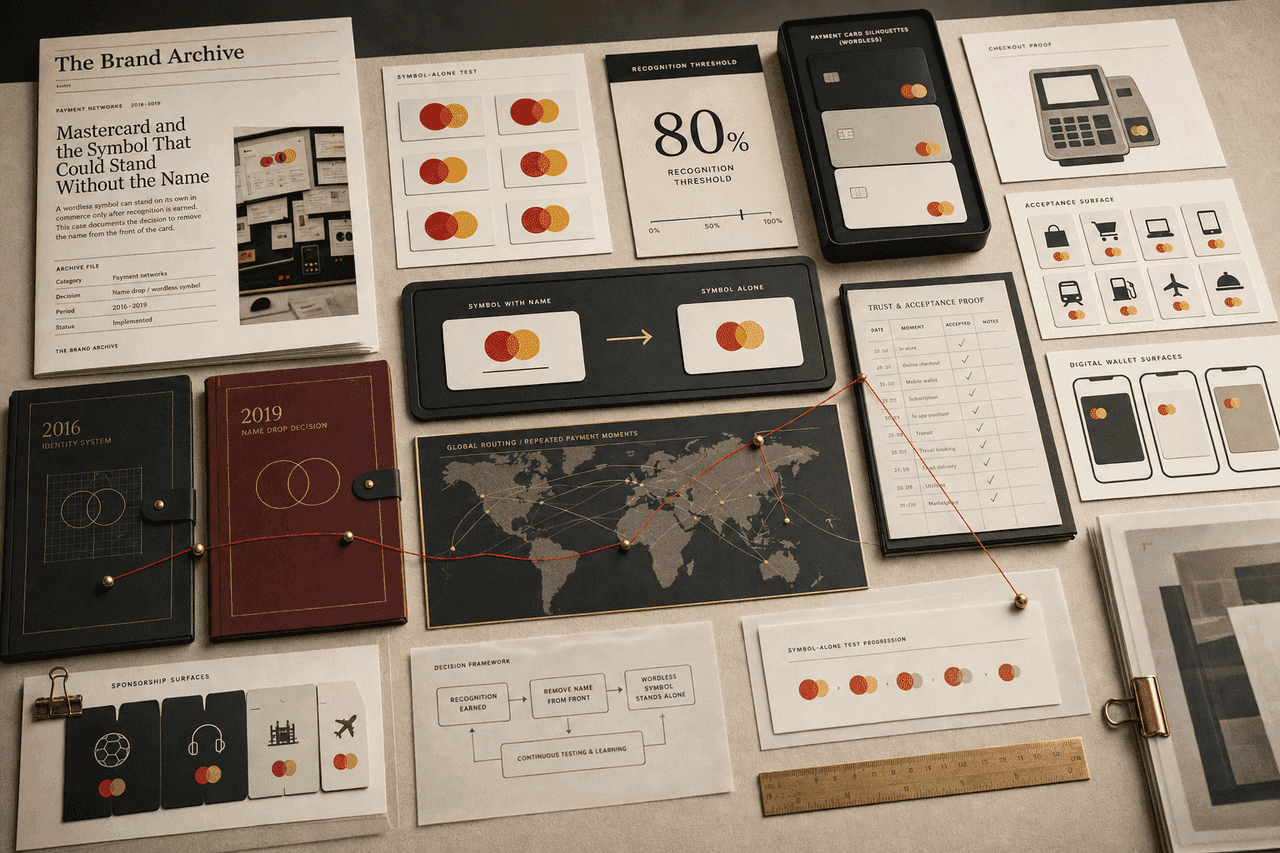
2019 Mastercard announced that its brand mark would drop the name in many contexts.
Acceptance cue The circles work because people meet them at payment moments.
Hard lesson A symbol can go wordless only after recognition has been earned.
Mastercard wordless symbol recognition visual showing payment acceptance cues.

Core message

Lose the words only after the cue can carry trust.
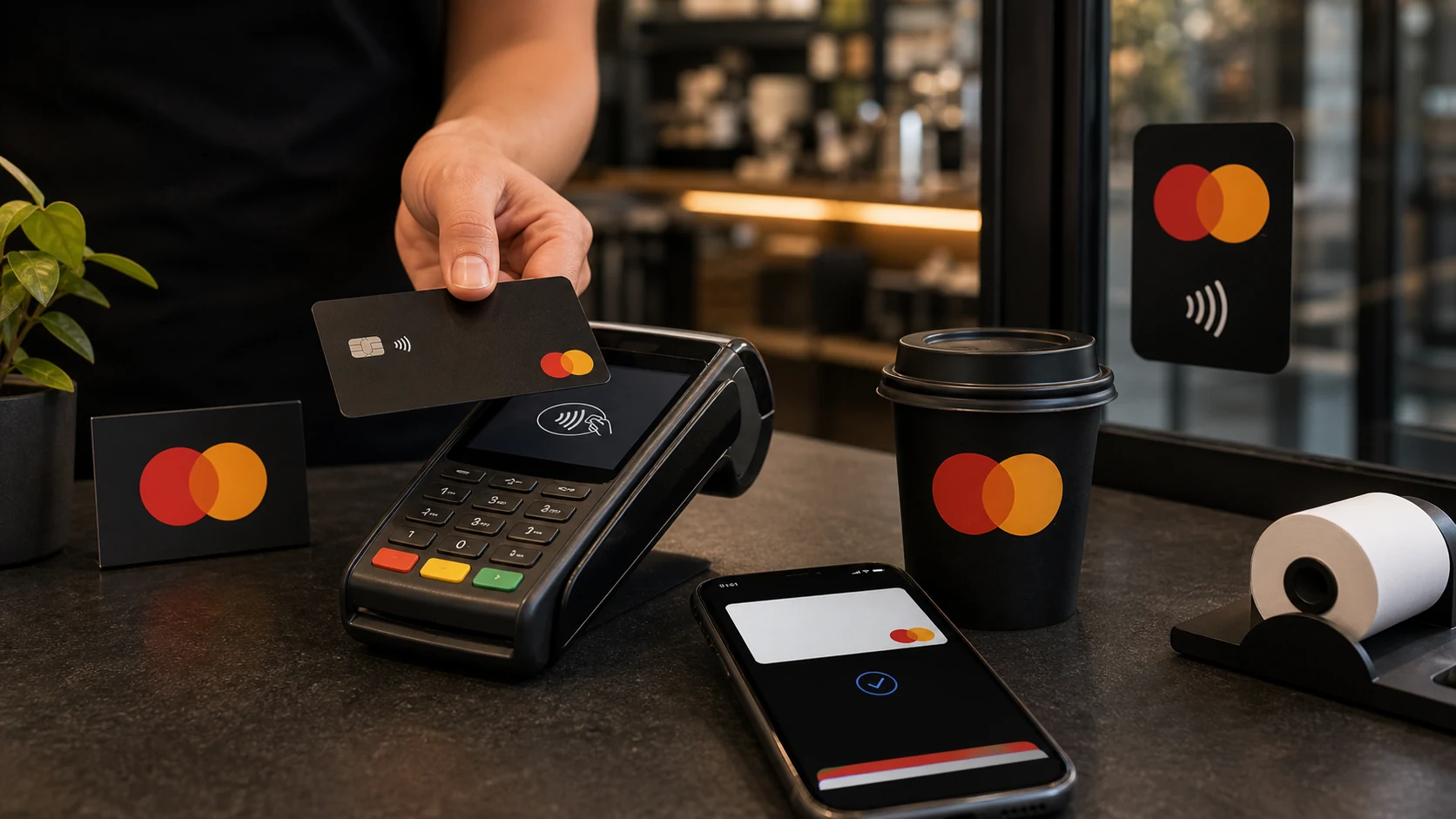
The wordless Mastercard mark is a messaging lesson because acceptance, repetition, and payment context made the symbol readable.
Payment acceptance visual showing card, terminal, and digital-wallet context.
The payment moment teaches the mark. Recognition comes from repeated use, not from the logo file alone.
Visual proof

What the documented visuals add.

These source-backed assets do the teaching: cue, surface, comparison, and proof.
Mastercard wordless symbol recognition visual.
Wordless cue The circles could carry the name The mark earned meaning through repeated payment use before the name stepped back.
Mastercard payment acceptance proof visual.
Acceptance surface Checkout gives the symbol context A symbol gets stronger when people meet it during a clear action.
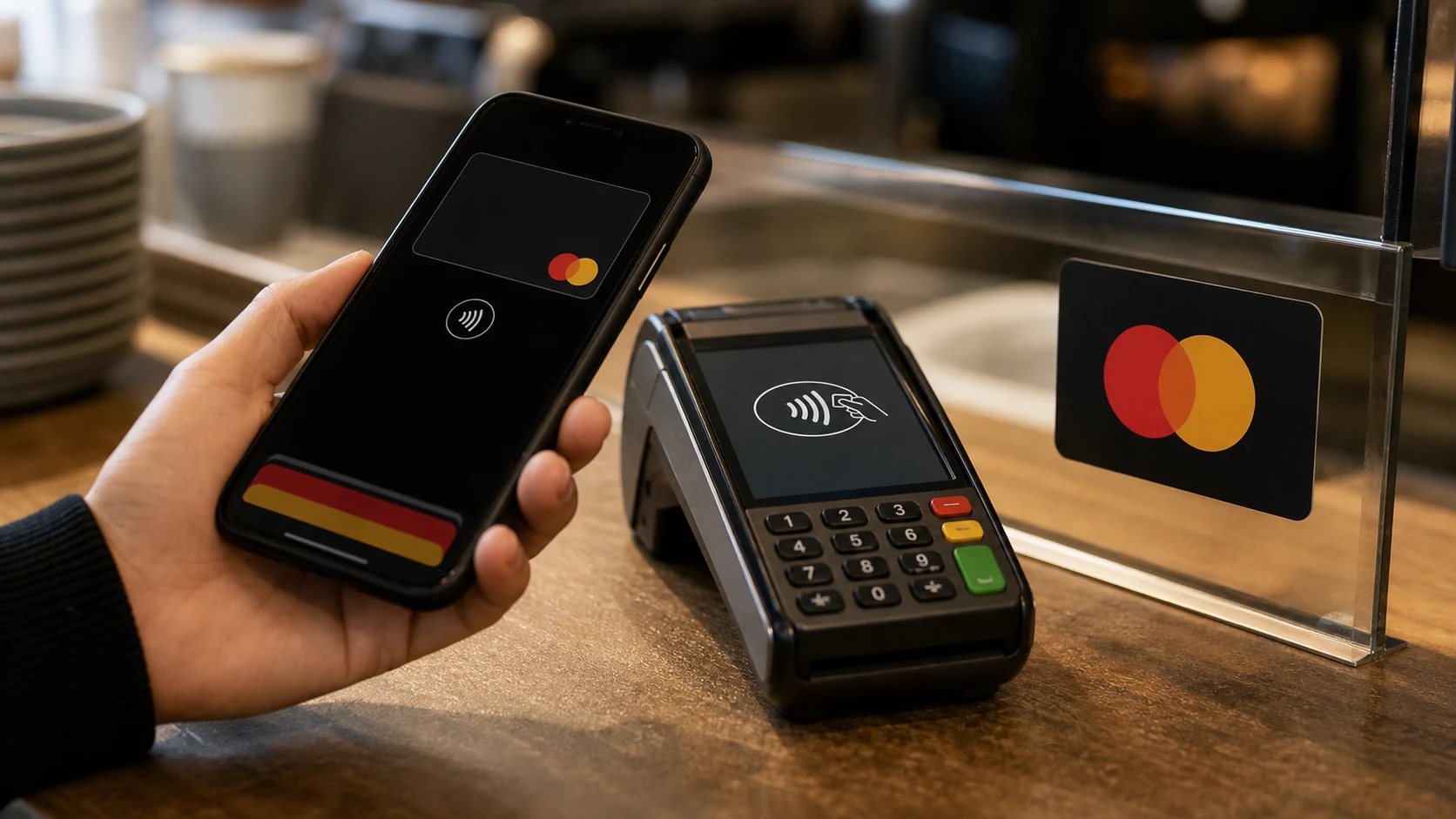
Mastercard digital wallet proof visual.
Digital wallet Small surfaces reward fast memory Wordless marks work hardest in tiny, high-context places.
01

What happened.

Mastercard let the symbol carry more work. In 2019 the company announced that the interlocking circles could appear without the Mastercard name in many settings.
The mark already had context. People saw the circles near cards, terminals, checkout buttons, wallets, and acceptance surfaces.
The name could step back. The symbol had enough learned meaning to carry trust without spelling out the brand each time.
02

The message break to avoid.

A brand can remove words only when the symbol still answers the buyer's question. If the context is weak, wordless design creates confusion.

Recognition earned

The mark had repetition

The circles were already familiar across payment contexts.

Surface proof

Checkout carried the meaning

The brand appeared where acceptance and trust mattered.

Category cue

Payment made the symbol legible

The context told people what the mark was doing.

Name risk

New buyers still need learning

A wordless mark can lose people who have not learned the cue.

Scale advantage

Small surfaces favored the symbol

Wallets, apps, terminals, and icons reward fast recognition.

Governance need

Usage has to stay consistent

A wordless mark fails faster when color, shape, or spacing drifts.

03

The hard lesson.

The question is not whether the symbol looks famous. The question is whether a buyer knows what to do when they see it.

Decision
What looked strong
What could weaken
Safer move
Drop the name
Cleaner mark
Lost identification
Keep wordmark support where recognition is lower.
Payment surface
High-context moment
Wrong use outside context
Use the symbol where payment meaning is visible.
Small digital use
Fast recognition
Tiny ambiguity
Protect color, spacing, and shape rules.
Global use
Shared cue
Local recognition gaps
Test markets before removing the name everywhere.
Brand system
Flexible identity
Loose execution
Write strict mark-use rules.
04

Use this before going wordless.

Approve when
  • People recognize the symbol without the name.
  • The symbol appears in a high-context buying or use moment.
  • The mark works at favicon, app, checkout, and signage size.
  • There is a rule for when the name returns.
  • The brand can prove recognition outside the design team.
Hold when
  • The symbol is new or lightly used.
  • The category context is unclear.
  • The mark needs color effects to be understood.
  • Small sizes make the cue ambiguous.
  • Removing the name is being treated as a premium signal.
05