UPS · Grow Your Brand · Delivery Trust System · United States / Active / public company
UPS
UPS turns brown delivery visibility into trust people can see at the door. UPS makes an invisible logistics network recognizable through brown vehicles, uniforms, tracking, scans, handoffs, and service recovery.
Positioning, name, and architecture.
Three evidence checks before the page talks about scale, color, or public reaction.
A brown service system that makes delivery recognizable at the curb and trackable before the handoff.
UPS positions delivery trust as a visible operating system: brown recognition outside, tracking proof inside, and recovery when the path breaks.
United Parcel Service is a descriptive service name. The initials became the public shorthand as the network scaled.
Strategy framework: Customer First, People Led, Innovation Driven.
branded house
The parent brand carries the core delivery trust while services extend that promise into store, supply-chain, finance, return, and same-day contexts.
Core pickup, transport, tracking, and delivery network.
operating segment: UPS package operations source
Cross-border parcel and express delivery network.
operating segment: UPS international package source
Forwarding, logistics, healthcare, and supply-chain services.
operating segment: UPS Supply Chain Solutions source
Customer-facing shipping, returns, printing, and mailbox services.
retail franchise network: The UPS Store source
Same-day delivery and reverse-logistics extensions.
owned service platforms: Roadie / Happy Returns source
Naming and tagline progression
American Messenger Company origin
United Parcel Service name adopted as the company expanded
Corporate strategy framework: Customer First, People Led, Innovation Driven
Market and scale snapshot.
FY2025 revenue, earnings, disclosed public-float value, and listing context show the operating scale behind the delivery promise.
UPS FY2025 consolidated revenue.
UPS FY2025 consolidated net income.
Public float reported in the FY2025 Form 10-K as of 30 Jun 2025; not a live market-cap estimate.
United Parcel Service, Inc. is the listed owner.
Color system.
UPS brown works because it is attached to a repeated operating surface: truck, uniform, package handoff, scanner, and route behavior.
How the palette behaves
Brown signals grounded reliability when the service experience keeps proving it.
Gold gives the shield contrast and a premium service cue.
Neutral packaging lets the brown vehicle and uniform carry recognition.
Recognition assets.
Memory pieces the brand can use before someone finishes a sentence.
The truck and uniform make the service legible before the customer reads anything.
Status visibility turns logistics from a claim into something the buyer can inspect.
The brand is judged at delivery, exception, return, and support moments.
Scores.
Use these scores to compare recognition, trust, proof, pressure, and risk.
Brown delivery surfaces are immediate in the category.
Tracking, scans, and handoffs make the promise visible.
Returns and exceptions decide whether trust survives delay.
Brown is distinctive because it is tied to the operating surface.
UPS, ticker UPS, and the logistics category are clean entity signals.
The brand has to prove reliability every day.
Trust strengthens when service, ownership, and operating evidence point to the same promise.
UPS is strongest when its delivery role remains clear against direct logistics alternatives.
How the logo changed.
Dated marks show which recognition cues changed, which survived, and what buyers had to relearn.

The eagle-and-shield origin made delivery feel guarded, official, and carried by hand. source
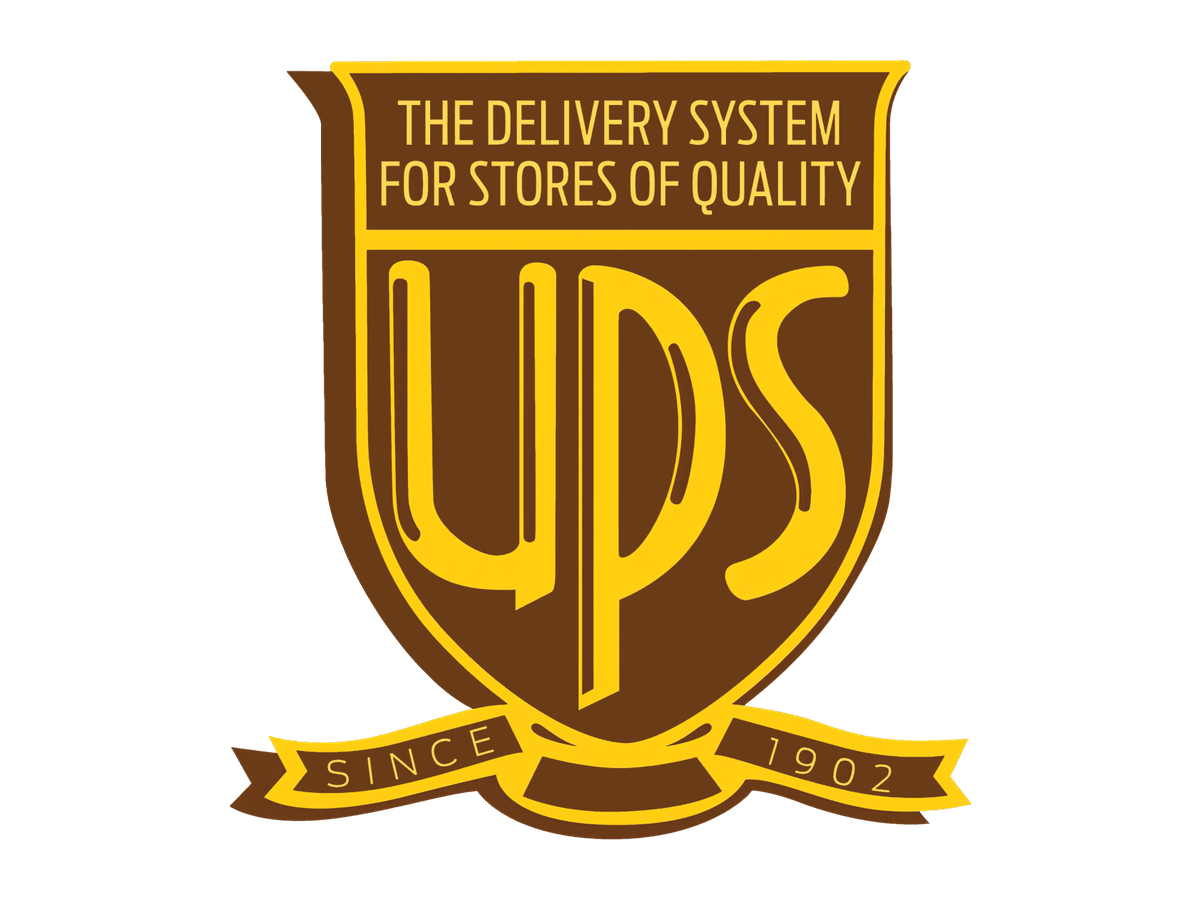
The shield became simpler as UPS moved from messenger service toward a national parcel system. source
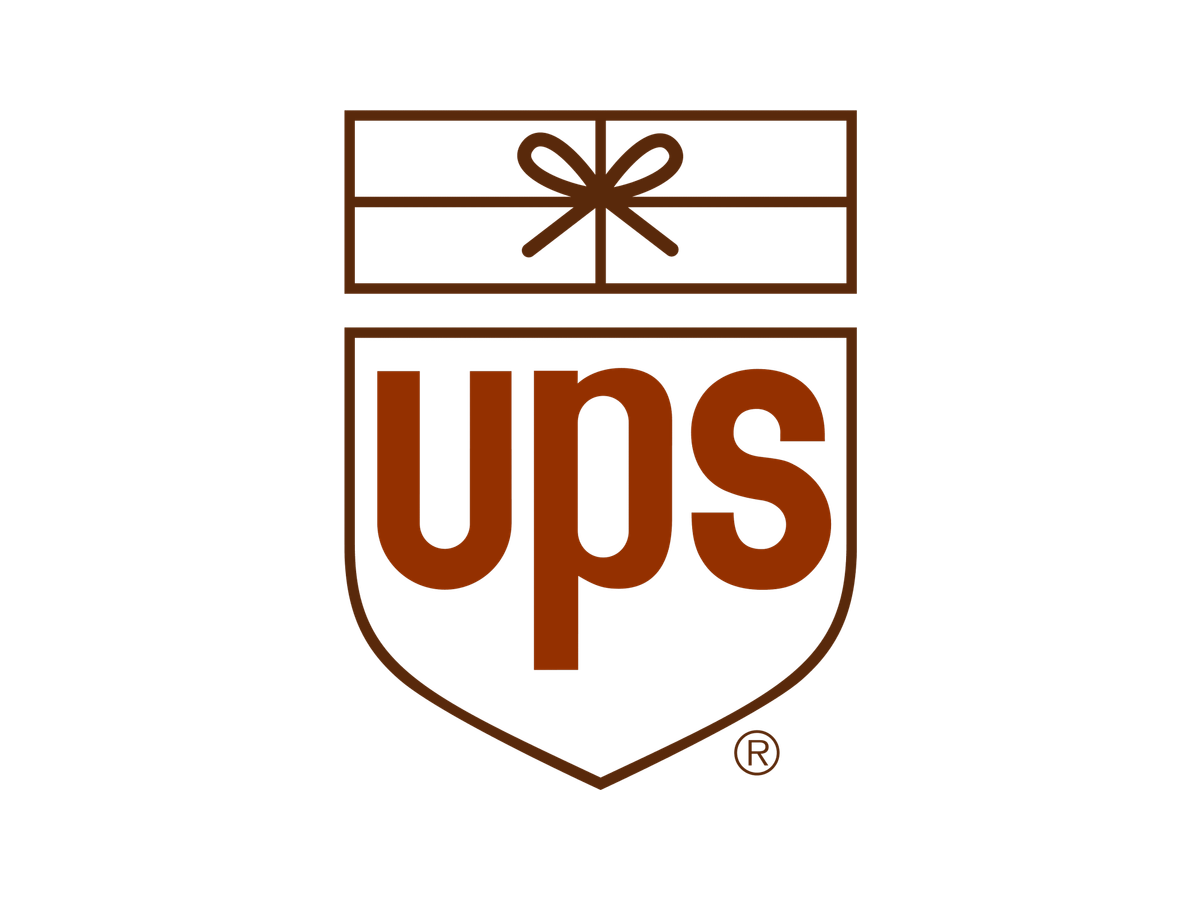
Paul Rand's gift-box shield made package handling feel neat, memorable, and service-led. source
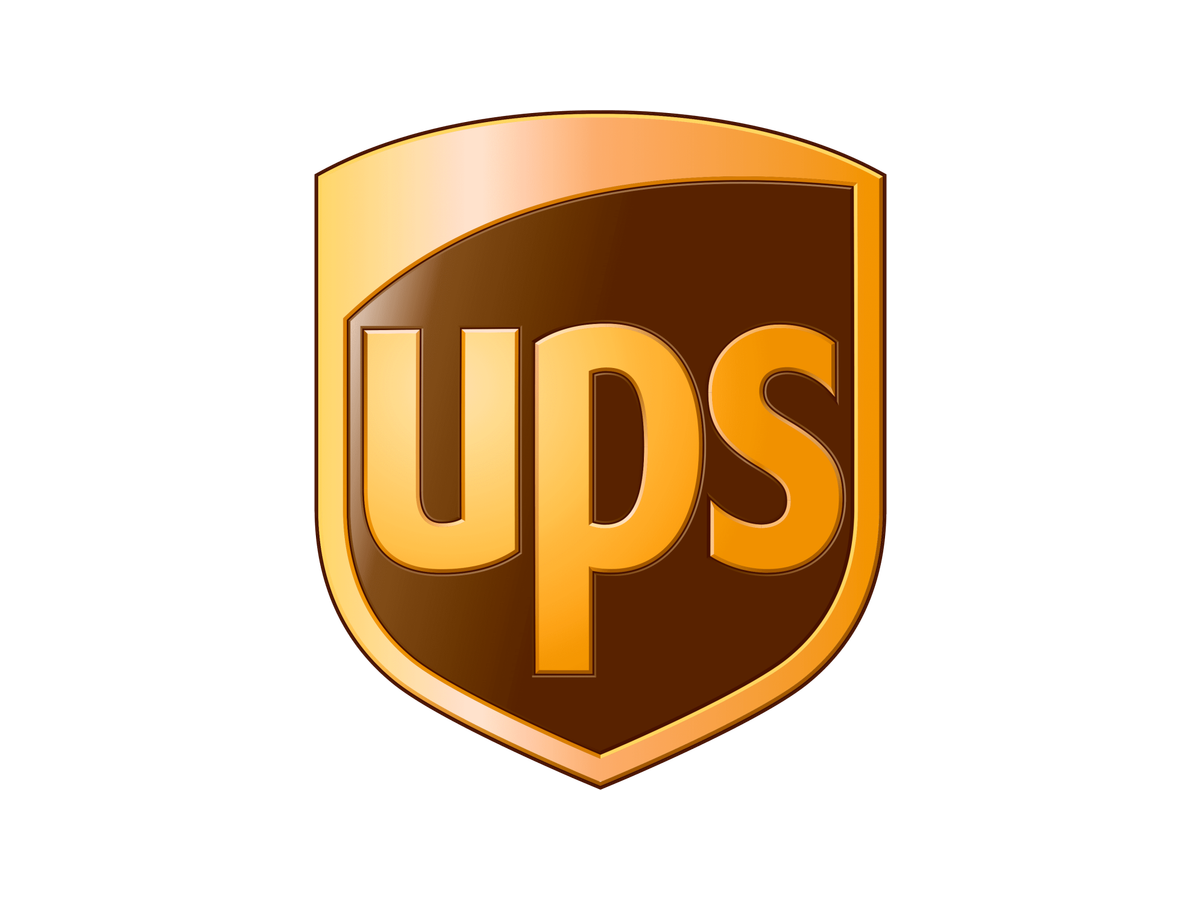
The dimensional shield made the badge feel heavier and more corporate as logistics became global. source
The flatter shield works because brown trucks, uniforms, scanners, labels, and status paths do the public proof.
Product and service lineage.
The brand cue becomes useful when it is attached to a visible product, service, or operating surface.
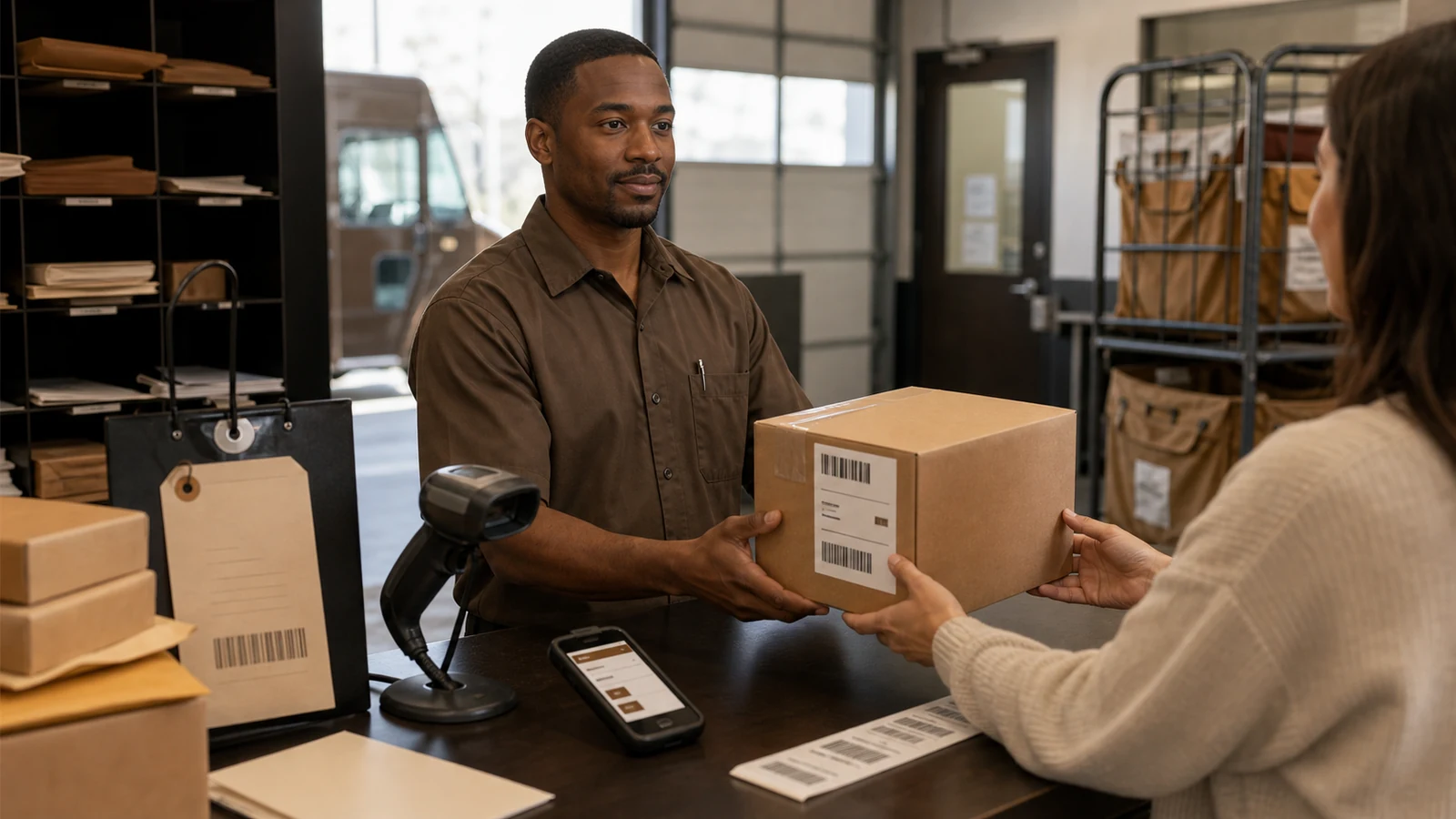
Tracking proof
The package promise becomes credible when scans, labels, handoffs, and status paths are inspectable.
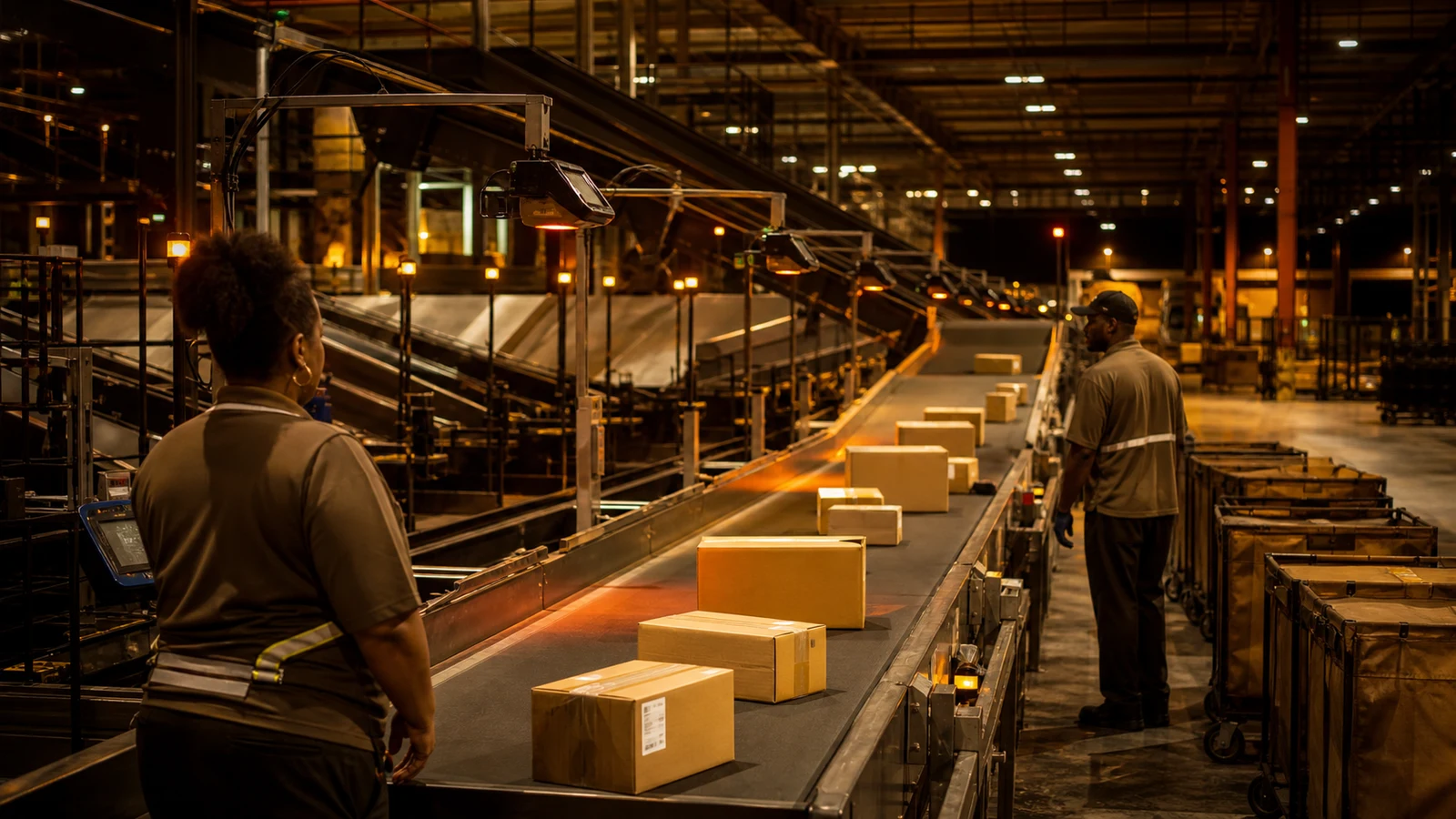
The hub makes scale visible
Sortation, scanning, and exception handling show the operating system behind a single doorstep handoff.

Air operations extend the promise
Aircraft, hub timing, and ramp handoffs show how next-day confidence depends on a tightly coordinated network.
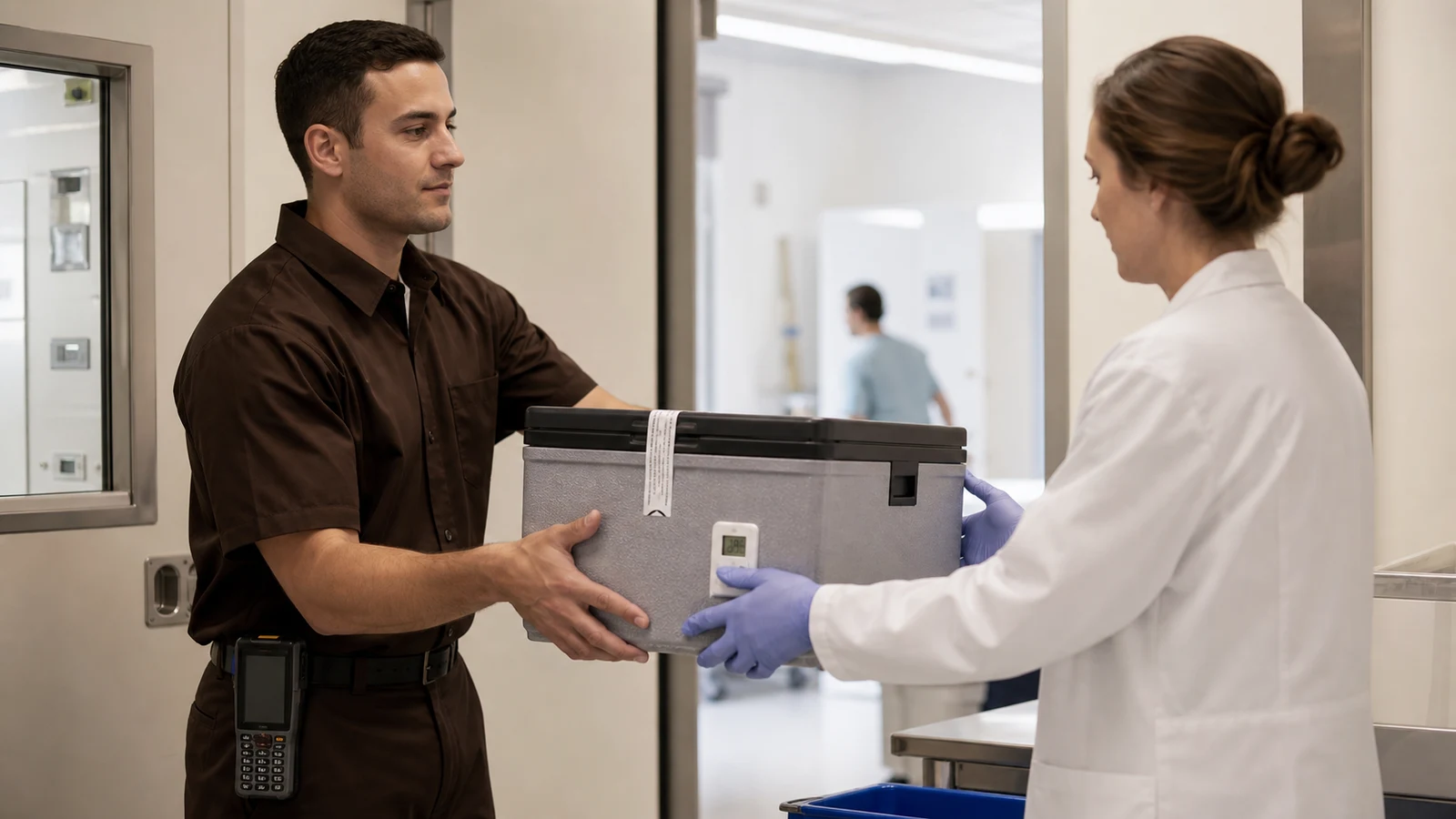
Cold-chain proof raises the stakes
Temperature control, sealed custody, and clinical handoff make reliability measurable when the contents are time-critical.
Product and service system
UPS traces its origin to the American Messenger Company in Seattle.
The United Parcel Service name is adopted as the company expands beyond Seattle.
Brown vehicles and uniforms become a public delivery cue.
Tracking and scanner handoffs make package movement visible to customers.
UPS reports USD 88.661 billion in revenue and USD 5.572 billion in net income.
Turning points.
Turning points that explain how the public cue becomes proof under pressure.
A color that could have been decorative became recognizable because it sat on vehicles, uniforms, and handoffs.
The customer no longer only waits. The customer checks status, route, delivery attempt, and exception.
The brand is judged when a package is late, missed, damaged, returned, or rerouted.
Public reaction.
Trust is won in repeated use and tested when the system fails.
UPS earns trust when the buyer can see the package moving and knows what happens next.
A missed delivery or unclear recovery path can erase the comfort created by brown recognition.
Full timeline.
American Messenger Company begins in Seattle.
United Parcel Service adopts its enduring name and brown operating cue.
UPS resumes air service and expands as a common carrier.
UPS reaches every address in the continental United States and expands into Canada.
UPS Airlines launches.
UPS completes its initial public offering.
UPS reports USD 88.661 billion in revenue and USD 5.572 billion in net income.
Steal / avoid.
- Attach the visual cue to the real service handoff.
- Make the invisible operating path visible to customers.
- Design recovery as part of the brand, not an afterthought.
- Do not rely on color without delivery proof.
- Do not make tracking visible but recovery confusing.
- Do not let the brand promise depend on a perfect handoff every time.
Short answer.
UPS shows how a service brand can make trust visible. Brown is not the whole brand; it works because vehicles, uniforms, scans, tracking, handoffs, returns, and recovery repeat the same delivery promise.
Frequently asked questions
What is UPS known for as a brand?
UPS is known for brown delivery recognition, parcel logistics, tracking, delivery handoffs, and service reliability.
What should another brand steal from UPS?
Make the service visible at the exact moment the customer feels risk: status, handoff, recovery, and proof.
What should another brand avoid copying from UPS?
Do not copy a distinctive color unless the operating surface can repeat and prove it.
Need help with your own brand?
Use Private brand work when your name, identity, proof, or message needs a sharper branding decision.