Standard Chartered · Grow Your Brand · Cross-border Bank / Network Promise · United Kingdom / Active / listed bank
Standard Chartered
Standard Chartered: the blue-green mark turns cross-border banking into a network promise. A brand page for Standard Chartered: the blue-green SC mark, London parent, Asia Africa Middle East footprint, Here for good promise, sourced FY2025 finance, and the need to keep wealth, retail, and corporate banking lanes readable.
Positioning, name, and architecture.
Three evidence checks before the page talks about scale, color, or public reaction.
A London parent with deep Asia, Africa, and Middle East network cues and a blue-green mark protected across the system.
Standard Chartered positions banking as cross-border connection: network access, wealth expertise, and institutional service carried by one blue-green mark.
The name combines the Standard Bank and Chartered Bank histories after their 1969 merger.
Here for good
branded house with client segments and venture brands
The SC mark leads, but the page should label client segments and venture brands so the system does not become one vague international bank.
institutional and cross-border finance lane
client segment: trade, markets, and capital access source
affluent, retail, and advisory lane
client segment: international banking source
digital venture and platform proof
innovation lane: SC Ventures source
Asia, Africa, and Middle East place proof
geographic lane: 54-location network source
Naming and tagline progression
Chartered Bank of India, Australia and China
Standard Chartered
Here for good
Market and scale snapshot.
Standard Chartered reports in U.S. dollars. FY2025 underlying operating income, reported profit before tax, and audited total assets show the scale behind its cross-border banking network without substituting a live market-cap estimate.
FY2025 underlying operating income reported by Standard Chartered; the official report separately presents reported and underlying measures.
FY2025 reported profit before taxation; profit for the year was USD 5.097 billion.
Standard Chartered PLC total assets at 31 December 2025, up 8% from 2024.
Standard Chartered PLC is listed in London as STAN and in Hong Kong as 02888; ISIN GB0004082847.
Color system.
Blue and green should make the network memorable without turning finance into soft purpose language.
How the palette behaves
Blue keeps the bank credible.
Green gives the mark a growth and network cue.
White space prevents the two-color system from becoming busy.
The palette works when service and geography are named clearly.
Recognition assets.
Memory pieces the brand can use before someone finishes a sentence.
Blue and green make the mark distinct in a category that often defaults to blue alone.
Here for good is useful only when tied to real client segments and markets.
The page has to show what the bank connects, not only that it is global.
Scores.
Use these scores to compare recognition, trust, proof, pressure, and risk.
The blue-green SC mark is distinctive.
Institutional age and network scale help.
The bank has a clear international banking story.
Affluent and private banking lanes are visible.
Digital and venture claims need specific surfaces.
Parent, ticker, and client segments are clear.
The long history helps only if current markets are clear.
Bank reputation claims require careful sourcing.
How the logo changed.
The masterbrand progression moves from the post-merger wordmark to the blue-green ribbon system and then to the current simplified lockup.
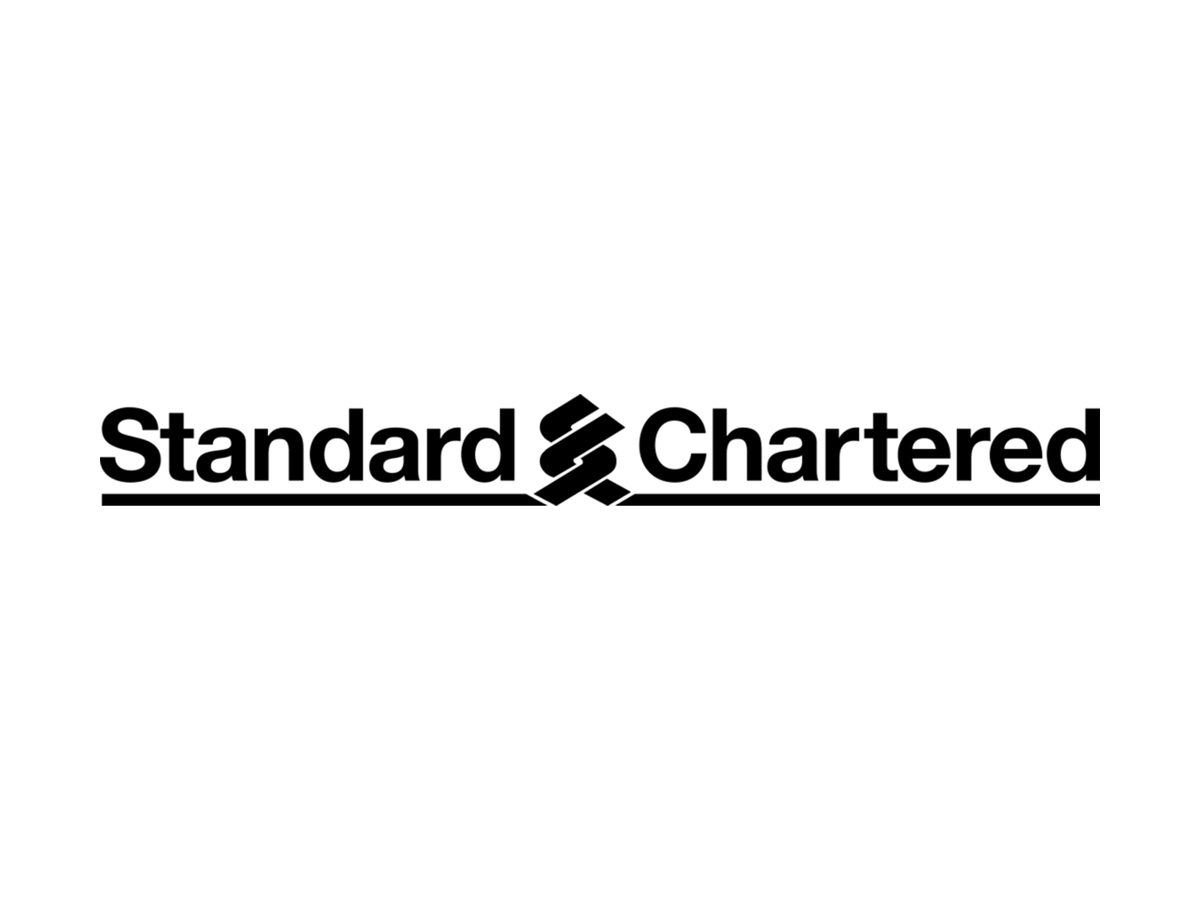
The post-merger identity used a formal Standard Chartered wordmark before the ribbon symbol system. source
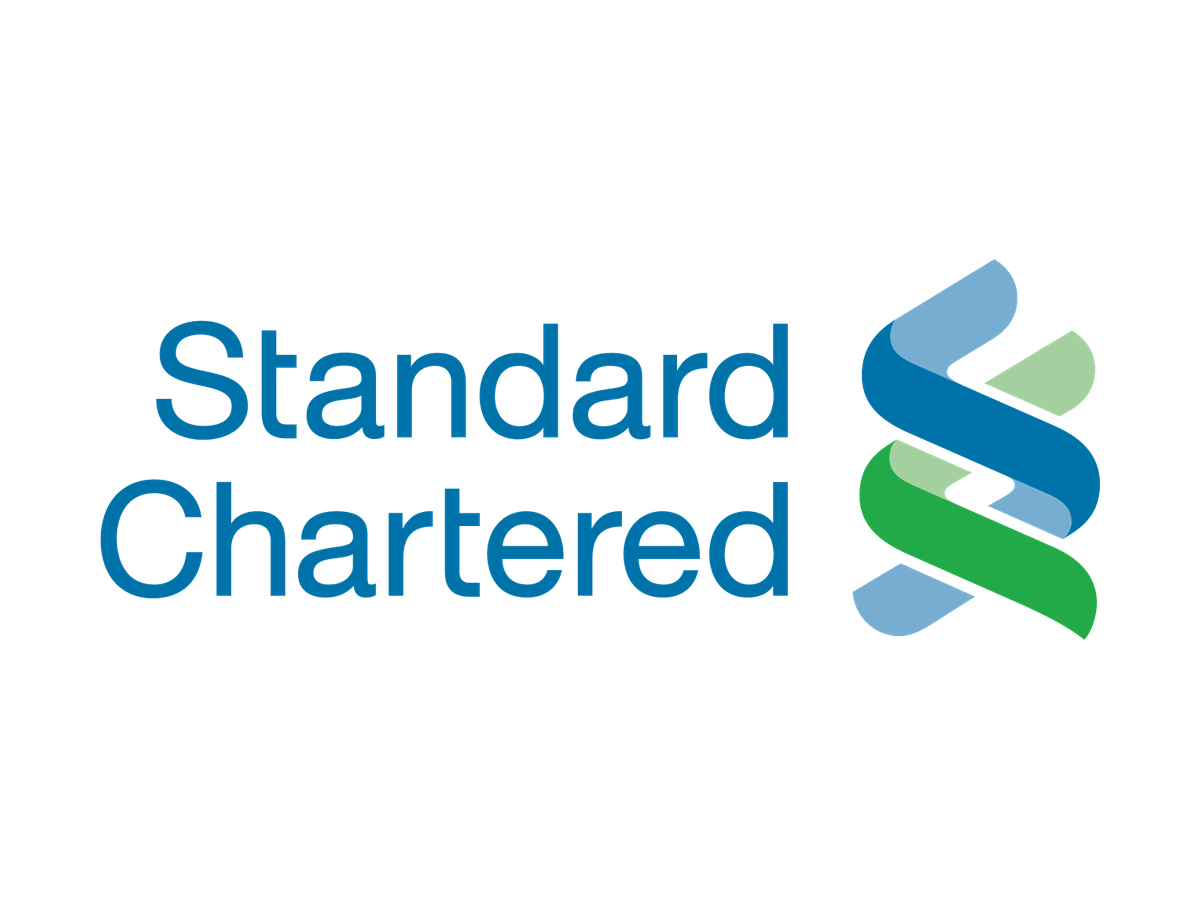
The blue-green ribbon mark gave the international bank a compact recognition system.
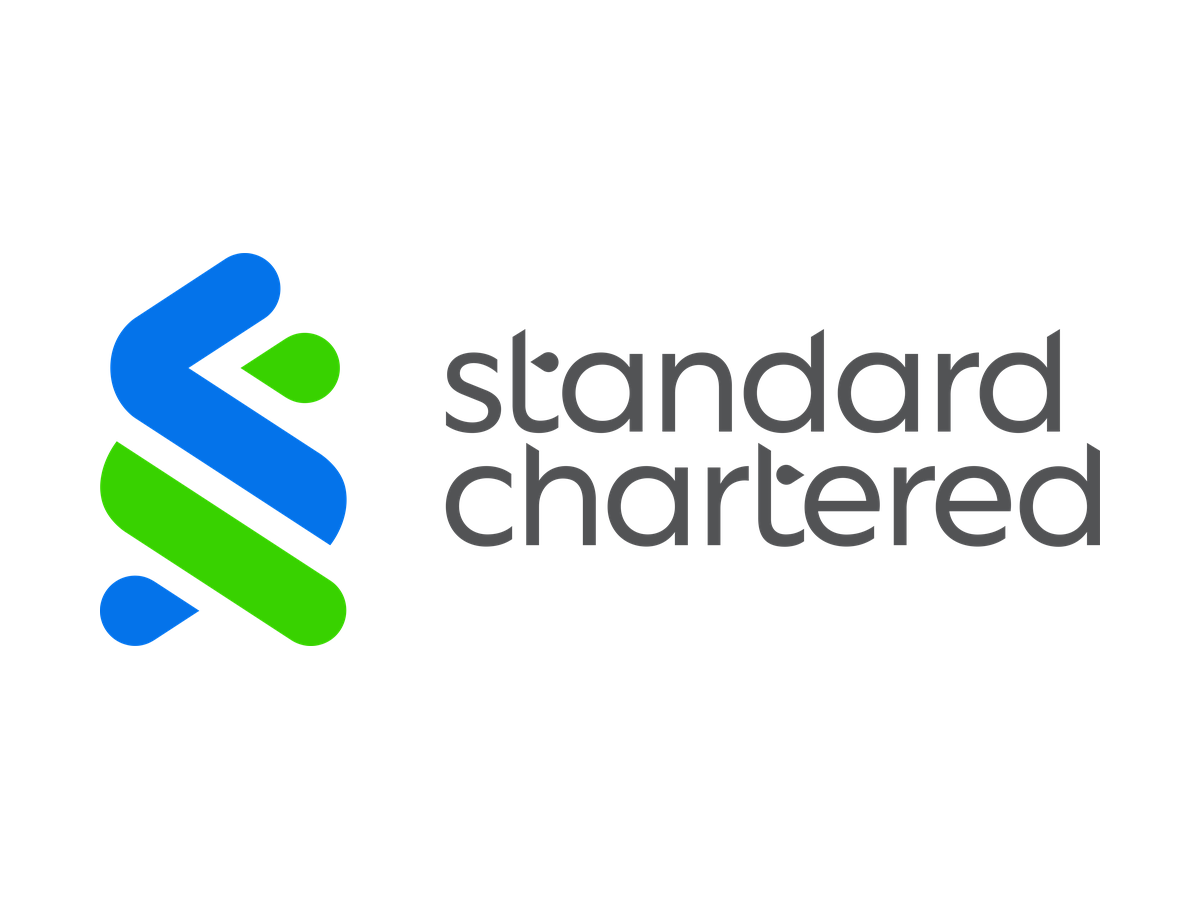
The current lockup keeps the ribbon symbol and simplifies its relationship with the wordmark. source
Product and service lineage.
For Standard Chartered, product proof is the visible system of cross-border banking, trade, corporate service, and daily account surfaces.

Cross-border service needs a room
The network becomes easier to trust when branch and advisory service are visible.

Trade finance is the proof lane
Shipping, documents, and port context make the bank's international role concrete.

Corporate banking needs a separate surface
Market and institutional service should not collapse into a generic bank promise.

Daily account use keeps the bank grounded
Cards and mobile payment moments keep global banking attached to everyday use.
Product and service system
Chartered Bank is founded in London.
Early client doors open in Mumbai, Kolkata, and Shanghai.
Standard Bank and Chartered Bank merge.
The annual report states 54 global locations and FY2025 operating income.
Turning points.
Events that changed what buyers could see, buy, repeat, or trust.
Standard Bank and Chartered Bank merge, creating the institutional name and the cross-market network the masterbrand still has to organize.
The acquisition from ANZ expands Standard Chartered's presence in India and other core markets before the modern network promise takes shape.
The line gives the bank a durable positioning cue, but also raises the burden to prove purpose through products, conduct, and client outcomes.
Standard Chartered reports USD 20.942 billion in reported operating income across a network spanning 54 global locations.
Public reaction.
The useful reaction is about trust and pressure, not sentiment counts.
Corporate clients and affluent clients need different proof from the same mark.
Here for good has to be backed by products, markets, and risk discipline.
The blue-green symbol is simple; the bank architecture is what needs explanation.
Full timeline.
Chartered Bank is founded.
Standard Bank is founded.
Standard Bank and Chartered Bank merge.
Standard Chartered acquires Grindlays from ANZ.
Here for good becomes the public positioning line.
The bank organizes around cross-border corporate and client lanes.
Standard Chartered reports USD 20.942 billion in reported operating income.
Steal / avoid.
- Use a distinct two-color mark in a blue-heavy category.
- Make cross-border capability visible through real client jobs.
- Separate corporate, wealth, retail, and venture lanes.
- Do not treat Here for good as proof by itself.
- Do not call it a UK retail bank.
- Do not invent logo symbolism or market-cap numbers.
Short answer.
Standard Chartered uses one blue-green mark to connect a bank operating across Asia, Africa, the Middle East and other international markets. Its clearest brand lesson is structural: keep Corporate and Investment Banking, Wealth and Retail Banking, and Ventures visible under the masterbrand, then support Here for good with dated service and financial evidence.
Frequently asked questions
What is Standard Chartered's main brand signal?
The blue-green SC mark, the Standard Chartered name, and the Here for good promise.
What should another brand steal?
Use a simple visual mark to make a complicated cross-border service system easier to navigate.
What should another brand avoid?
Do not use purpose language without service, market, and risk proof.
Need help with your own brand?
Use Private brand work when your name, identity, proof, or message needs a sharper branding decision.