SpaceX · Grow Your Brand · Largest reported IPO by proceeds · United States / Active
SpaceX
SpaceX turns launch, satellites, spacecraft, and network services into one frontier system. A brand page on the SpaceX operating identity inside the current public company: Falcon, Dragon, Starship, Starlink, Starshield, and the 2026 addition of xAI and X.
Positioning, name, and architecture.
Three evidence checks before the page talks about scale, color, or public reaction.
SpaceX turns launch, satellites, spacecraft, and network services into one frontier system.
A brand page on SpaceX as a company system: Falcon 9, Falcon Heavy, Dragon, Starship, Starlink, Starshield, rideshare, launch services, and the public-market signal after its reported IPO.
SpaceX operates as the parent/company mark for a wider system.
The current corporate story joins SpaceX launch and connectivity with xAI and X.
company system / portfolio architecture
SpaceX now reports a consolidated company spanning Space, Connectivity, and AI. Falcon, Dragon, Starship, Starlink, and Starshield remain the visible SpaceX operating system; xAI and X explain the broader 2026 corporate scope.
Reusable launch is the visible proof system: rocket, pad, landing, cadence, and payload trust.
Portfolio family: Falcon 9 and Falcon Heavy source
Crew and cargo missions make the brand credible in human spaceflight, not only commercial satellite launch.
Portfolio family: Dragon source
The next ambition layer makes payload scale, lunar missions, Mars language, and heavy transport part of the brand memory.
Portfolio family: Starship source
Satellite internet turns launches into a consumer and enterprise network service.
Portfolio family: Starlink source
Government and defense space services make the system a national-security infrastructure brand.
Portfolio family: Starshield source
Small-sat rideshare and contracted missions keep the commercial access story legible.
Portfolio family: Rideshare and launch services source
The February 2026 acquisition adds model development, compute, and the X platform to the consolidated public company.
AI and platform segment: xAI and X source
Naming and tagline progression
SpaceX is founded by Elon Musk.
Falcon 1 becomes the first privately developed liquid-fueled rocket to reach orbit.
Falcon 9 launches for the first time.
Market and scale snapshot.
SpaceX's first public-company quarter showed strong revenue growth and a much smaller operating loss, but USD 18.4B of capital spending made the Starlink-and-AI allocation question impossible to hide.
Q2 2026 revenue increased 92% year over year from about USD 4.1B.
Q2 2026 net loss; operating loss narrowed to USD 143M from USD 970M a year earlier.
Q2 2026 capital spending, including about USD 15.8B for AI infrastructure.
Public listing identified in official SpaceX offering materials.
Color system.
SpaceX's navy, steel, and pale gray connect rockets, launch sites, Dragon, Starship, Starlink terminals, and mission operations without borrowing a science-fiction interface.
How the palette behaves
Navy anchors the SpaceX name and the operational gravity of launch missions.
Steel blue separates Falcon and Dragon flight proof from Starlink's customer-equipment lane.
Pale gray supports vehicle, pad, landing, terminal, and mission-name evidence without inventing control screens.
Recognition assets.
Memory pieces the brand can use before someone finishes a sentence.
Repeated launches make the brand feel operational, not theatrical.
Booster landing is the proof cue that competitors have to answer.
The home, business, maritime, aviation, and mobility service turns space infrastructure into daily utility.
Falcon, Dragon, Starship, Starlink, and Starshield each carry a different memory job.
Scores.
Use these scores to compare recognition, trust, proof, pressure, and risk.
SpaceX is globally readable through rockets, reuse, and Starlink.
The page must separate launch, internet, defense, spacecraft, and AI/social assets.
Launch frequency and reuse create visible evidence.
The IPO superlative raises the burden on financial, safety, and execution proof.
Falcon, Dragon, Starship, Starlink, Starshield, and rideshare each carry a different operating job inside the wider public company.
SpaceX needs parent, product, service, and history lanes labeled cleanly so search systems do not flatten the brand into one vague entity.
SpaceX turns launch, satellites, spacecraft, and network services into one frontier system.
Launch cadence, booster recovery, spacecraft, satellite service, defense work, and mission operations prove SpaceX's category authority.
How the logo changed.
Two sourced corporate stages show the familiar trajectory wordmark and the 2026 successor identity. Falcon and Starlink stay in the portfolio section.
The streamlined wordmark turns the X into a trajectory and removes the explanatory company line. source
After the xAI combination, the successor corporate identity fuses the SpaceX trajectory with an AI-era X treatment. source
Product and service lineage.
Falcon, Dragon, Starship, Starlink, Starshield, and rideshare each carry a different operating job inside the wider public company.
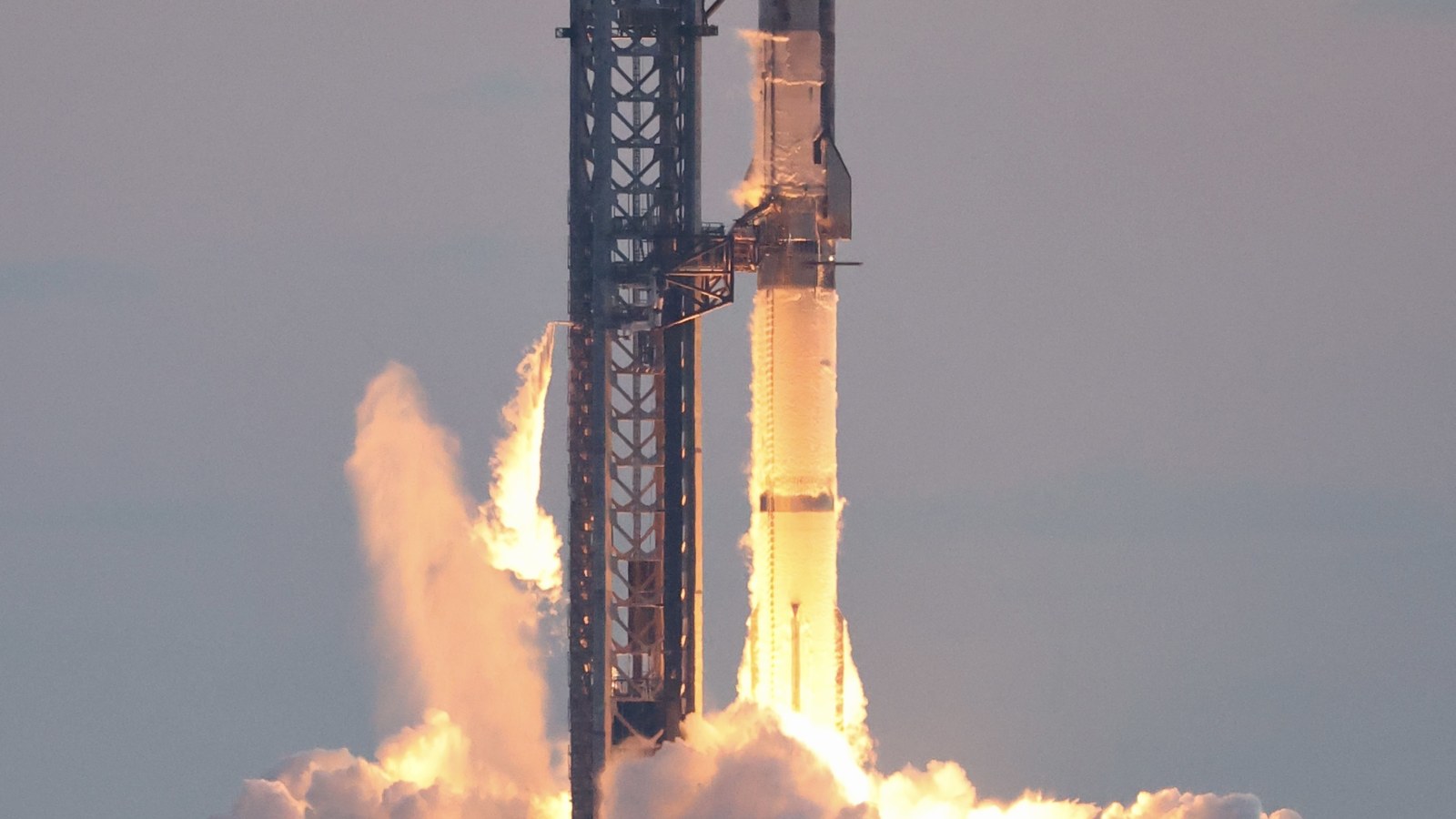
Starship changes the ambition
Starship is the signal that the company is not only selling launches; it is trying to make payload scale and future missions feel normal.
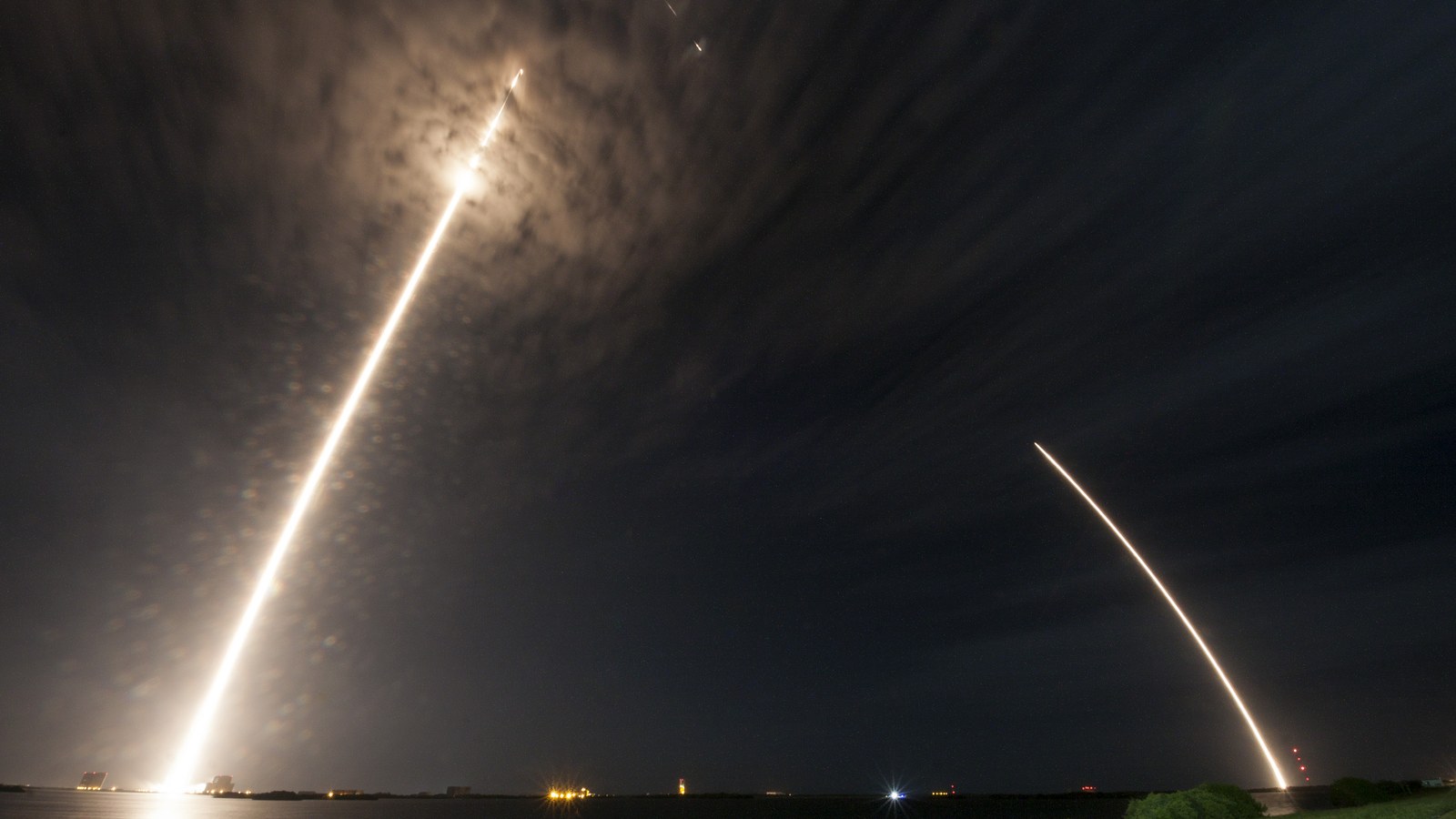
Dragon makes crew and cargo credible
Dragon turns SpaceX from a launch provider into a human-spaceflight and station-logistics brand.
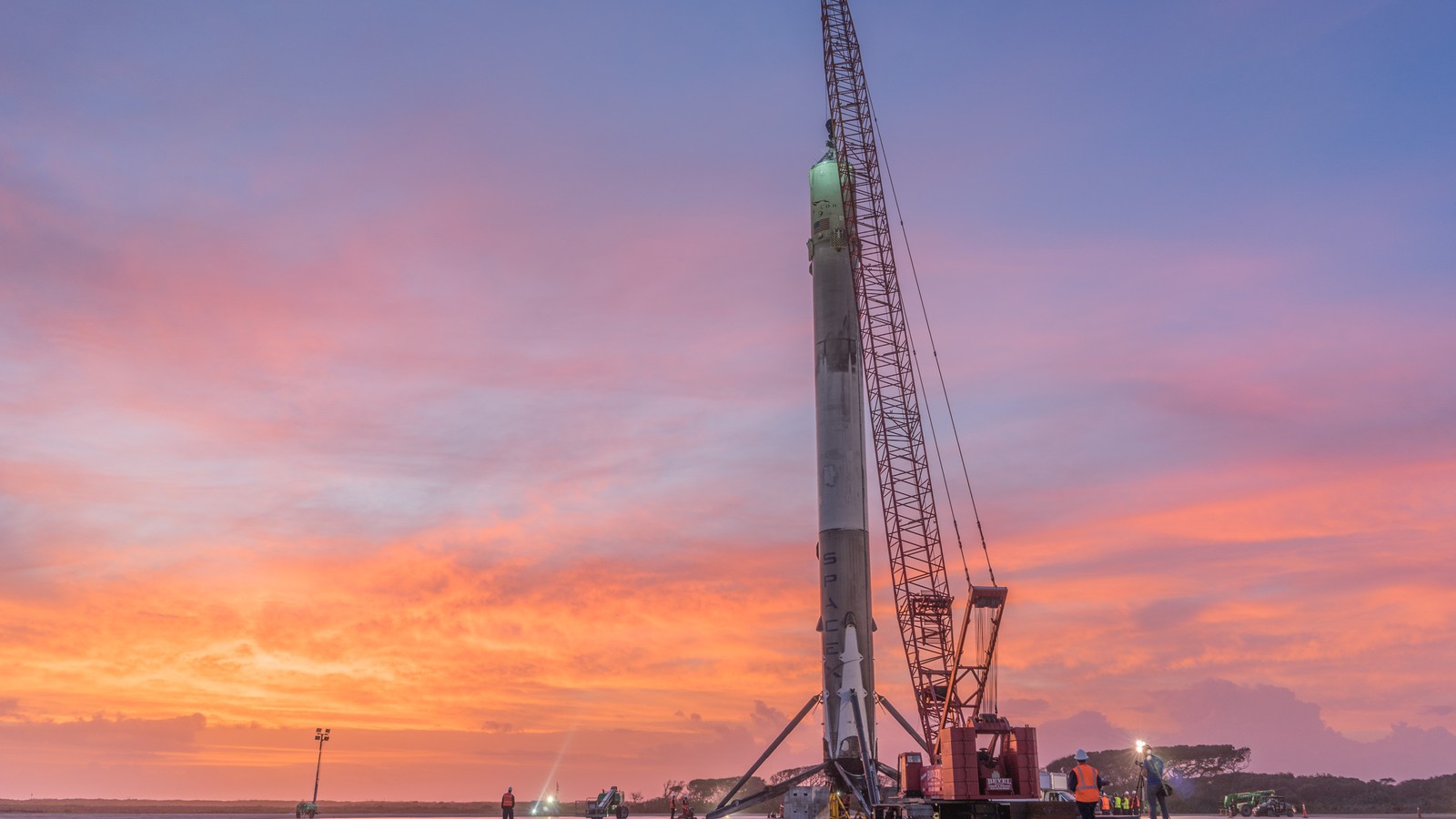
Landing makes reuse believable
The booster on the pad is the repeatable cue that reusable launch is operating proof, not only a presentation claim.
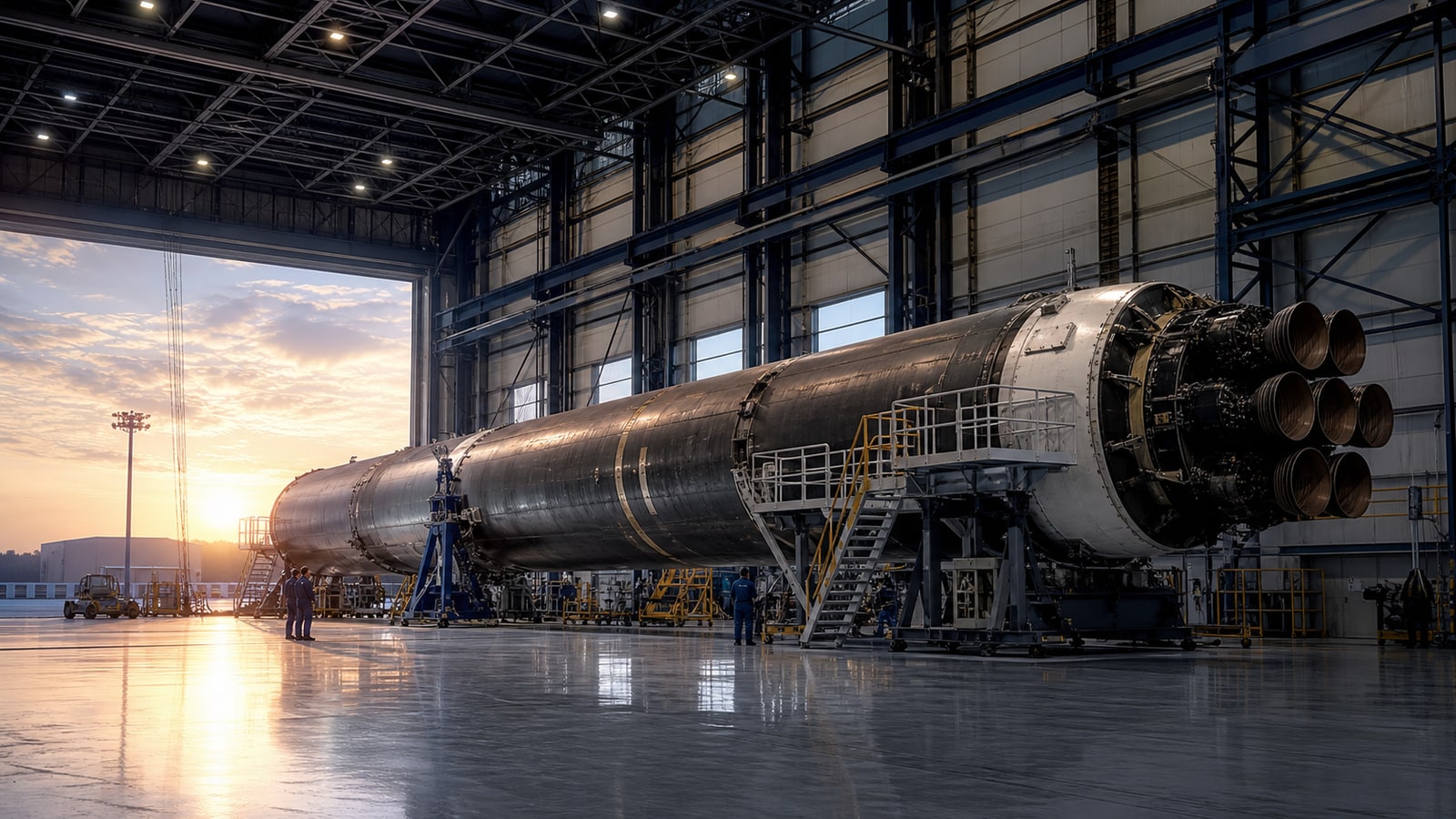
Turnaround makes reuse operational
Maintenance platforms, inspection work, and hangar scale show the operating system behind flying a booster again.
Product and service system
Reusable launch is the visible proof system: rocket, pad, landing, cadence, and payload trust.
Crew and cargo missions make the brand credible in human spaceflight, not only commercial satellite launch.
The next ambition layer makes payload scale, lunar missions, Mars language, and heavy transport part of the brand memory.
Satellite internet turns launches into a consumer and enterprise network service.
Government and defense space services make the system a national-security infrastructure brand.
Small-sat rideshare and contracted missions keep the commercial access story legible.
Turning points.
Events that changed what buyers could see, buy, repeat, or trust.
Dragon reaches the International Space Station on a commercial resupply mission.
Falcon 9 first-stage landing makes reuse a public proof cue.
SpaceX reflights an orbital-class booster and makes reuse a business argument.
Revenue reaches USD 7.81B and operating loss narrows to USD 143M, while capital spending rises to USD 18.4B.
NASA awarded three additional Crew Dragon missions for USD 946 million, bringing the Commercial Crew contract to 17 missions and USD 5.92 billion, with performance through 2030.
Public reaction.
The useful reaction is about trust and pressure, not sentiment counts.
The strongest SpaceX proof connects launches, reuse, Dragon missions, Starlink service, and Starshield contracts into one operating machine.
The brand weakens when IPO hype, Mars language, AI assets, or social platforms hide launch safety, reliability, and service proof.
Full timeline.
SpaceX is founded by Elon Musk.
Falcon 1 becomes the first privately developed liquid-fueled rocket to reach orbit.
Falcon 9 launches for the first time.
Dragon reaches the International Space Station on a commercial resupply mission.
Falcon 9 first-stage landing makes reuse a public proof cue.
SpaceX reflights an orbital-class booster and makes reuse a business argument.
Falcon Heavy launches and adds heavy-lift spectacle to the proof system.
Starlink deployment begins turning launch cadence into a network service.
Crew Dragon carries NASA astronauts, making crew transport part of public trust.
Starlink opens a wider public beta and moves the brand into homes and terminals.
Starshield is introduced for government and national-security customers.
Starship integrated flight testing begins.
Starship booster catch imagery turns reusability into a new public spectacle.
SpaceX is reported to complete the largest IPO by proceeds, moving the brand into public-market scrutiny.
SpaceX acquires xAI, including X, and the prospectus recasts the consolidated company across Space, Connectivity, and AI.
NASA extends reliance on Crew Dragon
Steal / avoid.
- Make the operating proof public: launches, landings, terminals, contracts, and missions.
- Give each sub-brand a specific job instead of saying everything is innovation.
- Let a financial superlative increase proof discipline, not replace it.
- Do not reduce SpaceX to rockets only.
- Do not mix Starlink, Starshield, Dragon, and Starship without separating their buyer jobs.
- Do not use fake mission screens, fake logos, or invented spacecraft visuals.
Short answer.
SpaceX should be read as a launch, connectivity and AI capital-allocation system. Q2 2026 revenue rose 92% to USD 7.81 billion and operating loss narrowed to USD 143 million, but USD 18.4 billion of capital spending made the proof burden larger than the growth headline.
Frequently asked questions
What is SpaceX's core brand signal?
SpaceX turns launch, satellites, spacecraft, and network services into one frontier system.
Why not describe SpaceX as one product?
Because SpaceX spans Falcon, Dragon, Starship, Starlink, Starshield, rideshare, launch services, and mission operations; one rocket launch hides the wider system.
What should another brand steal from SpaceX?
Make the operating proof public: launches, landings, terminals, contracts, and missions.
Need help with your own brand?
Use Private brand work when your name, identity, proof, or message needs a sharper branding decision.
Sources.
Use the education shelf for the concepts behind this brand page.
Private brand workIf one technology brand covers vehicles, services, infrastructure, government work, and customer hardware, Private Brand Work can separate each offer without losing the shared mission.
All brandsReturn to every brand page.
- https://www.businessinsider.com/spacex-ipo-live-updates-pricing-spcx-stock-2026-6
- https://www.spacex.com/vehicles/falcon-9/
- https://www.spacex.com/vehicles/falcon-heavy/
- https://www.spacex.com/vehicles/dragon/
- https://www.spacex.com/vehicles/starship/
- https://starlink.com/
- https://www.starshield.com/
- https://www.spacex.com/rideshare/
- https://www.spacex.com/launches/
- https://apnews.com/article/3b7b66a3e522e51d75caebc40af7e09e
- https://www.satellitetoday.com/finance/2026/08/05/spacex-outlines-starlink-mobile-plans-in-first-earnings-report/
- NASA awards three additional SpaceX crew flights