Pret A Manger · Grow Your Brand · Freshness Operating System · United Kingdom / Active
Pret A Manger
Pret A Manger turns in-shop preparation, red-star identity, and city convenience into an observable operating claim. A Pret A Manger brand page on in-shop food preparation, organic coffee, red-star identity, surplus donation, JAB ownership, 2024 system sales and adjusted EBITDA, international growth, and Club Pret's loyalty reset.
Positioning, name, and architecture.
Three evidence checks before the page talks about scale, color, or public reaction.
Pret makes the kitchen, same-day preparation, organic coffee, and surplus donation part of the brand promise.
Pret positions city convenience as freshly made, human, and responsible. The operating system has to carry more weight than the red sign.
Pret A Manger is a play on the French pret-a-manger, meaning ready to eat, and echoes pret-a-porter, meaning ready to wear.
Fresh preparation, the PRET wordmark, and the shop routine carry the promise more consistently than one verified current consumer line.
masterbrand with food and coffee offers, a membership program, franchise markets, and a separate charity
The masterbrand remains dominant; Club Pret is a membership program, the Foundation is a separate charity, and franchising is an operating model rather than a subbrand.
Makes surplus-food redistribution part of the operating story.
charity: Food donation source
Builds digital frequency around the daily visit.
service line: Membership benefits source
Naming and tagline progression
Pret A Manger frames prepared food as ready-to-eat city convenience.
This card does not assign an unverified current consumer tagline.
Market and scale snapshot.
Pret is private, but it publishes selected worldwide system-sales and adjusted-EBITDA figures; system sales are not the same as accounting revenue.
Pret reported worldwide system sales, not accounting revenue, for the year ended 2 January 2025.
Pret reported pre-IFRS 16 adjusted EBITDA in GBP, up 36% year over year; no USD equivalent is asserted here.
Pret reported 717 shops and 11% net shop growth for the period.
JAB acquired Pret in 2018; Pret remains privately held.
Color system.
The red wordmark and stars give the shop speed and visibility; cream and natural food color keep it from feeling like generic fast food.
How the palette behaves
Deep red signals appetite, energy, and street visibility.
Cream softens the speed cue and supports handmade language.
Gold stars add a small premium and celebratory signal.
Recognition assets.
Memory pieces the brand can use before someone finishes a sentence.
The shortened word becomes readable at street and cup distance.
Visible preparation forces operations to prove the freshness identity.
Colorful ingredients make freshness visible before copy.
The Foundation links daily waste pressure to a public response.
Scores.
Use these scores to compare recognition, trust, proof, pressure, and risk.
Red fascia and PRET shorthand are immediate.
Kitchen and donation systems make claims tangible.
Food, coffee, and store cues feel connected.
Freshness and speed must be delivered every day.
Brand and JAB ownership can be stated cleanly.
Pret owns a strong food-to-go freshness frame.
Red, cream, stars, and food color repeat strongly.
Service inconsistency becomes a brand problem quickly.
How the logo changed.
Dated marks show which recognition cues changed, which survived, and what buyers had to relearn.
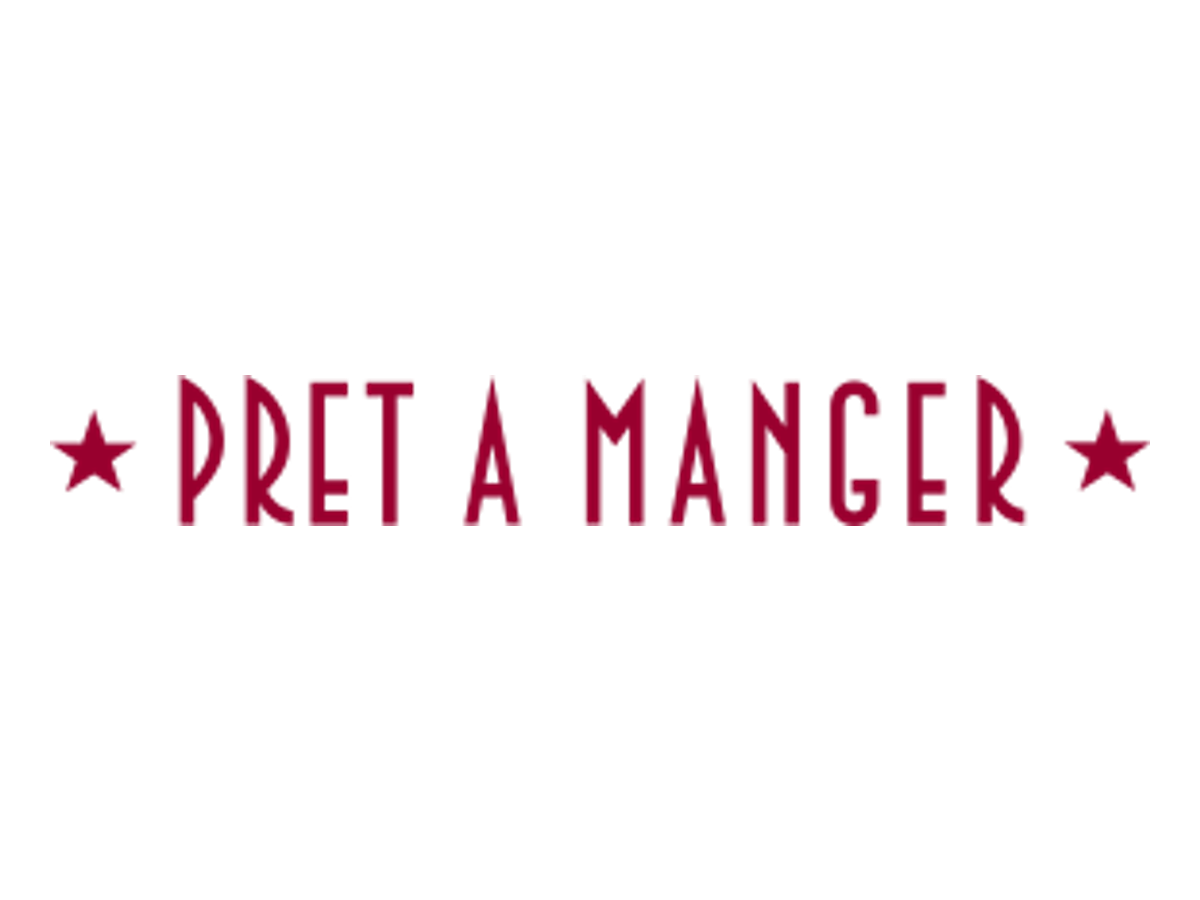
The earlier wordmark carried the full Pret A Manger name between two stars before the identity shortened to PRET.
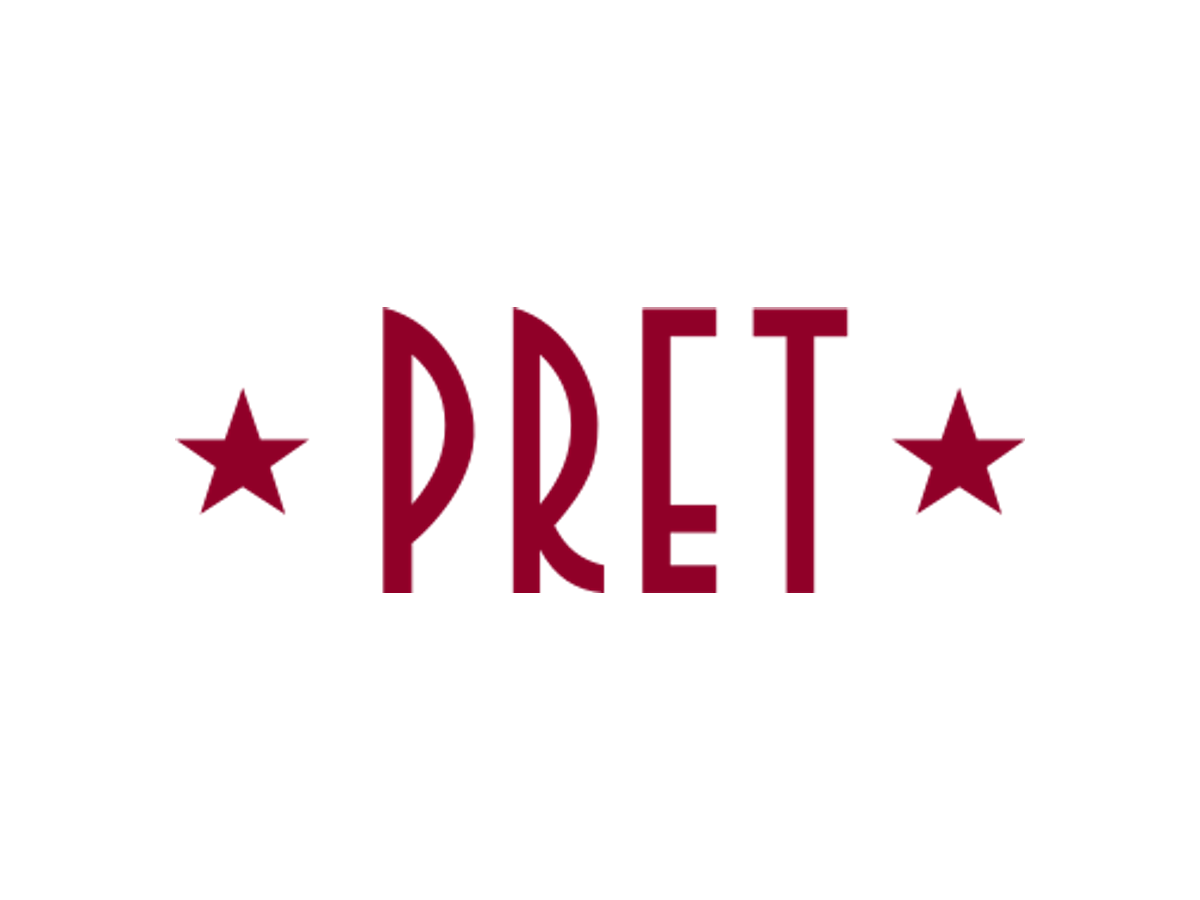
The current mark shortens recognition to PRET, flanked by stars, for faster reading across fascia, cups, apps, and packaging. source
Product and service lineage.
Pret grows by assigning a different role to kitchens, coffee, membership, franchise markets, and surplus donation.
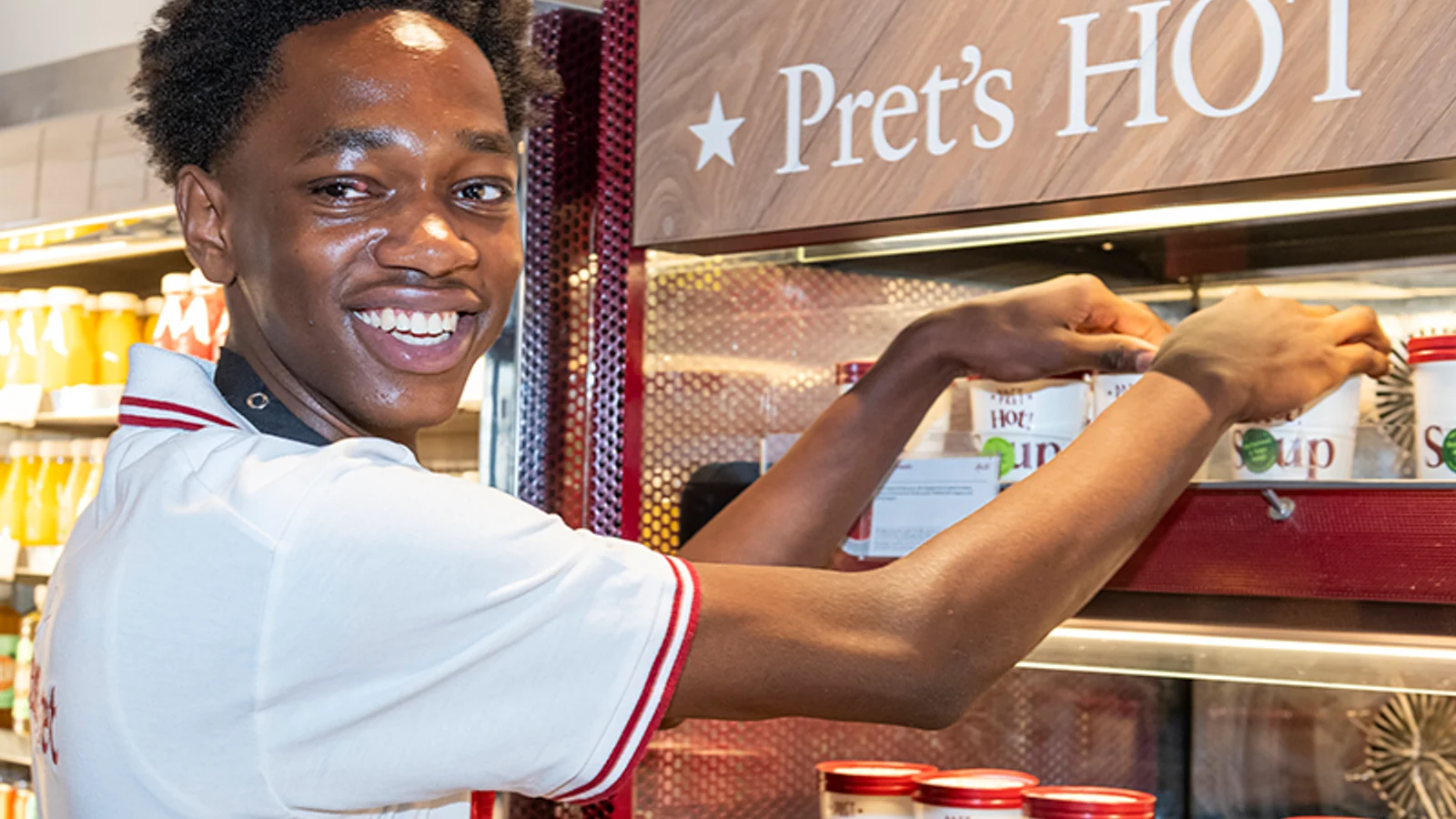
Hot food team
A real shop-team image makes the operating claim visible through people and preparation.
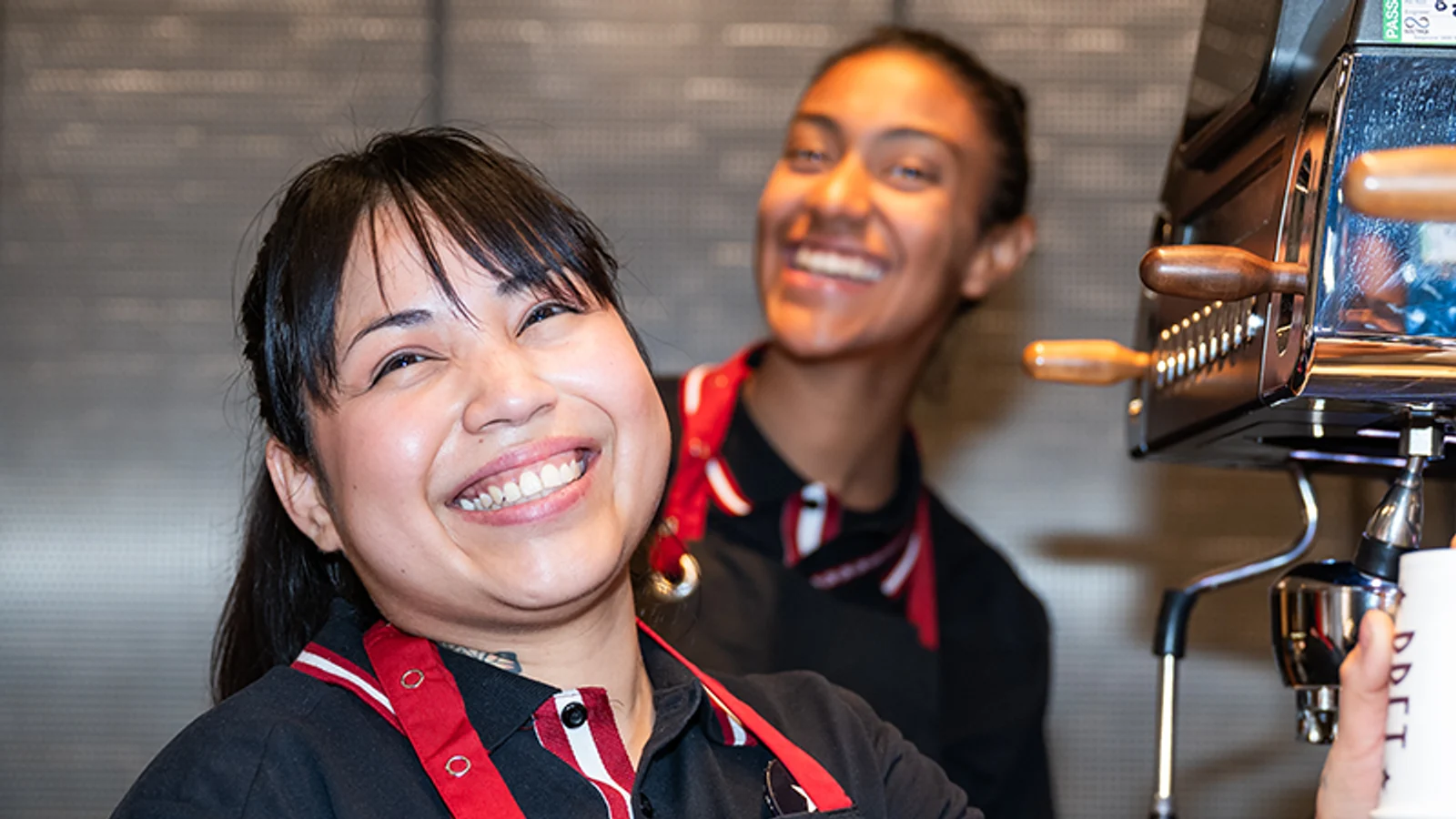
Barista craft
Real espresso service gives the food-led brand a repeat coffee occasion.
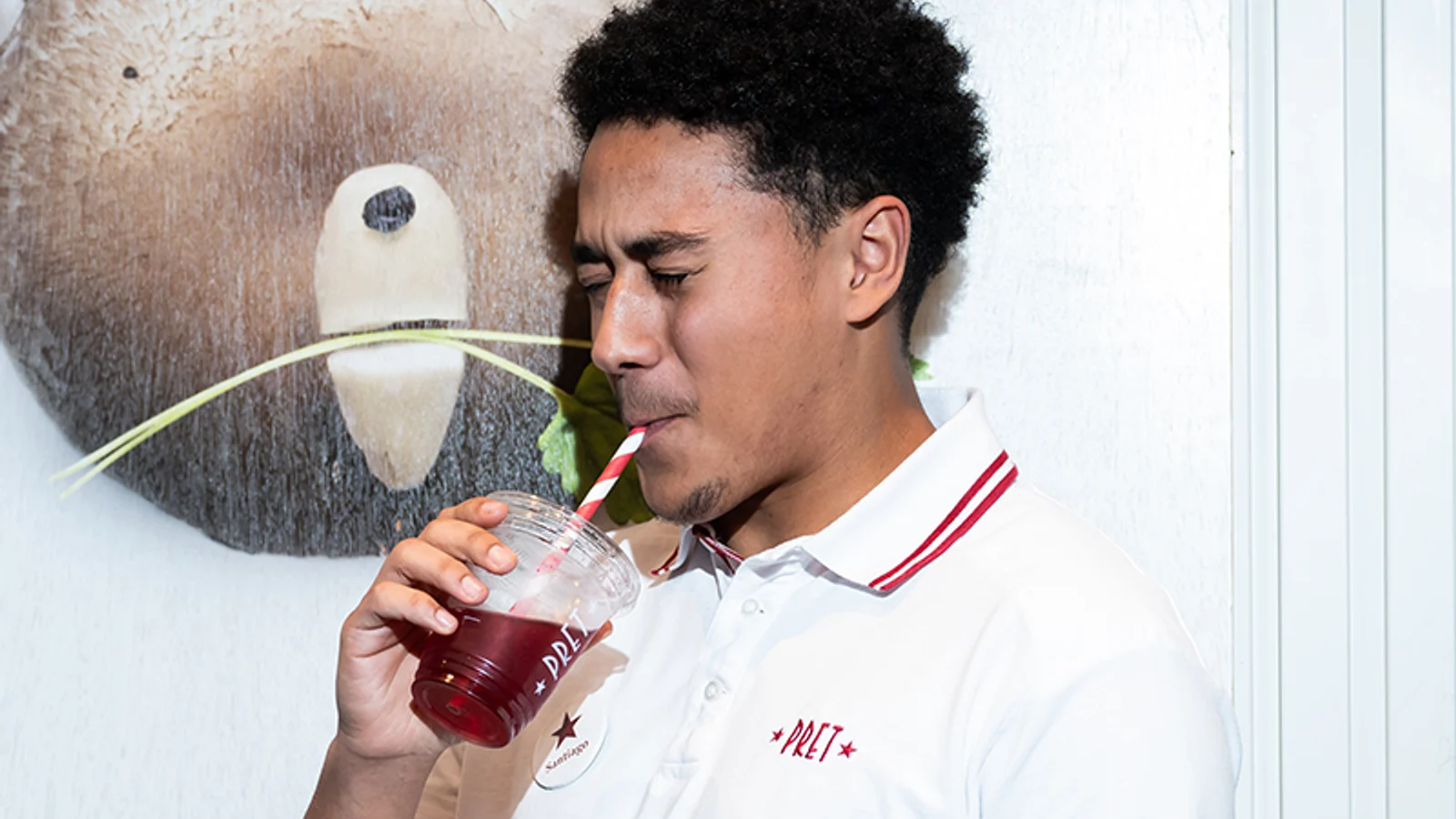
People carry the mark
The brand is made tangible by the people serving food and drinks in the shop.
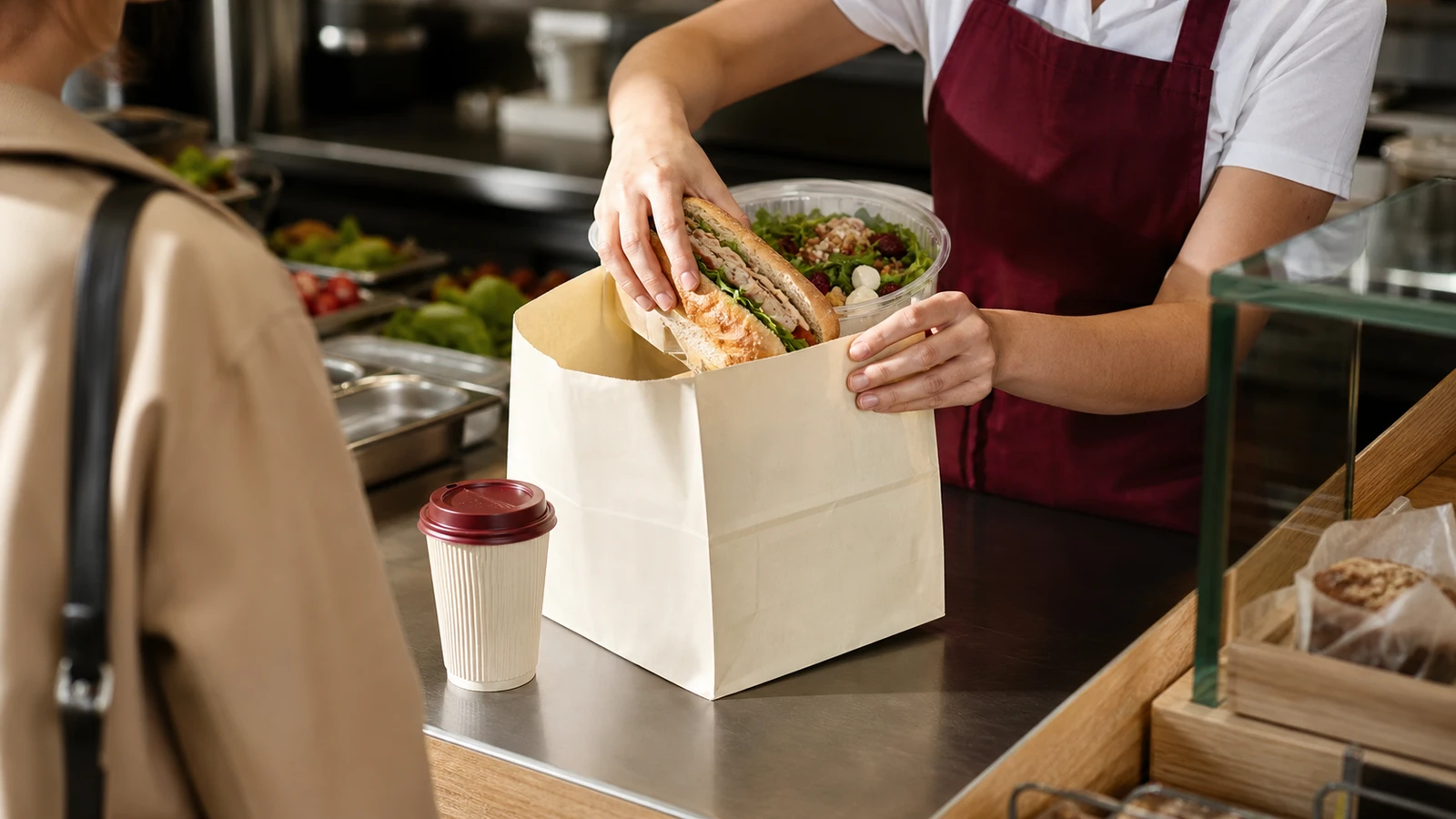
Fresh handoff
Preparation, portability, and service meet in the handoff that defines the city lunch occasion.
Product and service system
Daily preparation makes operations part of identity.
A beverage ritual broadens visit frequency.
Membership turns the visit into a digital relationship.
Surplus donation gives waste handling a public role.
Turning points.
Turning points that changed Pret from one London shop into an international food-to-go company.
The current Pret A Manger business opens its first shop.
The Pret Foundation formalizes food donation and community support.
JAB acquires Pret and backs international growth.
Pret reports £1.2B system sales and 717 shops.
Public reaction.
Pret changed Club Pret in September 2024, replacing the five-drinks-a-day subscription with a discounted-drinks offer. The change shows how a loyalty mechanic can become part of the value customers expect.
The original subscription trained members to build repeated barista-made drinks into the working day.
The September 2024 offer moved to 50% off up to five drinks and removed the former food discount, resetting what membership delivered.
Full timeline.
Pret opens its first shop under the current business.
The Pret Foundation is established.
JAB acquires Pret A Manger.
Pret launches the coffee subscription that later becomes Club Pret.
Club Pret moves from five included drinks a day to a discounted-drink model.
Pret publishes FY2024 growth results.
Pret reports 717 shops and 11% net shop growth for the prior financial year.
Steal / avoid.
- Make the operating process part of the brand promise.
- Use one short street-readable mark across cup, fascia, app, and pack.
- Connect waste and surplus to an observable response.
- Do not call system sales accounting revenue.
- Do not let franchise scale hide service inconsistency.
- Do not use product photography as fake logo progression.
Short answer.
Pret A Manger is a UK food-to-go and coffee brand founded in 1986 and controlled by JAB. Its strongest signal joins in-shop food preparation, organic coffee, red-star recognition, city convenience, and surplus-food donation; in FY2024 it reported £1.2 billion in worldwide system sales, £98 million in adjusted EBITDA, and 717 shops.
Frequently asked questions
Who owns Pret A Manger?
JAB acquired Pret in 2018 and remains the controlling private owner.
What were Pret's latest published scale figures?
For the year ended 2 January 2025, Pret reported £1.2 billion in worldwide system sales, £98 million in pre-IFRS 16 adjusted EBITDA, and 717 shops.
What should another brand steal?
Turn a marketing word such as fresh into a process customers can observe.
Need help with your own brand?
Use Private brand work when your name, identity, proof, or message needs a sharper branding decision.
