Porsche · Grow Your Brand · Sports-Car Proof Mark · Germany / Active
Porsche
Porsche makes sports-car proof small enough to sit on the product. A brand page for Porsche: the crest, Stuttgart horse, black-red-gold memory, 911 cult shape, modern 911 continuity, Taycan pressure, product placement, 2025 financial pressure, and the lesson that prestige needs product proof in more than one era.
Positioning, name, and architecture.
Three evidence checks before the page talks about scale, color, or public reaction.
Porsche compresses place, racing memory, engineering restraint, 911 shape, modern electric pressure, and product lineage into a small crest that still has to be proven by cars.
Porsche positions performance as origin you can see: crest, classic 911, modern 911, Taycan pressure, driver focus, and product lineage have to agree.
Porsche carries the founder family name and the Stuttgart/Zuffenhausen origin behind the sports-car signal.
The card reads the crest and product proof rather than one universal slogan.
model-line portfolio with automotive and financial-services segments
Current model lines are separated from the ended-production 718, operating segments, and brand extensions so product status and ownership remain clear.
Carries the enduring silhouette and performance reference.
Sports-car core: 911 source
Extend performance into electric, SUV, and four-door jobs.
Current model lines: Cayenne source
Production ended in October 2025; treat as legacy/inventory, not an open future line.
Ended-production line: 718 source
Competition and designed goods extend the code beyond road-car sales.
Proof and extension: Porsche Motorsport source
Naming and tagline progression
Crest logic begins around origin and sports-car proof.
The product shape turns the mark into repeated public memory.
Prestige has to answer profit, transition, and tariff pressure.
Market and scale snapshot.
Porsche's FY2025 revenue, sharply lower profit after tax, and public-market value put the 911, Taycan, Macan, Cayenne, motorsport, and electric transition in the same business frame.
Official FY2025 sales revenue of EUR 36.272B converted at the recorded 30 Jun 2026 EUR-to-USD rate of 1.141583.
Official FY2025 profit after tax of EUR 310M converted at the recorded rate; this is not operating profit.
Dated USD market-cap observation captured 10 Jul 2026; source and method recorded above.
Volkswagen AG controls Porsche AG indirectly; Porsche SE holds 25% plus one ordinary share.
Color system.
Porsche color works because it reads like a crest and product badge, not a decorative palette.
How the palette behaves
Black gives the brand control and seriousness.
Red adds racing heat and warning energy.
Gold makes the badge feel earned and old-world without replacing product proof.
Recognition assets.
Memory pieces the brand can use before someone finishes a sentence.
The signal has to carry origin and performance in a small space.
The car silhouette keeps the badge from becoming empty luxury.
New cars have to become desirable without breaking the old discipline.
A prestige brand still has to answer sales, margin, and transition pressure.
Scores.
Use these scores to compare recognition, trust, proof, pressure, and risk.
Crest and product shape are immediate.
The badge and product lineage reinforce each other.
2025 operating profit fell sharply.
Black, red, and gold work through crest memory.
Porsche AG and Volkswagen context should stay clear.
Premium pricing raises proof expectations.
The Porsche mark needs product proof: crest, car shape, driver focus, performance memory, and modern model discipline.
Porsche positions performance as origin you can see: crest, classic 911, modern 911, Taycan pressure, driver focus, and product lineage have to agree.
How the logo changed.
Three sourced crest stages show the 1952 origin, the 1963 refinement, and the official 2023 modernization.
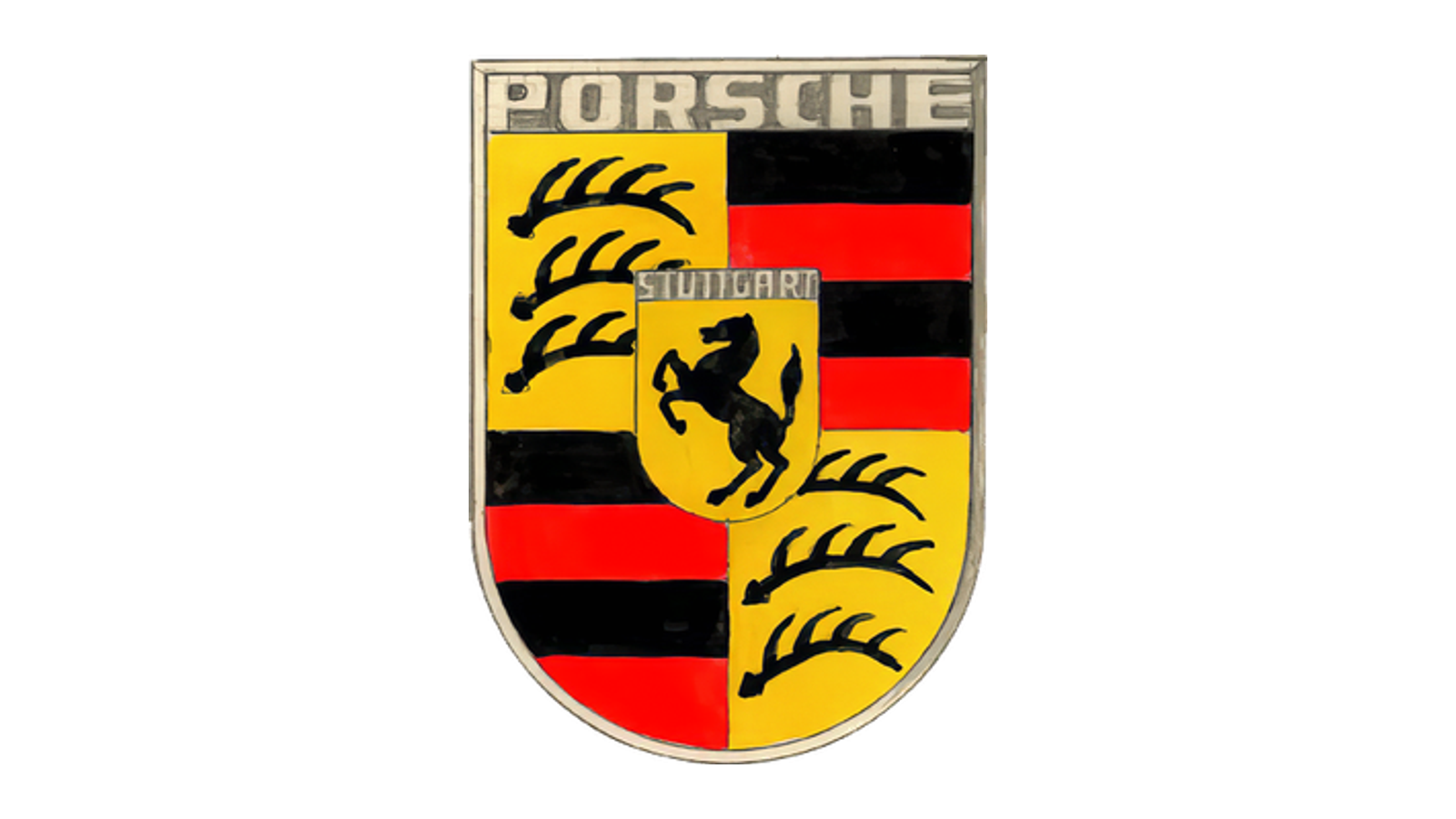
The original combined Stuttgart’s horse with Württemberg-Hohenzollern colors and antlers under the Porsche name. source
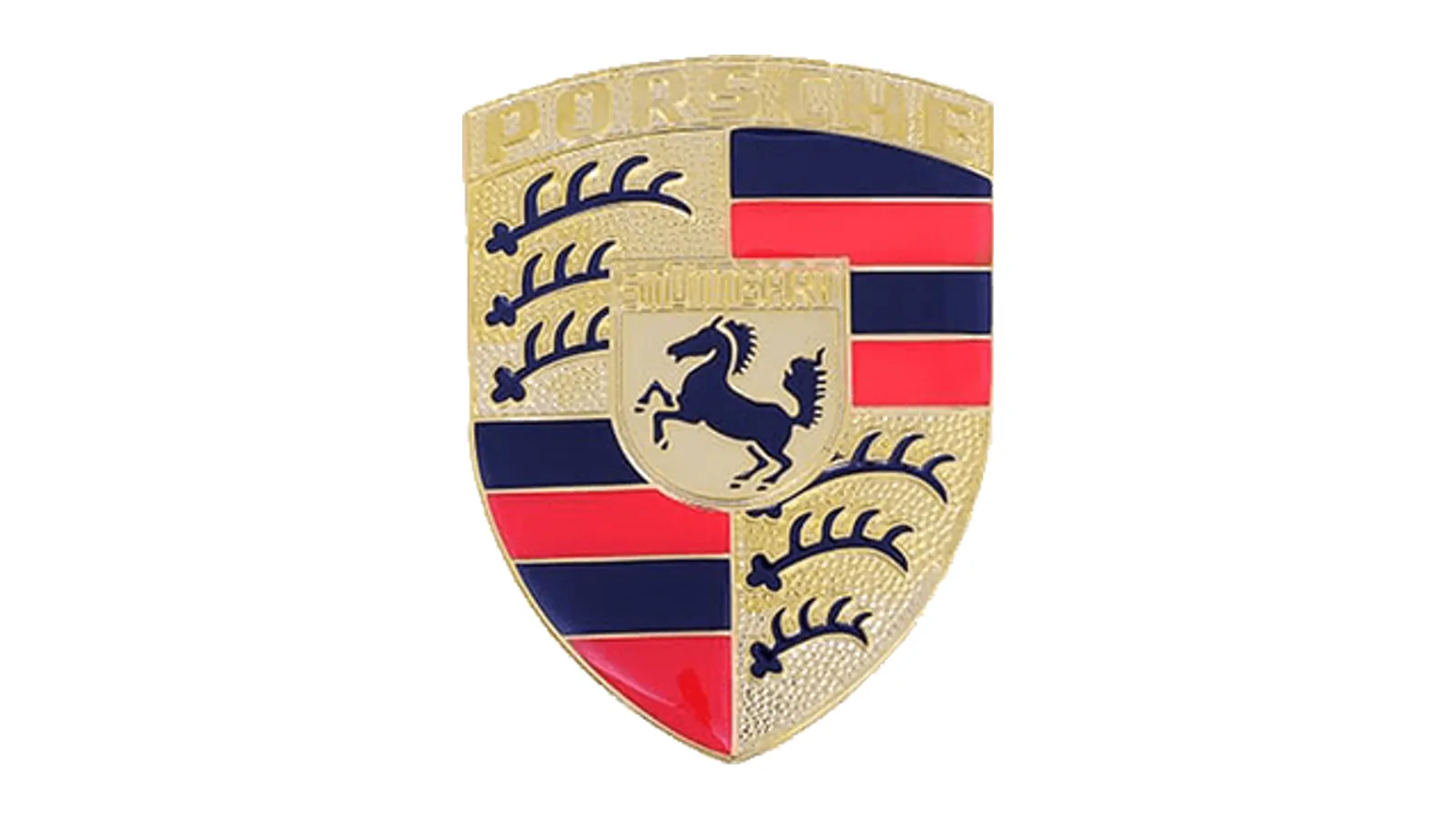
The 1963 treatment refined proportion and detail as the crest became a more consistent vehicle and communications mark. source
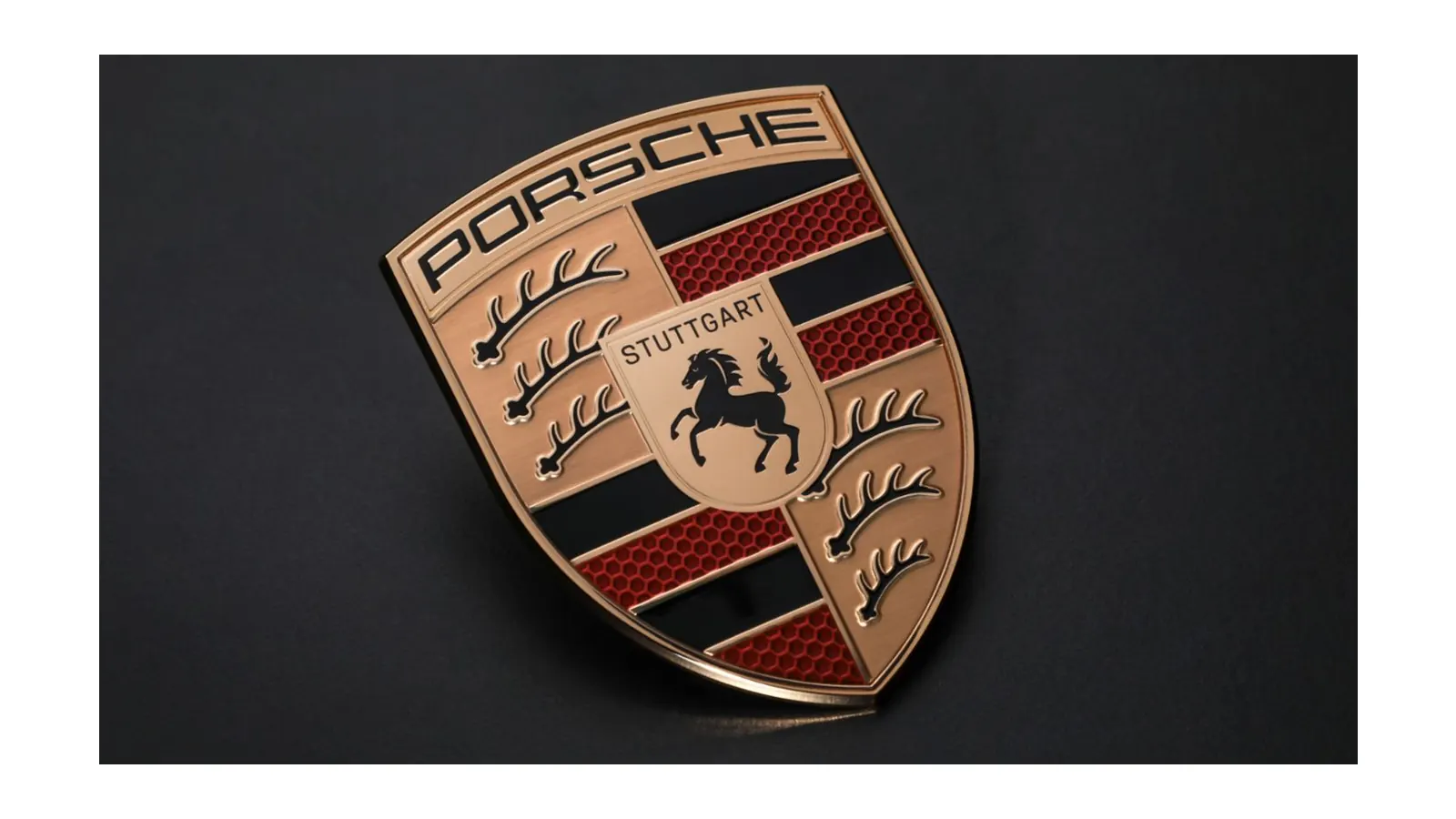
The current crest uses brushed metal, honeycomb texture, a refreshed horse, and more subtle gold while preserving the established structure. source
Product and service lineage.
The Porsche mark needs product proof: crest, car shape, driver focus, performance memory, and modern model discipline.
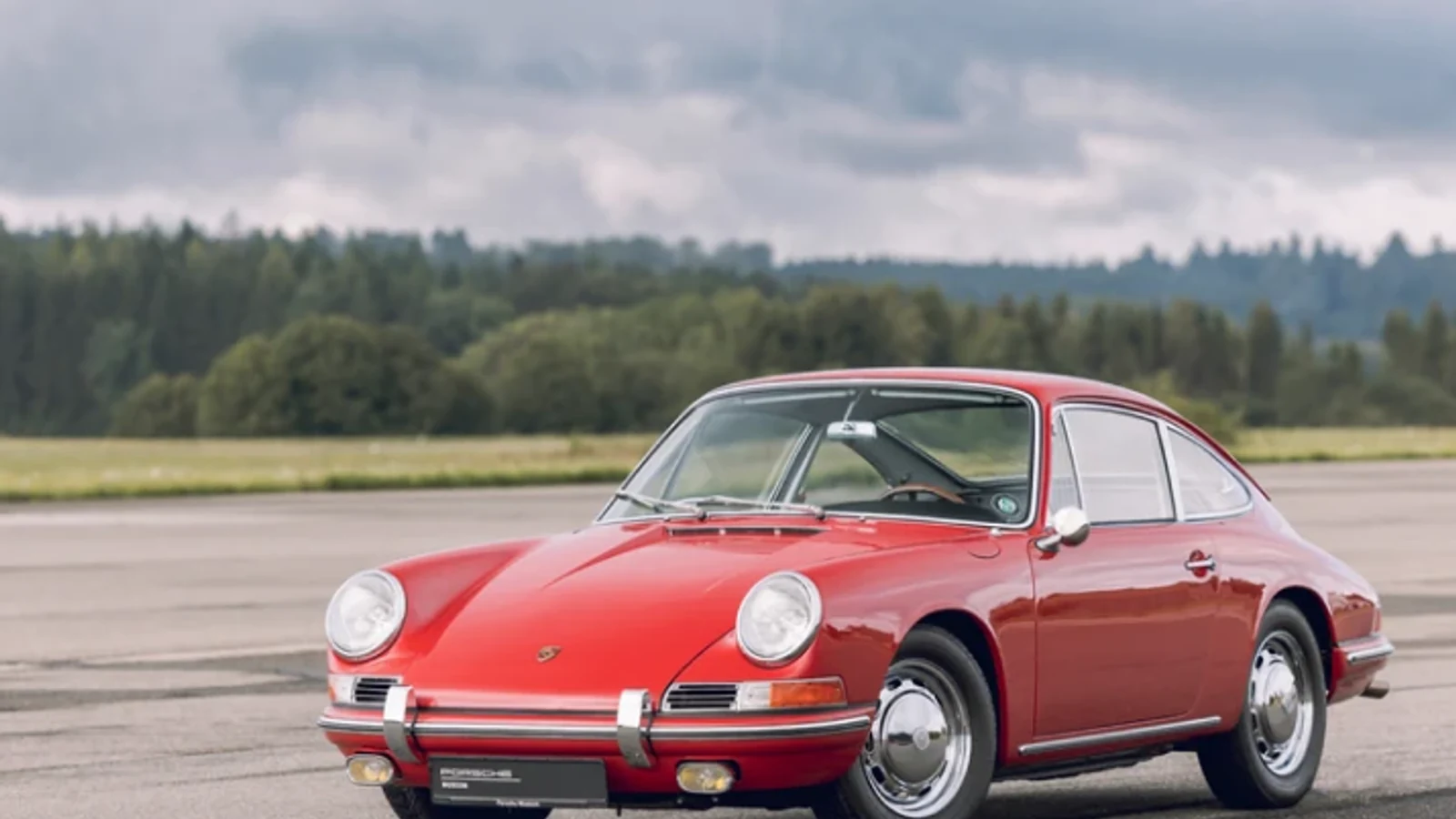
Original shape proof
The old 911 gives the crest a body people can recognize before they read it.
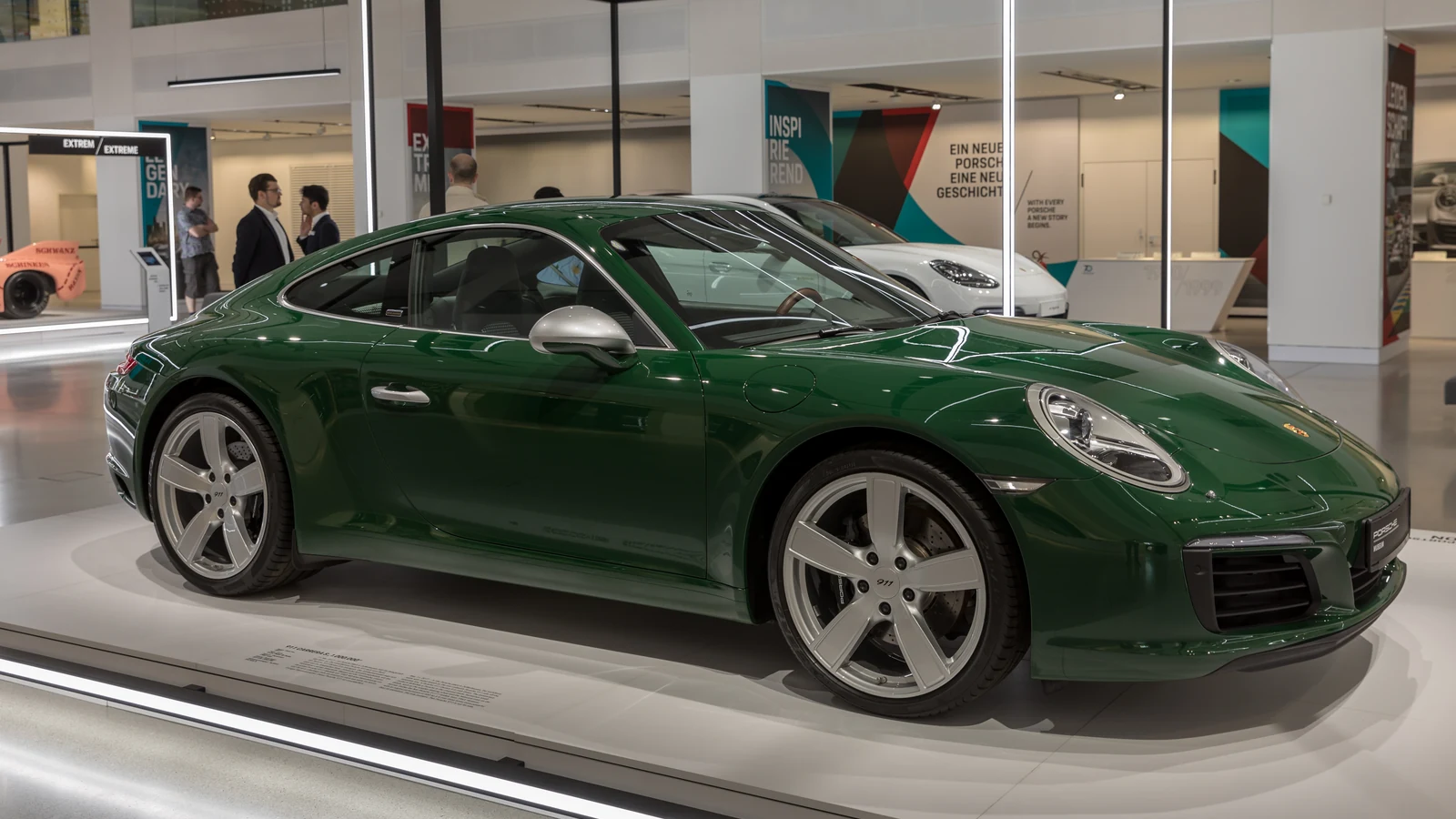
Shape memory
The silhouette and material restraint keep the crest from becoming empty decoration.
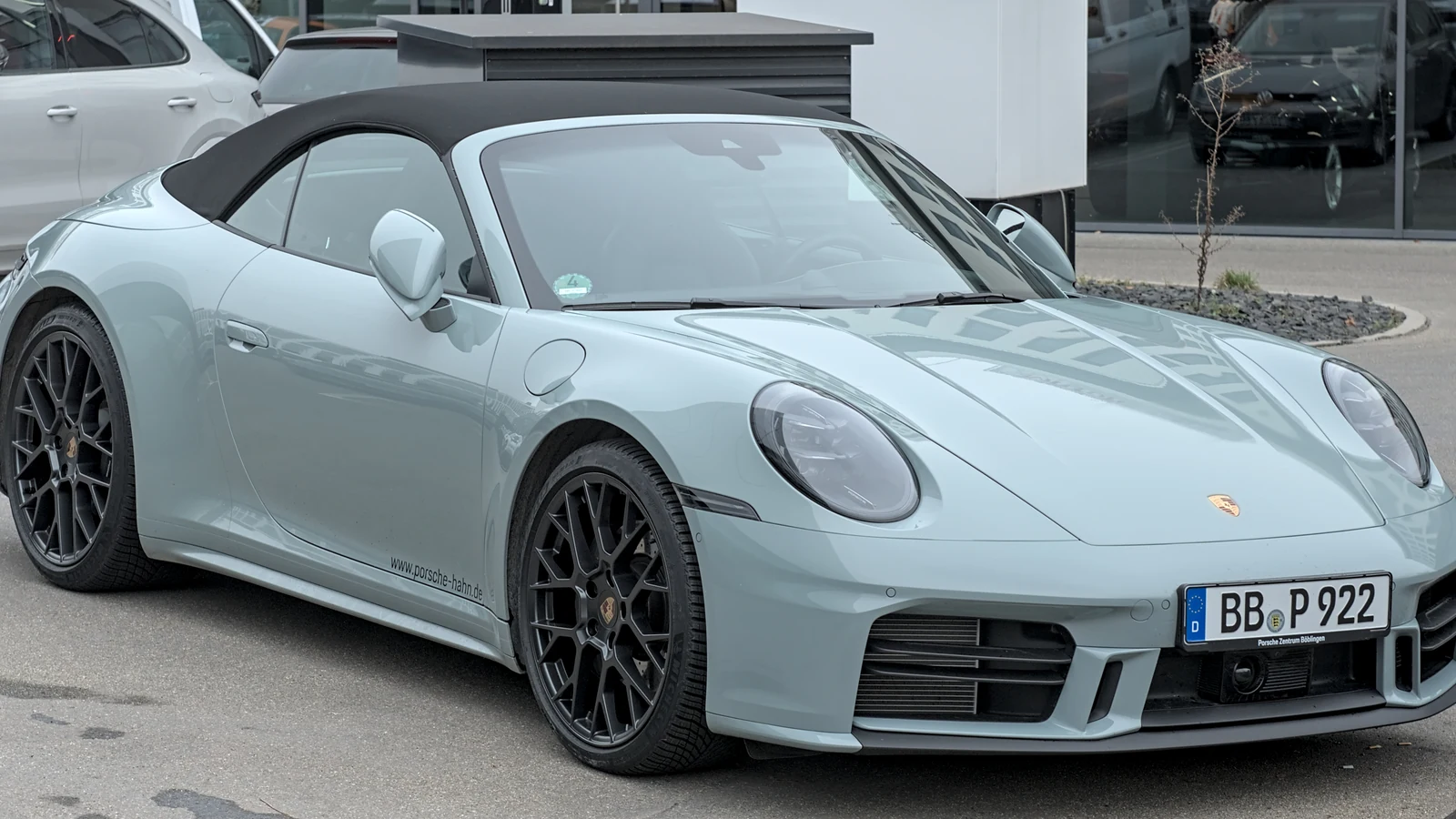
Modern 911 continuity
A current 911 still has to feel like the same promise, not a logo applied to a new shell.
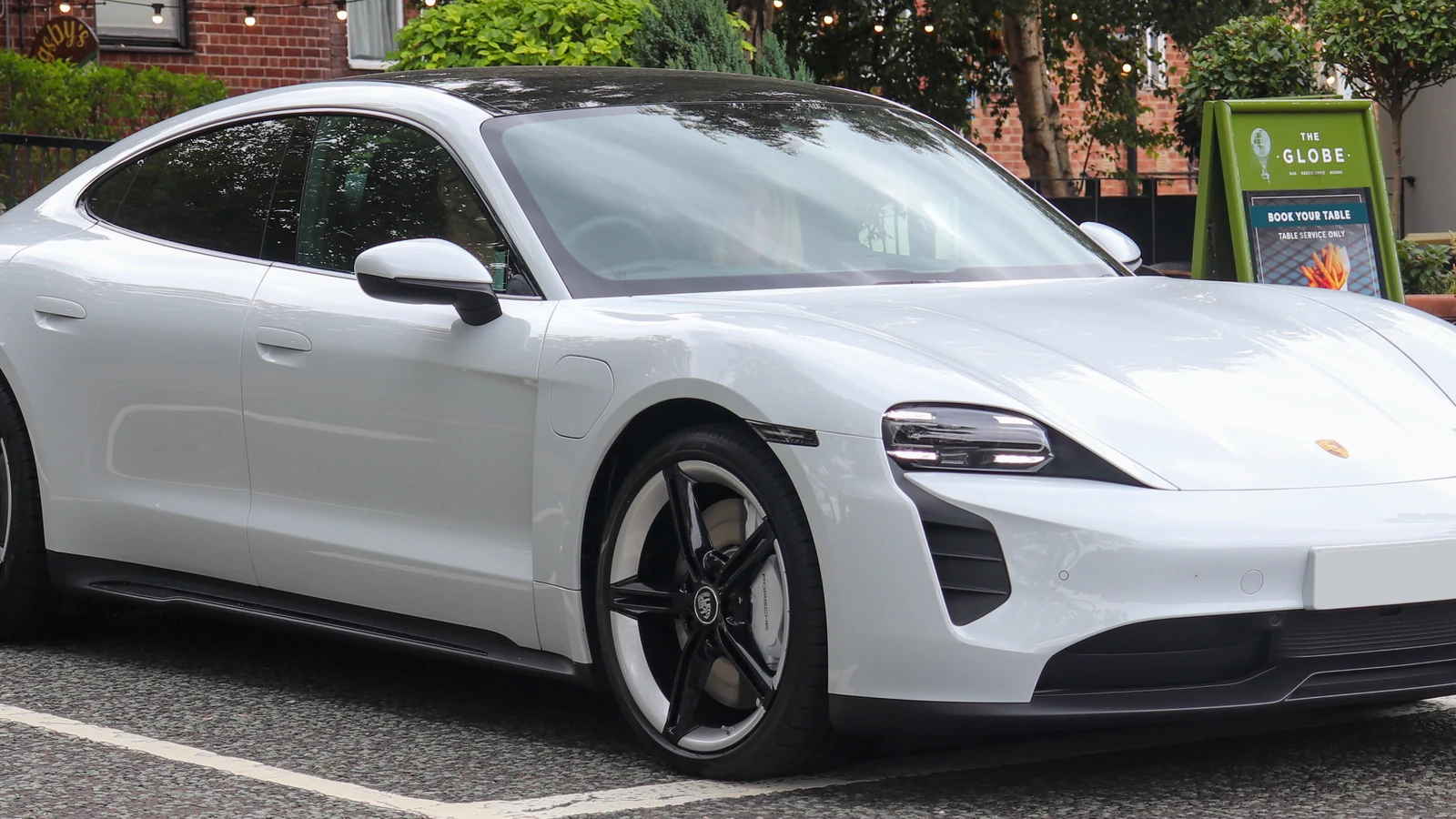
Taycan extends the performance code
Electric propulsion changes the product architecture without removing the silhouette, control, and performance expectations attached to Porsche.
Product and service system
Porsche sports-car production begins around a focused performance idea.
The crest logic connects the car to place, shield, and horse memory.
A repeatable silhouette makes the badge visible even before the logo is read.
Electric performance tests whether a new Porsche can become desirable without breaking the old cult.
Porsche reports EUR 36.272B sales revenue and EUR 413M operating profit.
Turning points.
Moments that show why the badge has to stay tied to product proof.
The badge compresses place, color, horse, and product pride.
The product silhouette lets the brand be recognized without a headline.
Taycan and current 911 proof have to carry desire into a changed car market.
Sales revenue and operating profit show that prestige still faces hard economics.
Public reaction.
Porsche earns desire when the badge and product agree and loses trust when prestige feels detached from proof.
The crest works when it points to driving feel, shape, and history.
Pricing, transition pressure, or weak model decisions can make the prestige feel borrowed.
Full timeline.
Porsche sports-car origin.
Crest logic becomes part of the product signal.
Porsche publishes a crest evolution story.
Electric performance tests whether newer models can become real Porsche proof.
Porsche reports EUR 36.272B sales revenue.
Steal / avoid.
- Make the mark carry origin and product proof.
- Put the signal on the inspected surface.
- Let product shape reinforce the logo.
- Do not copy prestige marks without product discipline.
- Do not let badge history become luxury filler.
- Do not hide transition pressure behind heritage language.
Short answer.
Porsche shows how a prestige badge stays useful only when the product keeps proving it: crest, classic 911, modern 911, Taycan pressure, color, origin, and driving shape must point to the same promise.
Frequently asked questions
What is Porsche's core brand signal?
Sports-car proof carried by the crest, product shape, and origin memory.
What should another brand steal from Porsche?
Make the mark small, inspectable, and tied to real product proof.
What should another brand avoid copying from Porsche?
Do not copy prestige language without a product surface that earns it.
Need help with your own brand?
Use Private brand work when your name, identity, proof, or message needs a sharper branding decision.