Nestlé · Grow Your Brand · Daily product portfolio system · Switzerland / Active
Nestlé
Nestlé turns coffee, chocolate, pet care, cooking, nutrition, and distribution into daily brand architecture. A brand page on Nestlé as a day-to-day portfolio system: Nescafé, Nespresso, Starbucks Coffee At Home, KitKat, Smarties, Aero, Maggi, DiGiorno, Garden Gourmet, Purina, Fancy Feast, Friskies, Gerber, Cerelac, Perrier, S.Pellegrino, Acqua Panna, ice cream, food service, factories, distribution, and the hard trust problem of many brands under one parent.
Positioning, name, and architecture.
Three evidence checks before the page talks about scale, color, or public reaction.
Nestlé turns coffee, chocolate, pet care, cooking, nutrition, and distribution into daily brand architecture.
A brand page on Nestlé as a day-to-day portfolio system: Nescafé, Nespresso, Starbucks Coffee At Home, KitKat, Smarties, Aero, Maggi, DiGiorno, Garden Gourmet, Purina, Fancy Feast, Friskies, Gerber, Cerelac, Perrier, S.Pellegrino, Acqua Panna, ice cream, food service, factories, distribution, and the hard trust problem of many brands under one parent.
Henri Nestlé used his family name and nest emblem; the 1905 merger carried Nestlé into the combined food company name.
Good food, Good life
company system / portfolio architecture
Nestlé is a parent-brand system, not one product promise. Its advantage is repeated household reach across distinct categories; its risk is that every category carries a different standard of trust, regulation, sourcing, and recovery.
Coffee creates a daily habit surface before most buyers think about the parent company.
Portfolio family: Coffee: Nescafé, Dolce Gusto, Nespresso, Starbucks Coffee At Home source
Confectionery turns product shape, break rituals, color, and local taste into memory.
Portfolio family: Chocolate and confectionery: KitKat, Smarties, Aero, Baci Perugina, Milkybar source
Meals work because a brand becomes a household shortcut for fast cooking, seasoning, and freezer decisions.
Portfolio family: Cooking, chilled, and frozen: Maggi, DiGiorno, Garden Gourmet, Thomy source
Ice cream makes the portfolio visible in treats, freezers, food service, and local summer habits.
Portfolio family: Ice cream: Drumstick, Häagen-Dazs, Maxibon, Mövenpick source
Pet care gives the portfolio a different trust problem: animals, vets, feeding routine, and household loyalty.
Portfolio family: Pet care: Purina, Purina ONE, Pro Plan, Fancy Feast, Friskies, Felix source
Water and premium beverages carry origin, occasion, hospitality, and sustainability pressure.
Portfolio family: Water and premium beverages: Perrier, S.Pellegrino, Acqua Panna, Sanpellegrino source
Nutrition and health lanes carry higher scrutiny than snacks because the buyer is protecting a body, child, patient, or family routine.
Portfolio family: Nutrition and health: Gerber, Cerelac, NAN, Nestlé Health Science, adult nutrition source
The portfolio only works because manufacturing, logistics, food-service channels, and local market adaptation keep products available.
Portfolio family: Food service, factories, and distribution source
Name and company progression
Anglo-Swiss Condensed Milk Company is founded.
Henri Nestlé develops infant cereal, giving the future company its nutrition origin.
Nestlé and Anglo-Swiss merge, creating the larger food company structure.
Market and scale snapshot.
Nestlé reports in Swiss francs. FY2025 sales and attributable net profit are shown as USD equivalents, while market value is a separately dated USD observation.
Official FY2025 sales were CHF 89.490B, converted at 1.2326 USD per CHF.
Official FY2025 attributable net profit was CHF 9.033B, converted at the same rate.
CompaniesMarketCap USD market-cap observation for NESN.SW captured 14 Jul 2026.
Nestlé S.A. registered shares; ISIN CH0038863350.
Color system.
Nestlé's brown parent cue supports the nest mark while blue and red help separate water, coffee, chocolate, pet care, nutrition, and local product brands.
How the palette behaves
Brown anchors the parent nest mark and the company's food-and-care history.
Blue separates water, nutrition, and corporate proof from red-led confectionery and shelf cues.
White space lets Nescafé, KitKat, Purina, Maggi, Perrier, and other product brands keep their own packaging systems.
Recognition assets.
Memory pieces the brand can use before someone finishes a sentence.
The nest origin gives warmth, but it cannot explain the whole company by itself.
Buyers often know KitKat, Nescafé, Maggi, or Purina before they name Nestlé.
Coffee, meal prep, pet feeding, and snack breaks make repetition the main signal.
The same parent house has to flex across country tastes and retail norms.
Scores.
Use these scores to compare recognition, trust, proof, pressure, and risk.
The parent name is global, but many product brands are stronger in daily memory.
The card must separate coffee, chocolate, cooking, pet care, water, and nutrition.
The products live in kitchens, offices, stores, and pet routines.
Food, nutrition, water, and pet care bring higher scrutiny than ordinary packaged goods.
Nestlé only reads correctly when Nescafé, Nespresso, KitKat, Maggi, Purina, Gerber, water, health science, factories, distribution, and local-market adaptation stay visible together.
Nestlé needs parent, product, service, and history lanes labeled cleanly so search systems do not flatten the brand into one vague entity.
Nestlé turns coffee, chocolate, pet care, cooking, nutrition, and distribution into daily brand architecture.
Nestlé weakens when the parent name hides the brands people actually use: Nescafé, Nespresso, Starbucks Coffee At Home, KitKat, Smarties, Aero, Maggi, DiGiorno, Garden Gourmet, Purina, Fancy Feast, Friskies, Gerber, Cerelac, Perrier, S.Pellegrino, Acqua Panna, ice cream, food service, and health science.
How the logo changed.
Official Nestlé history traces the masterbrand from the original nest symbol through the combined umbrella mark to the current lockup.
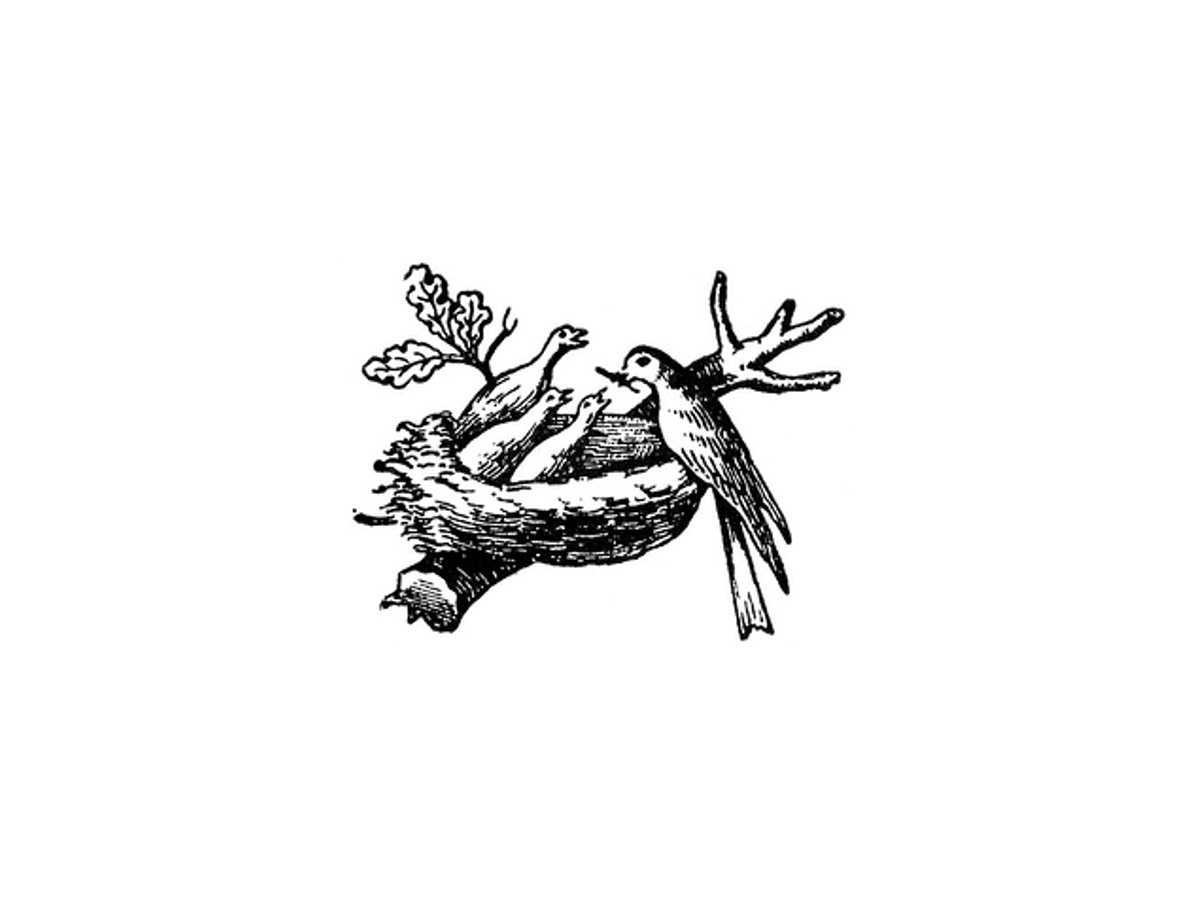
The early Nestlé mark links the family-name nest to infant-cereal trust and imitator protection. source
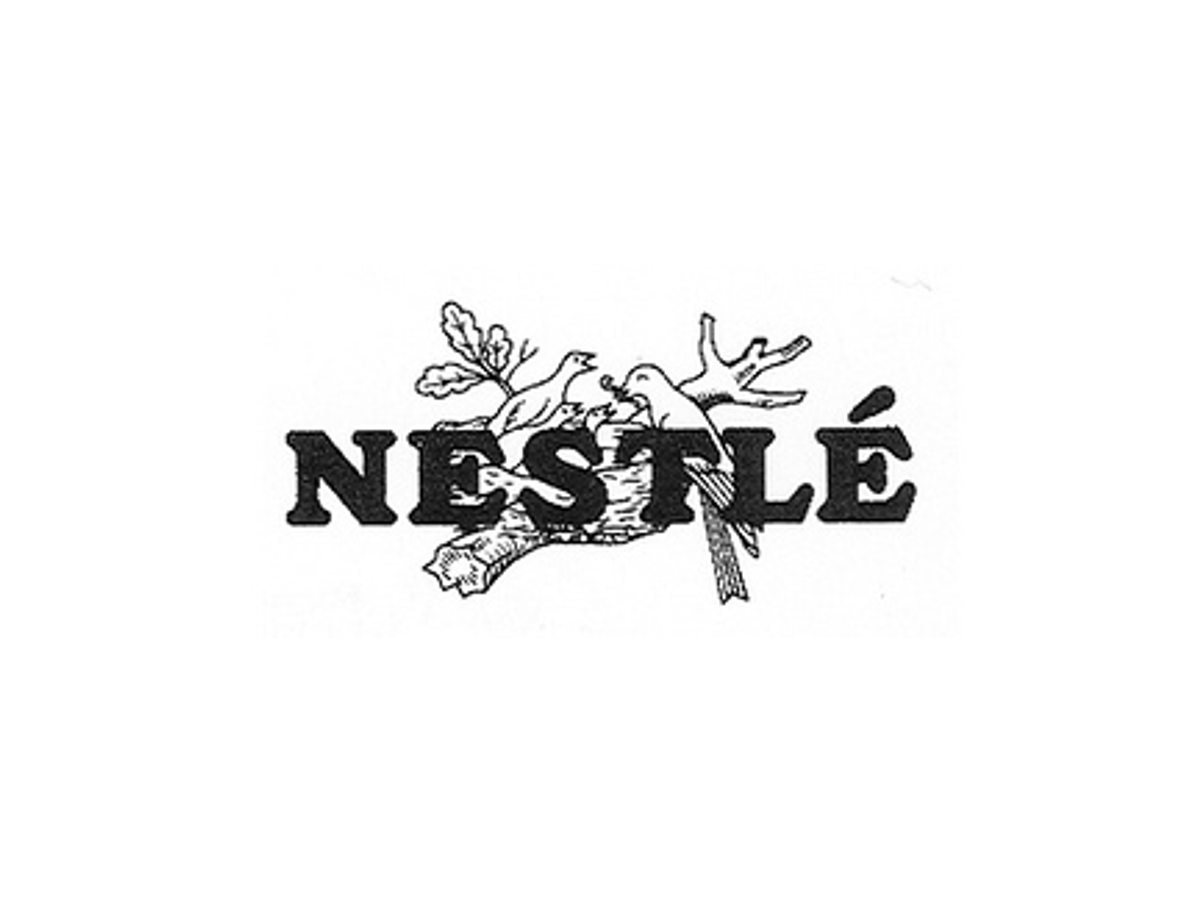
The Nestlé lettering and nest combine into an umbrella mark for different Nestlé brands worldwide. source
The current Nestlé mark keeps the parent visible while product brands carry daily public memory. source
Product and service lineage.
Nestlé only reads correctly when Nescafé, Nespresso, KitKat, Maggi, Purina, Gerber, water, health science, factories, distribution, and local-market adaptation stay visible together.

Coffee owns the morning route
Roast, preparation, aroma, and repeated use show why coffee is a daily portfolio anchor rather than a shelf-only category.

Pet care is a different trust system
Nutrition, animal wellbeing, household routine, and owner confidence need their own human scene inside the wider portfolio.

Culinary brands become household instructions
Convenience earns meaning when pantry products support a real meal, real preparation, and shared family use.

Nutrition claims require operating evidence
Formulation, measurement, sensory evaluation, and quality control make the science claim visible without turning the page into a laboratory diagram.
Product and service system
Anglo-Swiss and Henri Nestlé establish preservation, nutrition, and family trust before the modern portfolio exists.
Nescafé and Maggi move the company from preserved nutrition into daily beverage and meal routines.
Carnation, Rowntree, and Ralston Purina add dairy, confectionery, and pet care to the operating house.
Nestlé Health Science creates a higher-scrutiny lane while Starbucks rights show that growth can include licensed partner brands.
The infant-formula recall tests whether a vast portfolio can isolate affected batches, restore availability, and report the operating impact clearly.
Turning points.
Events that changed what buyers could see, buy, repeat, or trust.
Nescafé launches and turns coffee into a durable global product lane.
Maggi becomes part of Nestlé, adding cooking aids and meal shortcuts to the house.
Nestlé acquires Carnation, widening food, dairy, and pet-care reach.
Nestlé initiated a global precautionary recall of affected infant-formula batches and reported that product availability returned to normal during Q1.
Public reaction.
The useful reaction is about trust and pressure, not sentiment counts.
The best Nestlé proof is daily repeat use across coffee, cooking, snacks, pet feeding, water, and nutrition.
The parent brand faces pressure when product quality, nutrition claims, water, infant food, or pet-care trust come under scrutiny.
Full timeline.
Anglo-Swiss Condensed Milk Company is founded.
Henri Nestlé develops infant cereal, giving the future company its nutrition origin.
Nestlé and Anglo-Swiss merge, creating the larger food company structure.
Nescafé launches and turns coffee into a durable global product lane.
Maggi becomes part of Nestlé, adding cooking aids and meal shortcuts to the house.
Nestlé acquires Carnation, widening food, dairy, and pet-care reach.
Nestlé acquires Rowntree and brings KitKat into the portfolio.
Nestlé acquires Ralston Purina and deepens the pet-care business.
Nestlé Health Science is created, separating health and nutrition logic from ordinary food.
Nestlé gets perpetual rights to market Starbucks consumer packaged goods outside Starbucks retail.
Nestlé reports FY2025 sales of about USD 110.31B and net profit of about USD 11.13B.
Nestlé initiates a global precautionary recall of affected infant-formula batches and reports that product availability returned to normal during Q1.
Steal / avoid.
- Let product brands carry their own memory instead of forcing the parent name everywhere.
- Show daily-use rituals: coffee, meal prep, snack break, pet feeding, and family buying.
- Use portfolio architecture to separate trust problems by category.
- Do not describe Nestlé as only chocolate or coffee.
- Do not hide Nescafé, Nespresso, Starbucks Coffee At Home, KitKat, Smarties, Aero, Maggi, DiGiorno, Garden Gourmet, Purina, Fancy Feast, Friskies, Gerber, Cerelac, Perrier, S.Pellegrino, Acqua Panna, food service, and health science.
- Do not let the parent mark replace product-level proof.
Short answer.
Nestlé is useful for business owners because it shows why one company name is not enough. The portfolio has to explain daily rituals separately: coffee, cooking, snacks, pet care, water, nutrition, factories, distribution, and local taste.
Frequently asked questions
What is Nestlé's core brand signal?
Nestlé turns coffee, chocolate, pet care, cooking, nutrition, and distribution into daily brand architecture.
Why not describe Nestlé as one product?
Because Nestlé spans coffee, confectionery, cooking, ice cream, pet care, water, infant nutrition, health science, food service, and hundreds of product brands; the parent name alone does not explain the shelf.
What should another brand steal from Nestlé?
Let product brands carry their own memory instead of forcing the parent name everywhere.
Need help with your own brand?
Use Private brand work when your name, identity, proof, or message needs a sharper branding decision.
Sources.
Use the education shelf for the concepts behind this brand page.
Private brand workIf a parent brand governs many consumer labels across unrelated categories, Private Brand Work can define parent endorsement, category ownership, and proof without flattening the portfolio.
All brandsReturn to every brand page.
- Nestlé FY2025 full-year results
- Nestlé Q1 2026 sales and recall update
- Nestlé infant-formula recall timeline
- Nestlé logo evolution
- Nestlé company history
- Nestlé brand portfolio
- Nestlé coffee brands
- Nestlé pet-care brands
- Nestlé culinary brands
- Dated CHF-to-USD reference rate
- Nestlé market capitalization observation