Meta · Grow Your Brand · Social graph and reality-platform system · United States / Active / public company
Meta
Meta turns social identity, messaging, ads, AI, VR, and wearables into one parent-company bet. Meta connects a vast ad-funded app family to an expensive AI, compute, wearables, and Reality Labs expansion. Trust remains the pressure point.
Positioning, name, and architecture.
Three evidence checks before the page talks about scale, color, or public reaction.
Meta turns social identity, messaging, ads, AI, VR, and wearables into one parent-company bet.
Meta is a parent system: the Family of Apps funds AI, Reality Labs, wearables, and infrastructure while privacy, moderation, safety, and attention remain permanent trust constraints.
Meta became the parent-company name in October 2021 to signal a company extending beyond Facebook and toward a wider metaverse, AI, platform, and hardware bet.
No verified current company-wide tagline; Meta is read through the Family of Apps, advertising, AI, Quest, Horizon, and Ray-Ban Meta.
company system / portfolio architecture
Meta is a parent-company system spanning social apps, messaging, advertising, AI, developer infrastructure, VR, and wearables. Safety, privacy, and moderation are governance pressures on that system, not portfolio brands.
Facebook remains the original identity graph, community, feed, groups, pages, and social-memory layer.
social platform: Facebook source
Instagram carries visual culture, creators, Reels, shopping behavior, and youth attention pressure.
visual social platform: Instagram source
Messaging makes Meta a private communication layer, not only a feed company.
messaging products: WhatsApp and Messenger source
Threads gives Meta a text-social lane connected to Instagram identity.
text social platform: Threads source
The ad system monetizes attention, commerce intent, creators, businesses, and targeting across the app family.
monetization engine: Family of Apps advertising source
Hardware, VR, AR, wearables, and immersive software make the parent name visible beyond apps.
operating segment and hardware-software family: Reality Labs, Quest, Horizon, and Ray-Ban Meta source
AI turns Meta into a model, assistant, open-source, and developer-infrastructure story.
AI product and developer platform: Meta AI and Llama source
Connects permissions, a dedicated virtual machine and the Sentinel control agent to actions across services.
Personal AI agent: Muse source
Naming and tagline progression
No Meta masterbrand slogan is used here as operating proof.
Market and scale snapshot.
FY2025 revenue, earnings, disclosed public-float value, and listing context show the capital scale behind Meta's app and infrastructure system.
FY2025 revenue in USD.
FY2025 net income in USD.
Non-affiliate public float reported in the FY2025 Form 10-K as of 30 Jun 2025; not a live market-cap estimate.
Meta Platforms, Inc. is the listed parent company.
Color system.
Meta blue identifies the parent and platform layer while WhatsApp green, app icons, Quest hardware, and Ray-Ban Meta proof retain their own recognition.
How the palette behaves
Blue anchors the Meta infinity mark and the corporate technology layer.
WhatsApp green proves that major apps keep separate memory inside the Family of Apps.
Black and white give Facebook, Instagram, Threads, Quest, and Ray-Ban Meta room to remain distinct products.
Recognition assets.
Memory pieces the brand can use before someone finishes a sentence.
The Meta mark signals a parent bet rather than one app icon.
Facebook, Instagram, WhatsApp, Messenger, and Threads each carry a different public memory.
The headset makes the abstract future-platform story visible.
Wearables put capture, audio, and AI assistant behavior into daily life.
Scores.
Use these scores to compare recognition, trust, proof, pressure, and risk.
The app family is globally immediate.
The parent name, apps, ads, AI, and Reality Labs must stay separated.
Privacy, moderation, youth safety, and election scrutiny are central brand constraints.
Quest, Ray-Ban Meta, AI, and Llama make the future story concrete, but expensive.
Trust improves when products, ownership, capital allocation, and operating evidence remain connected.
The parent, operating segments, products, and governance pressures must stay clearly separated.
Infrastructure, hardware, products, and financial disclosure make the parent-company claim inspectable.
Meta is strongest when app reach, advertising economics, AI infrastructure, and hardware bets remain distinct.
How the logo changed.
The sourced progression follows the same corporate entity from its distinct 2019 Facebook company wordmark to the Meta parent identity introduced in 2021. Product and app marks are excluded.
The all-caps corporate wordmark separated the company identity from the Facebook app before the 2021 parent-company rename. source
The infinity mark and Meta wordmark establish the parent-company identity introduced in 2021.
Product and service lineage.
Meta only reads correctly when the app family, ad engine, messaging layer, AI models, Quest hardware, Ray-Ban Meta wearables, and governance pressure stay visible together.
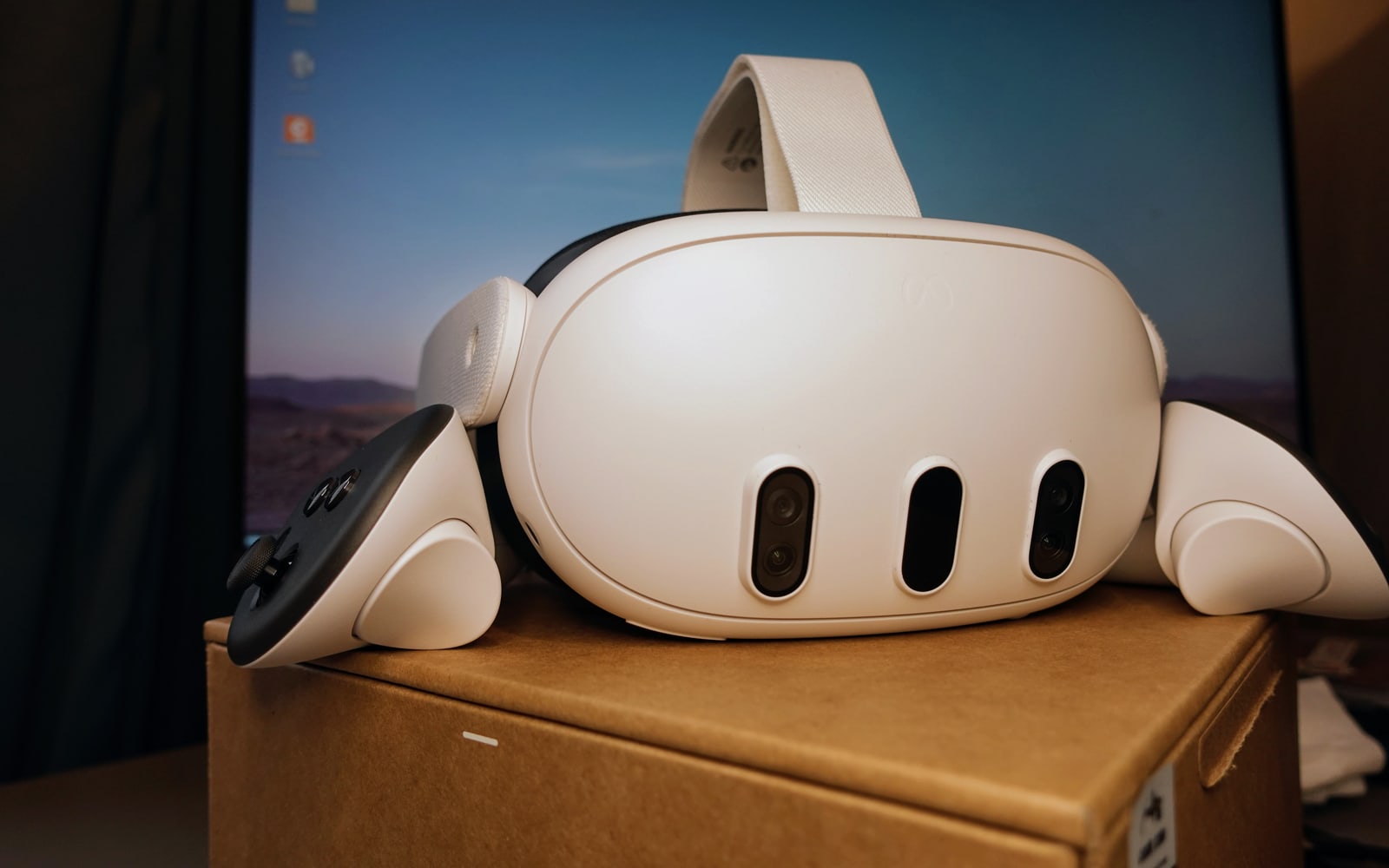
Hardware carries a different risk
The headset asks buyers to trust Meta with hardware, operating systems, accounts, content, and developer ecosystems.
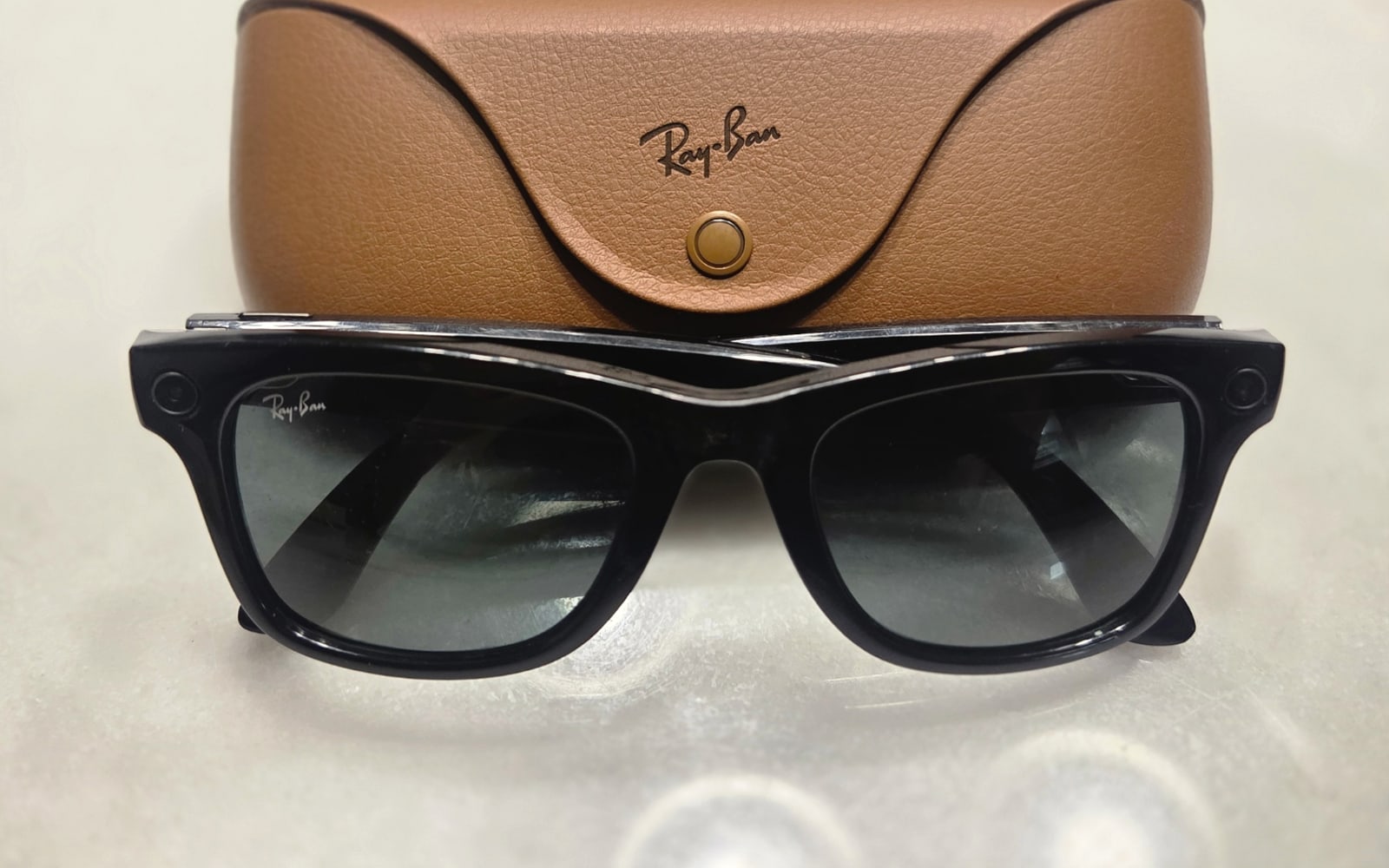
Wearables move the brand to the face
Ray-Ban Meta shifts the system from apps and headsets into cameras, AI assistants, audio, and daily social capture.

Custom compute turns the AI claim physical
Accelerators, racks, cooling, and deployment cadence show that Meta's AI position is also an industrial infrastructure bet.

Trust claims need adversarial proof
Content Seal promises durable provenance after cropping and compression; independent failure tests make the gap inspectable.
Product and service system
Facebook remains the original identity graph, community, feed, groups, pages, and social-memory layer.
Instagram carries visual culture, creators, Reels, shopping behavior, and youth attention pressure.
Messaging makes Meta a private communication layer, not only a feed company.
Threads gives Meta a text-social lane connected to Instagram identity.
The ad system monetizes attention, commerce intent, creators, businesses, and targeting across the app family.
Hardware, VR, AR, wearables, and immersive software make the parent name visible beyond apps.
AI turns Meta into a model, assistant, open-source, and developer-infrastructure story.
The personal agent adds delegated actions to Meta’s model and assistant products.
Turning points.
Events that changed what buyers could see, buy, repeat, or trust.
Facebook goes public and acquires Instagram.
Facebook acquires WhatsApp and Oculus, adding messaging and VR to the system.
Election and platform-abuse scrutiny make governance part of the brand.
Meta expands its Richland Parish data-center plan above USD 50 billion and toward 5GW of compute capacity.
A July Reuters report says Meta plans to begin manufacturing its code-named Iris AI accelerator in September, based on an internal memo.
Meta says Content Seal survives cropping and compression; a Reuters analysis of 40 Meta-generated images found verification failed for 55% after cropping.
Meta introduced Muse as a personal agent that can use connected services. Meta describes a dedicated Secure VM and a separate Sentinel agent that checks outbound actions.
Amazon blocked Muse from shopping on its site, according to GeekWire’s reporting and Amazon’s statement.
Reuters, citing Apptopia estimates, reported 2.8 million Muse installs in its first 12 days.
Public reaction.
The useful reaction is about trust and pressure, not sentiment counts.
The strongest Meta proof is reach: people use its apps to message, publish, buy, watch, create, organize, and increasingly ask AI for help.
The brand weakens when privacy, moderation, youth safety, political manipulation, or Reality Labs spending makes the parent promise feel too abstract or too powerful.
Full timeline.
Facebook launches and creates the original social-identity layer.
News Feed turns Facebook into a daily attention habit.
Facebook Connect extends identity across the web.
Facebook goes public and acquires Instagram.
Facebook acquires WhatsApp and Oculus, adding messaging and VR to the system.
Election and platform-abuse scrutiny make governance part of the brand.
Cambridge Analytica pressure makes privacy a permanent public issue.
Libra / Diem shows Meta's ambition to extend beyond social apps, then meets regulatory resistance.
Facebook changes the parent-company name to Meta and centers the metaverse bet.
Quest Pro and Reality Labs losses make the future-platform cost more visible.
Threads launches and Llama makes open AI infrastructure part of the story.
Meta AI and Ray-Ban Meta put assistant and wearable proof into more daily contexts.
FY2025 results show the Family of Apps still funds the broader AI and Reality Labs system.
Meta raises its Richland Parish AI data-center investment above USD 50 billion and plans 5GW of compute capacity.
Reuters reports that Meta plans to begin manufacturing its code-named Iris AI accelerator in September.
Muse adds permission to act
Amazon blocks Muse shopping
Early downloads show reach, not retention
Steal / avoid.
- Separate parent-company ambition from app-level recognition.
- Let every product lane carry a different trust job: feed, visual culture, messaging, AI, hardware, and developer tools.
- Make future bets physical before asking people to believe the narrative.
- Treat governance as brand risk and operating responsibility when the product shapes public behavior.
- Do not reduce Meta to Facebook.
- Do not reduce Meta to the metaverse.
- Do not fake app screens, notifications, AI dashboards, or abstract infinity art.
- Do not ignore WhatsApp, Instagram, Threads, Quest, Ray-Ban Meta, Meta AI, Llama, ads, privacy, or moderation pressure.
Short answer.
Meta should be read as a parent system, not Facebook with a new name. The useful lesson is to separate the Family of Apps, messaging, ads, AI, Llama, Quest, Ray-Ban Meta, and governance pressure before judging whether the parent mark earns trust.
Frequently asked questions
What is Meta's core brand signal?
Meta turns social identity, messaging, ads, AI, VR, and wearables into one parent-company bet.
Why not describe Meta as one product?
Because Meta spans Facebook, Instagram, WhatsApp, Messenger, Threads, advertising, AI, Quest, Horizon, and Ray-Ban Meta; calling it Facebook hides both the app family and hardware bets.
What should another brand steal from Meta?
Separate parent-company ambition from app-level recognition.
Need help with your own brand?
Use Private brand work when your name, identity, proof, or message needs a sharper branding decision.
Sources.
Use the education shelf for the concepts behind this brand page.
Private brand workIf your parent brand sits above high-recognition apps, advertising, AI, and hardware, Private Brand Work can decide where the parent should lead and where product names must stay independent.
All brandsReturn to every brand page.
- https://www.sec.gov/Archives/edgar/data/1326801/000162828026003942/meta-20251231.htm
- https://www.meta.com/about/company-info/
- https://about.fb.com/news/2019/11/introducing-our-new-company-brand/
- https://about.fb.com/news/2021/10/facebook-company-is-now-meta/
- https://about.fb.com/news/2023/07/introducing-threads-new-app-text-sharing/
- https://www.meta.com/emerging-tech/
- https://www.meta.com/quest/
- https://www.meta.com/ai-glasses/
- https://ai.meta.com/
- https://developer.meta.com/ai/
- https://www.meta.com/actions/
- https://investor.atmeta.com/investor-news/press-release-details/2026/Meta-Reports-First-Quarter-2026-Results/default.aspx
- https://about.fb.com/news/2026/07/teachers-local-businesses-win-as-meta-expands-louisiana-data-center/
- https://live.euronext.com/en/financial-news/meta-put-ai-chip-production-september-it-looks-double-computing-capacity-memo-shows
- https://ai.meta.com/blog/introducing-muse-image-muse-video-msl/
- https://www.investing.com/news/stock-market-news/meta-ai-image-detector-fails-to-identify-some-of-its-own-cropped-ai-images-reuters-analysis-finds-4786551
- Meta introduces Muse
- GeekWire: Amazon blocks Muse
- Reuters: Muse early adoption estimates