Mercedes-Benz · Grow Your Brand · Prestige Engineering Cue · Germany / Active
Mercedes-Benz
Mercedes-Benz makes prestige visible through a star, a grille, and product discipline. A Mercedes-Benz brand page on the three-pointed star, Maybach flagship status, S-Class luxury, G-Class durability, AMG performance, EQ electric pressure, the AEG and DaimlerChrysler holding-company stretch, 2025 financial scale, and the lesson that a luxury cue must keep proving engineering and status at the same time.
Positioning, name, and architecture.
Mercedes-Benz joins a portable star, a founder-linked name, and a tiered product house in which S-Class, G-Class, AMG, Maybach, Vans, finance, and software must each prove a distinct job.
Mercedes-Benz connects the star, Maybach flagship luxury, sedan authority, durable SUV memory, AMG performance, and electric transition into one prestige-engineering system.
Mercedes-Benz positions premium mobility as engineering status made visible through symbol, grille, cabin, and model hierarchy.
Mercedes-Benz joins the Mercedes nameplate with Benz engineering heritage; the public name carries both personal naming memory and automotive origin.
The best or nothing.
branded house with high-stakes sub-brand tiers
The current group is much narrower than the Daimler-Benz and DaimlerChrysler eras: the star now leads Mercedes-Benz Cars, Vans, Financial Services, AMG, Maybach, S-Class, G-Class, and electric software cues, while AEG, DASA, debis, Chrysler, and Daimler Truck show how far the corporate roof once stretched.
Sedans, SUVs, coupes, and electric models carry the largest public burden for safety, comfort, technology, and prestige.
Passenger-car core: S-Class / G-Class / electric CLA source
Sprinter, eSprinter, V-Class, and the new modular van architecture extend engineering trust into work and group transport.
Commercial and private vans: Sprinter / eSprinter / Vision V source
AMG turns engines, chassis, sound, and motorsport association into a separate performance promise.
Performance tier: Mercedes-AMG GT source
Rear-seat space, materials, privacy, and restrained badging raise the proof burden above ordinary premium trim.
Ultra-luxury tier: Mercedes-Maybach S 680 source
Financing, leasing, insurance, and fleet services keep the brand involved after product selection and through the ownership cycle.
Ownership and fleet system: EUR 128.8 billion FY2025 portfolio source
Electric platforms, charging, digital features, and MB.OS test whether new technology can remain recognizably Mercedes-Benz.
Electric and software system: Electric CLA / MB.OS source
Naming and tagline progression
Mercedes-Benz becomes the public compound name.
Daimler AG becomes Mercedes-Benz Group AG.
The best or nothing.
Market and scale snapshot.
FY2025 revenue and adjusted EBIT show the scale behind the passenger-car, van, finance, AMG, Maybach, and software system.
Official FY2025 revenue of EUR 132.2 billion, converted at the ECB 31 Dec 2025 rate of 1.1750.
Official FY2025 adjusted EBIT of EUR 8.2 billion, converted at the ECB 31 Dec 2025 rate of 1.1750.
Historical 2025 year-end market value of EUR 57.23 billion, converted at the ECB 31 Dec 2025 reference rate and fixed to that reporting period.
Frankfurt and Stuttgart / Mercedes-Benz Group AG; Bloomberg MBG:GR.
Color system.
Mercedes-Benz color works when restraint lets engineering, material quality, and the star carry the status.
How the palette behaves
Black makes the cue controlled, formal, and executive.
Silver carries metal, engineering, and machine precision.
Deep blue adds premium technology pressure without making the brand feel playful.
Recognition assets.
The star, grille, hood ornament, sedan proportion, G-Class outline, AMG stance, and Maybach cabin create recognition through both symbol and product shape.
The mark is simple enough to read on hood, grille, key, app, and showroom sign.
The executive sedan makes comfort, safety, and status visible.
The boxy SUV gives the prestige system a different kind of proof.
Electric models have to feel like Mercedes-Benz, not an isolated badge.
Scores.
These scores test whether Mercedes-Benz prestige remains legible across luxury, performance, utility, electric, software, and ownership surfaces.
The star is one of the fastest automotive identifiers.
Strong but stretched by model breadth.
Works when product discipline stays visible.
AMG, Maybach, and EQ need careful separation.
Company, brand, and product families are easy to identify.
Electric design has to earn the old trust.
Maybach cabins, G-Class bodywork, AMG performance, and the star give buyers visible reasons for the premium.
S-Class, G-Class, AMG, and Maybach occupy distinct jobs without breaking the shared prestige system.
How the logo changed.
Four sourced identity stages move from the 1916 Mercedes predecessor star to the 1926 joined seal, the 1933 streamlined mark, and today's horizontal Mercedes-Benz lockup.
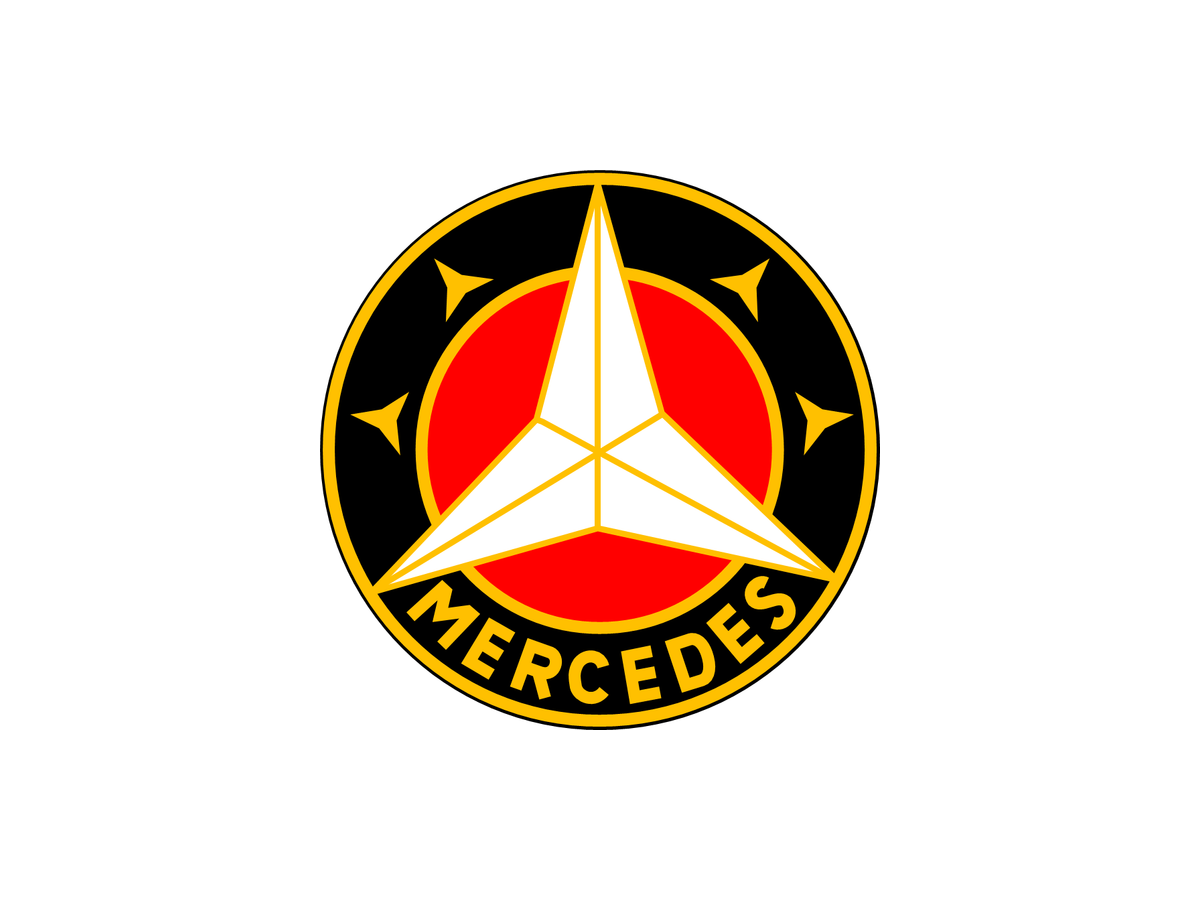
The Mercedes predecessor identity places the three-pointed star inside a ring with the Mercedes name, showing the symbol before the Benz merger. source

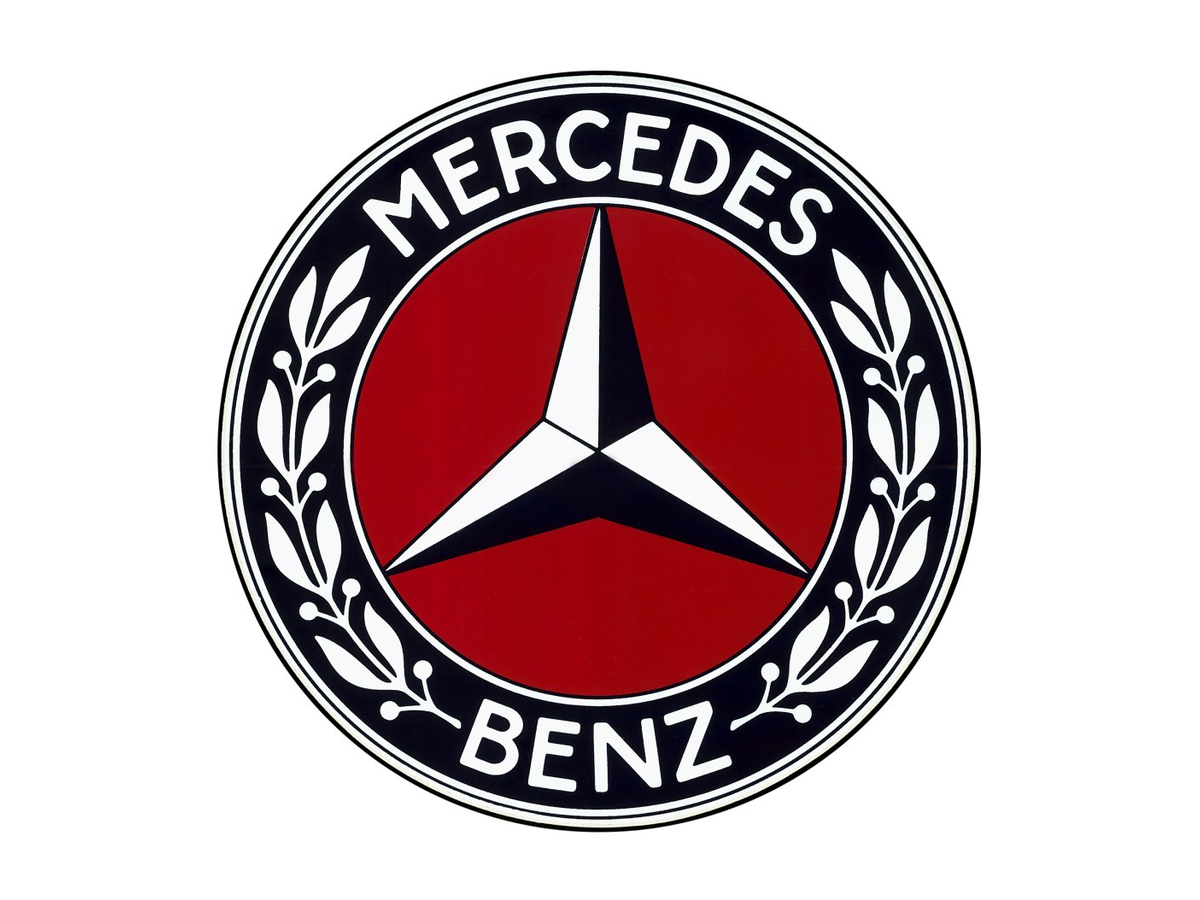
The official centenary archive shows the star inside the Benz laurel ring, registered after Daimler-Benz AG was formed in 1926. source
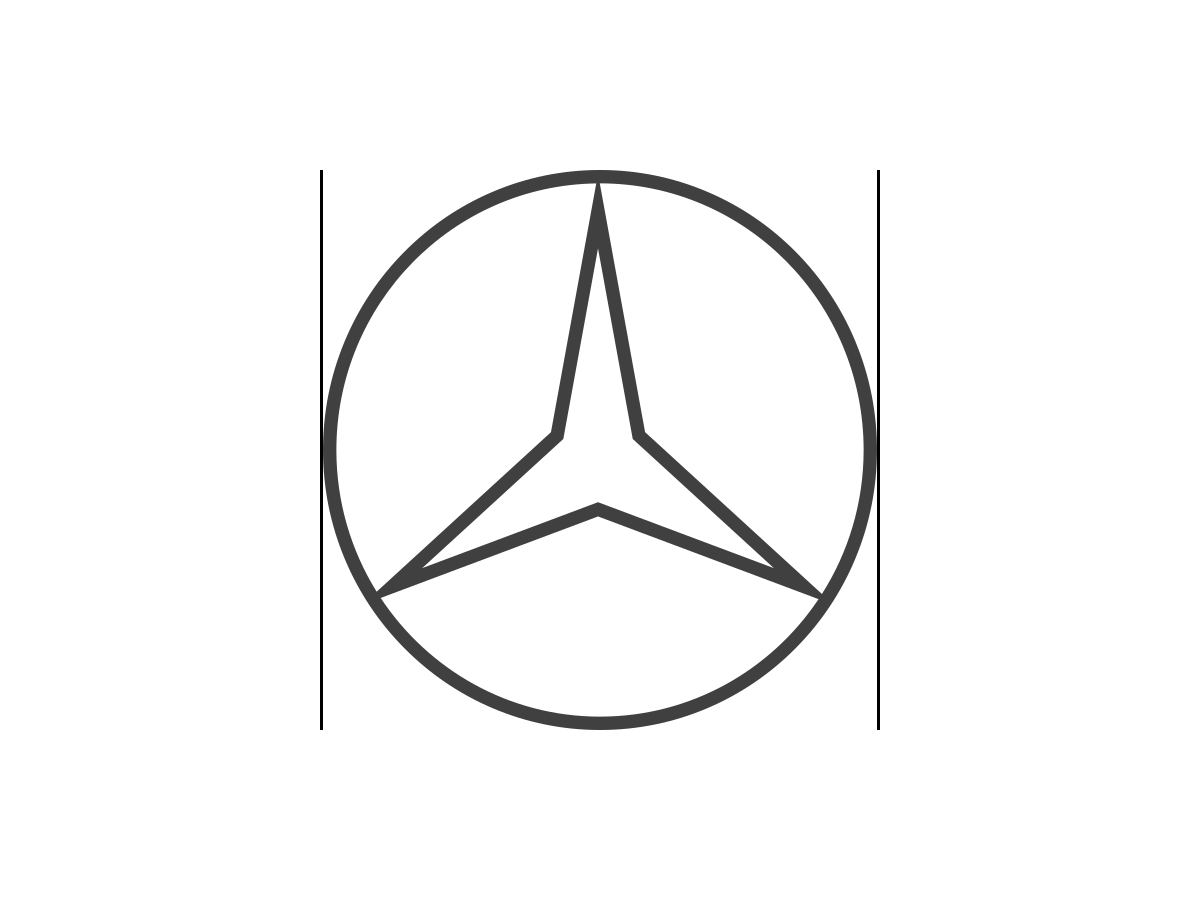
The 1933 identity removes the laurel and lettering, reducing the mark to a thin ring and three-pointed star for cleaner reproduction.
The current horizontal lockup pairs the simplified star with the Mercedes-Benz name, giving the progression a distinct current identity while the source-mark slot retains the official Media star.
Product and service lineage.
Mercedes-Benz has to make one star stretch across flagship safety, vans, finance, G-Class durability, AMG performance, Maybach luxury, electric vehicles, and software without becoming vague.
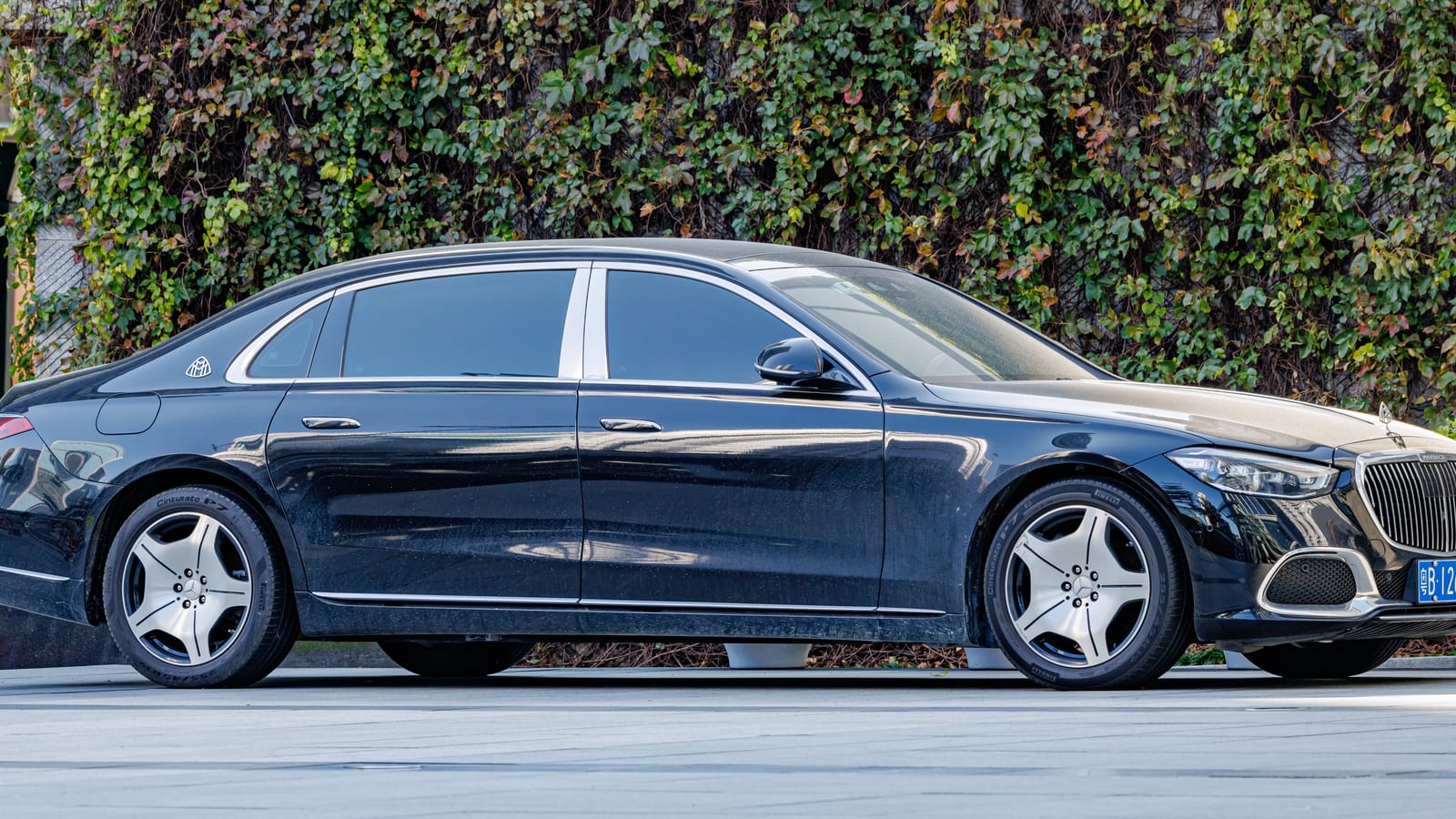
S-Class sets the authority ceiling
The flagship sedan turns proportion, quiet surfaces, technology, and rear-seat comfort into executive status proof.
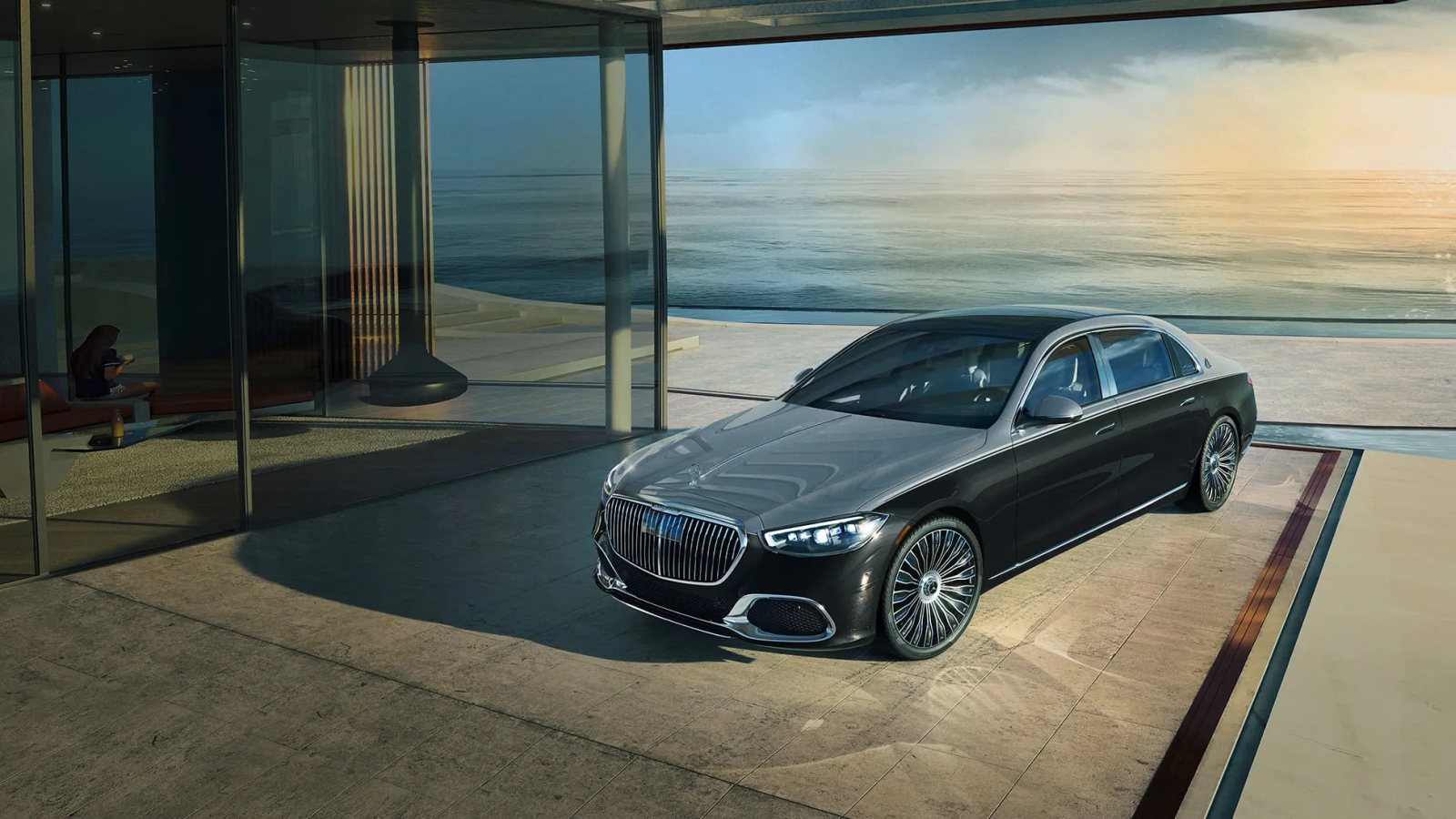
Maybach raises the proof burden
Ultra-luxury badging only works when proportion, material detail, and cabin experience support the price tier.
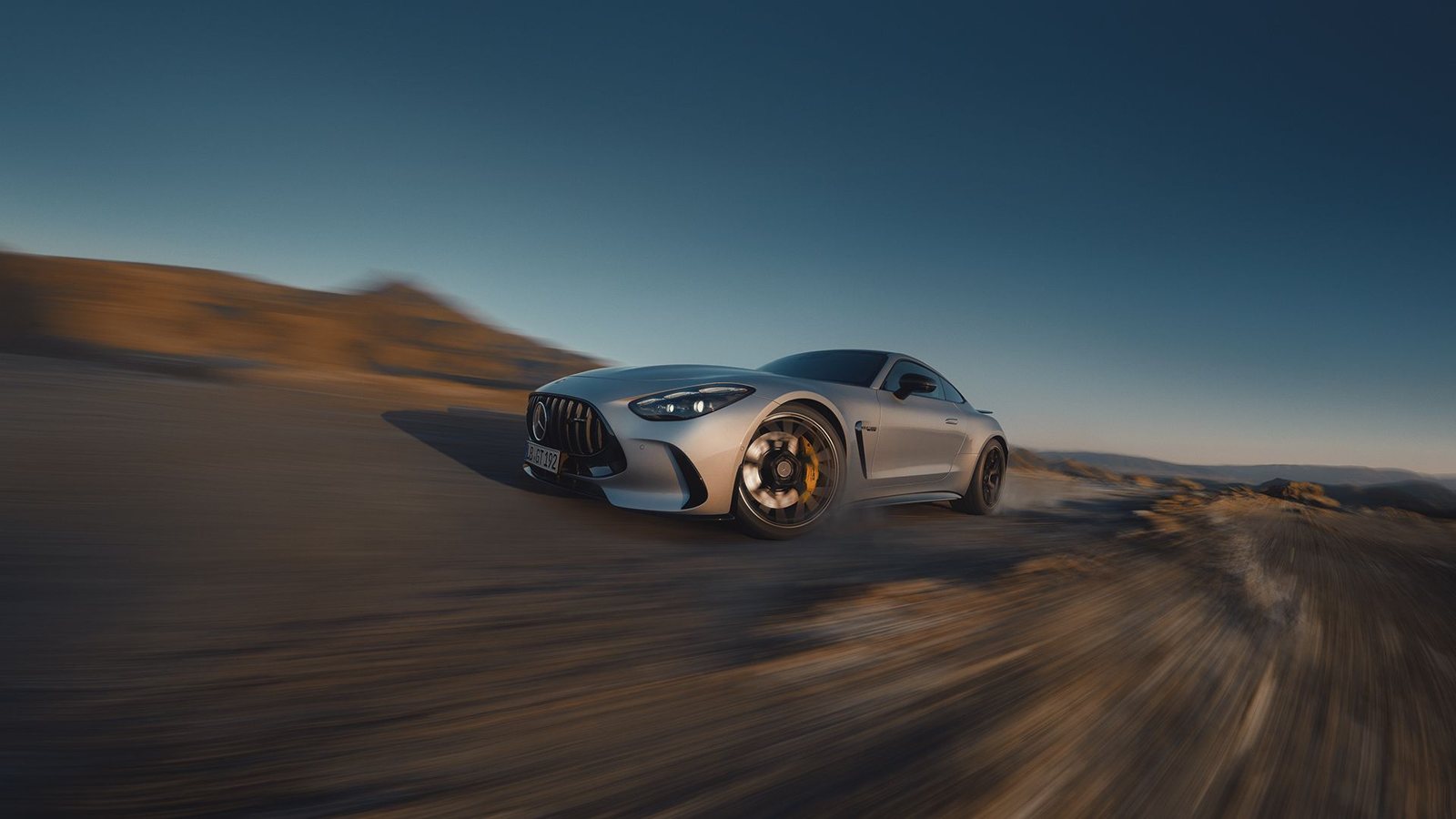
AMG performance
Performance products keep the prestige system from becoming only chauffeur luxury.
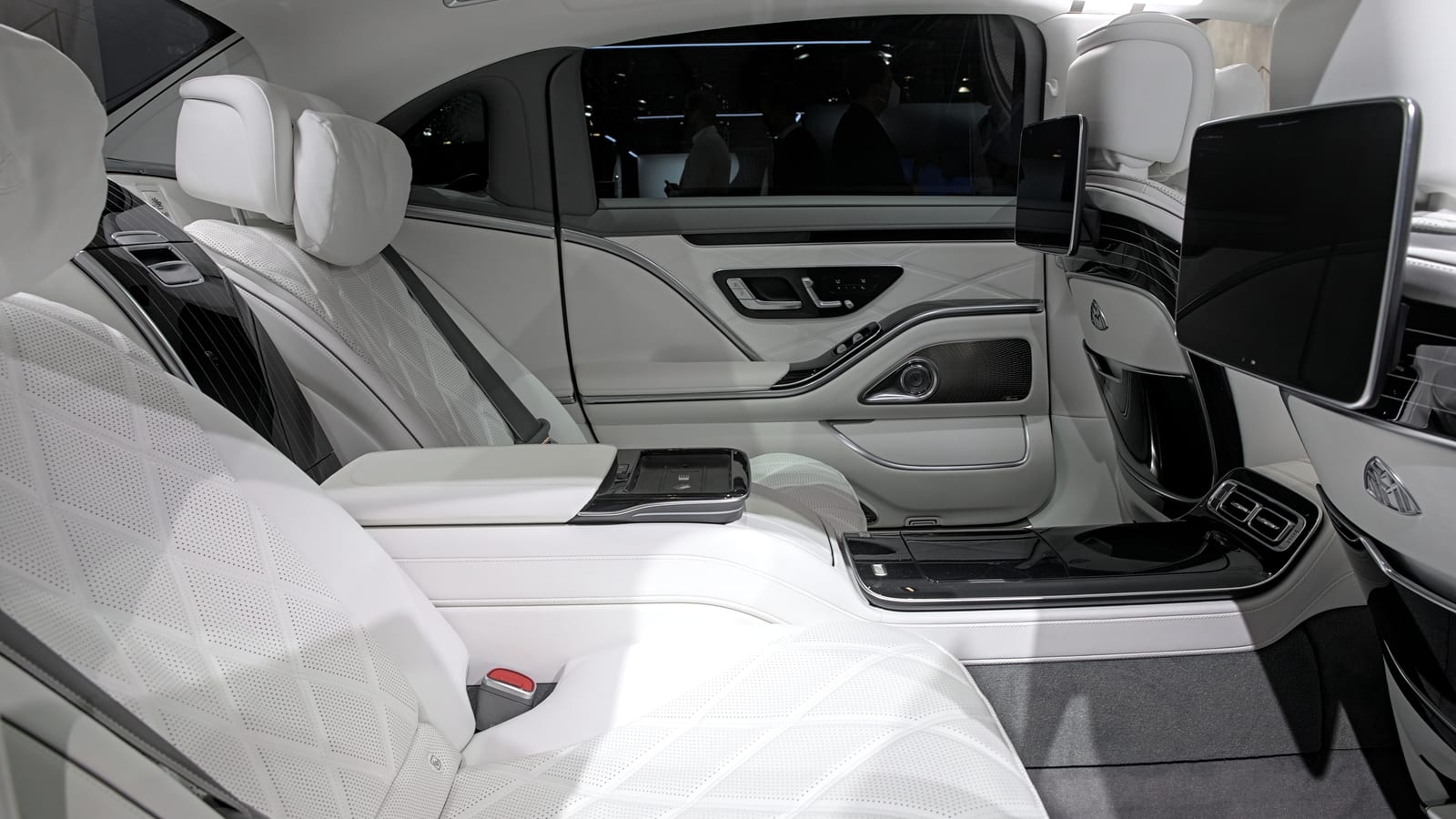
The cabin has to prove the flagship promise
Rear-seat space, controls, materials, privacy, and finish carry the luxury claim after the exterior badge disappears from view.
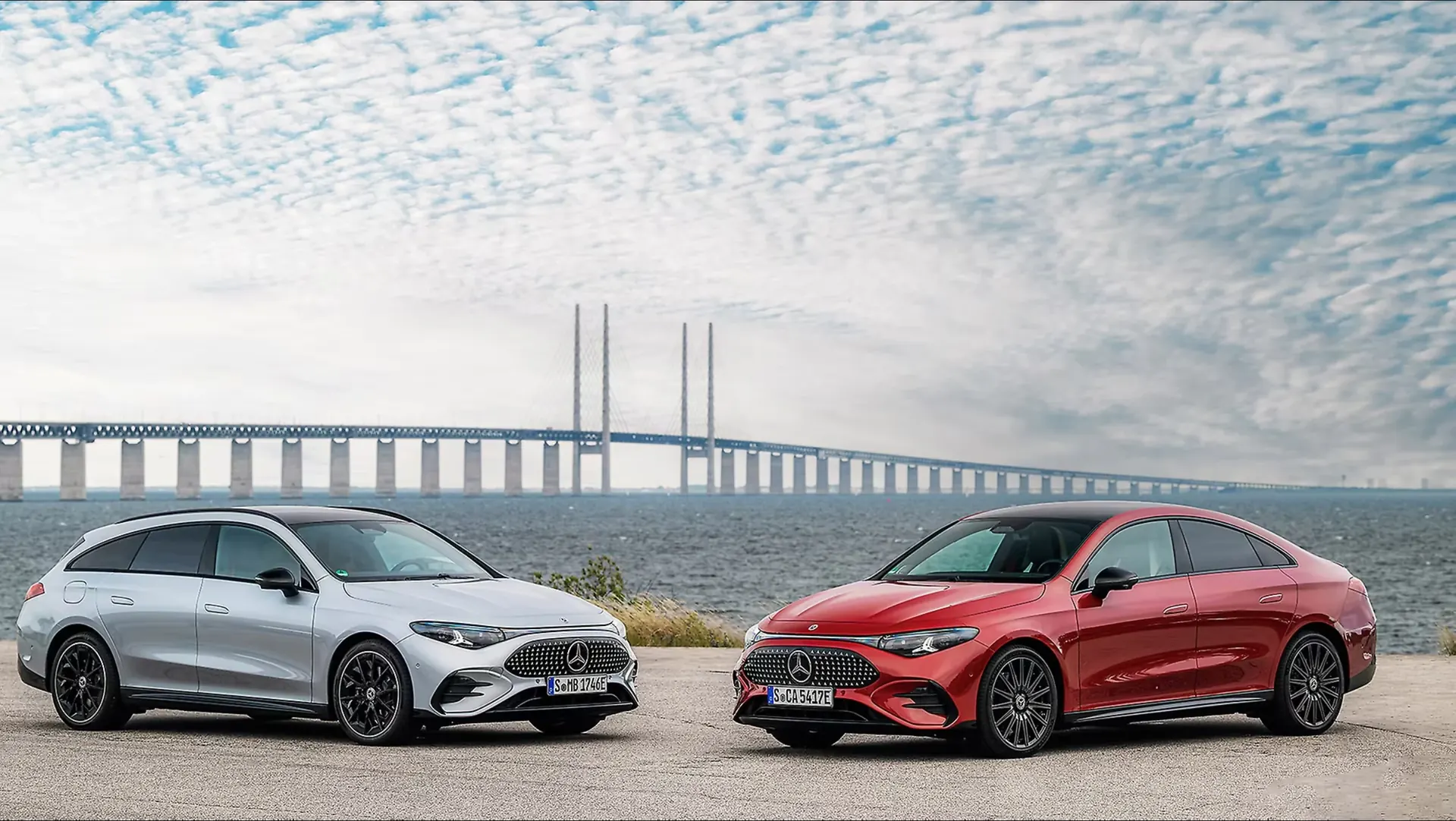
Electric products now carry MB.OS
The electric CLA family makes the software transition visible: efficiency, digital features, and the Mercedes-Benz Operating System now have to reinforce the old prestige promise.
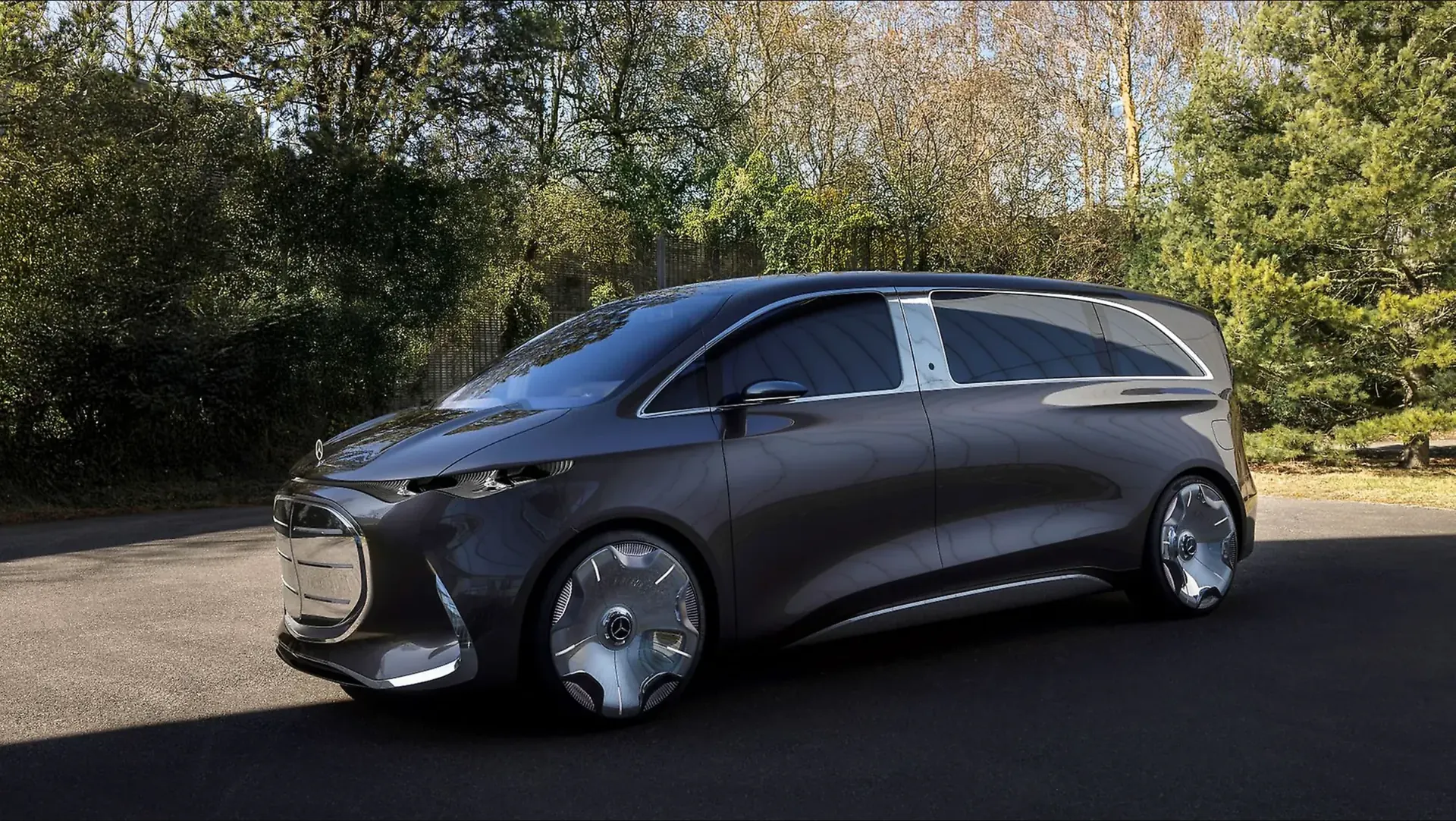
Vans are a separate architecture job
Sprinter, electric commercial vans, and the new private-van architecture extend the star beyond passenger-car luxury into work, fleets, and group transport.
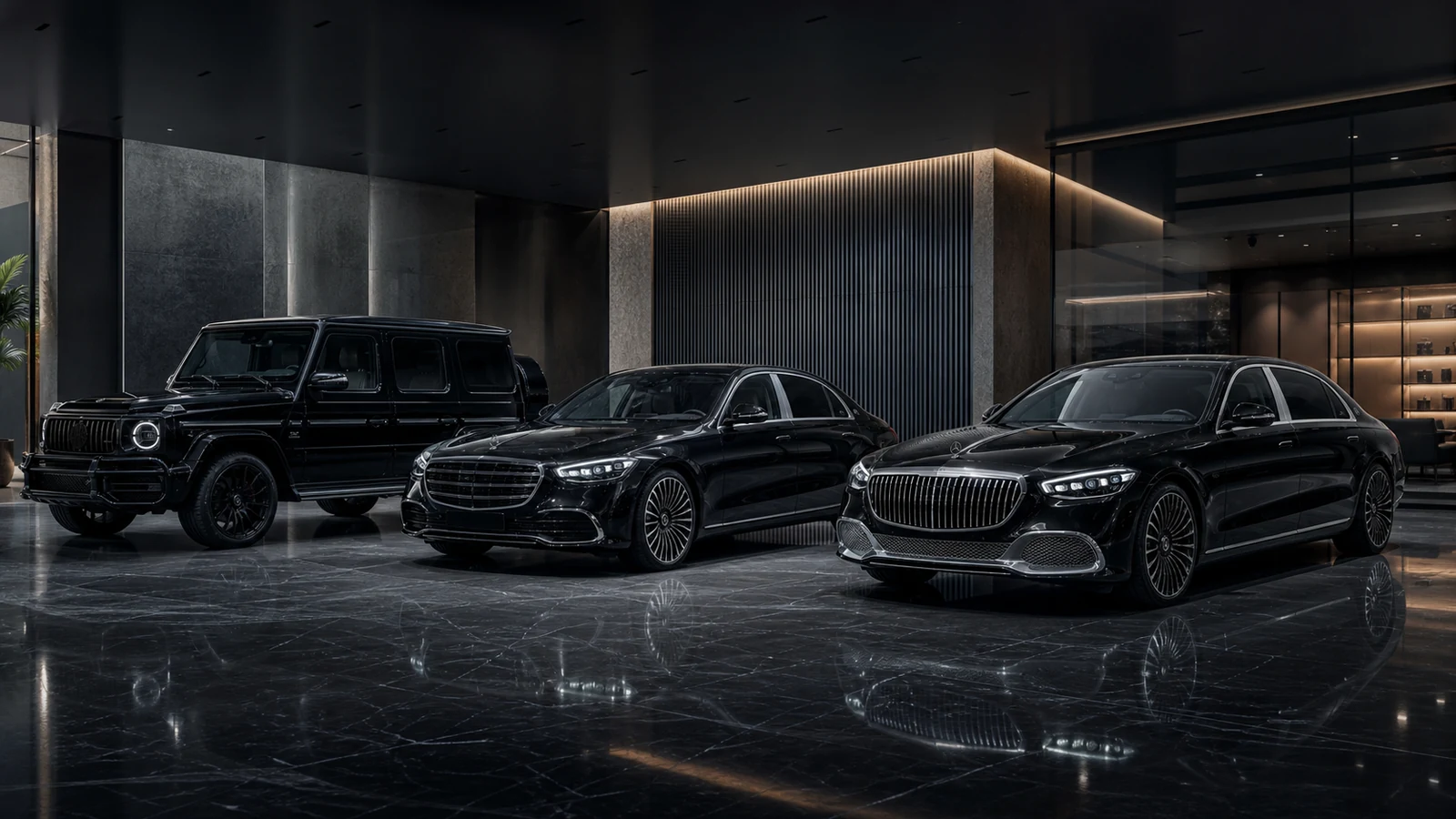
AI concept / one retail system, several product roles
This disclosed AI-generated concept is not exact product photography. It illustrates the brand-system challenge: different vehicle jobs still need one restrained, recognizable retail environment.
Product and service system
Mercedes-Benz becomes the joined public name.
The flagship sedan turns comfort, privacy, and safety into status proof.
The box-form SUV makes durability and status visible in a separate shape language.
Performance and ultra-luxury tiers raise proof expectations.
Leasing, finance, insurance, and mobility services extend the brand from the vehicle into ownership and fleet decisions.
Sprinter and the van range test whether engineering trust can carry into commercial work without borrowing passenger-car luxury cues.
Electric vehicles, charging, infotainment, and software updates test whether the brand can evolve without losing restraint or service clarity.
Turning points.
Moments that show where the star earns trust or has to answer pressure.
Daimler-Benz's 1980s integrated-technology push made Mercedes-Benz only one part of a wider AEG, DASA, and debis corporate system.
The 1998 Chrysler merger tested whether Mercedes-Benz prestige could stay sharp while the company also held a broad U.S. volume brand.
After the Daimler Truck spin-off, the 2022 Mercedes-Benz Group name moved the public center back to Cars, Vans, Financial Services, AMG, Maybach, S-Class, G-Class, and electric/software proof.
Public reaction.
Mercedes-Benz earns trust when status and engineering agree; it loses trust when the badge feels heavier than the product.
Mercedes-Benz product pages support the prestige claim with distinct G-Class durability, Maybach comfort, and AMG performance roles.
The annual report keeps product investment, software transition, margins, and luxury positioning visible together, showing why the badge cannot replace operating proof.
Full timeline.
Carl Benz patents the three-wheeled Motorwagen while Gottlieb Daimler and Wilhelm Maybach develop a motor carriage.
The Mercedes name enters automobile use and Daimler registers the three-pointed star as a trademark.
Daimler and Benz combine their star and laurel identities, then merge as Daimler-Benz AG under the Mercedes-Benz name.
A streamlined ring-and-star mark removes the laurel and lettering from the core symbol.
S-Class lineage, SL sports cars, safety engineering, and the G-Class establish distinct flagship, performance, and durability jobs.
AMG grows from an independent performance engineering firm into the Mercedes-Benz performance system.
DaimlerChrysler stretches the corporate roof across Mercedes-Benz and Chrysler before the group returns to the Daimler name.
Maybach returns as an ultra-luxury marque and later becomes the Mercedes-Maybach flagship tier.
Daimler Truck is spun off and Daimler AG becomes Mercedes-Benz Group AG.
Mercedes-Benz Group reports EUR 132.2 billion revenue, EUR 8.2 billion adjusted EBIT, and a EUR 128.8 billion Financial Services portfolio.
Steal / avoid.
- Make one cue portable across real surfaces.
- Use product hierarchy to prove premium range.
- Let restraint make the mark feel expensive.
- Do not let sub-brands blur the core promise.
- Do not use luxury language without engineering proof.
- Do not let electric transition look like a detached experiment.
Short answer.
Mercedes-Benz shows how a prestige brand works when symbol, product proof, and corporate architecture agree: the star is simple, but Maybach, S-Class, G-Class, AMG, EQ, and the post-DaimlerChrysler refocus have to keep earning it.
Frequently asked questions
What is Mercedes-Benz's strongest cue?
The three-pointed star, because it stays legible across product, retail, key, and digital surfaces.
What makes Mercedes-Benz useful for brand strategy?
It shows how a simple mark needs product hierarchy, engineering proof, and premium restraint behind it.
What should another brand avoid copying?
Do not copy luxury cues unless the product and service prove premium expectations.
Need help with your own brand?
Use Private brand work when your name, identity, proof, or message needs a sharper branding decision.
Sources.
Use the education shelf for the concepts behind this brand page.
Private brand workUse this when the decision belongs to your own brand.
All brandsReturn to every brand page.
- Mercedes-Benz annual reports
- Mercedes-Benz FY2025 results
- Mercedes-Benz share, ticker, and ISIN disclosure
- Mercedes-Benz historical year-end market capitalization
- ECB euro reference exchange rates, 31 December 2025
- Daimler-Benz integrated technology era
- Birth of the Mercedes-Benz name
- DaimlerChrysler company history
- Daimler Truck separation history
- Mercedes-Benz Group naming history
- Mercedes-Benz vehicle icons: S-Class, SL, and G-Class milestones
- Mercedes-AMG history and Affalterbach production network
- Daimler annual report 2002: Maybach return
- Daimler annual report 2014: Mercedes-Maybach launch
- Mercedes-Benz annual report 2022: EQ and MB.OS
- Mercedes-Benz Media: 100 years of brand history
- 1916 Mercedes predecessor logo
- Official 1926 star-and-laurel archive image
- 1933 streamlined Mercedes-Benz logo
- Current Mercedes-Benz horizontal lockup
- Current official Mercedes-Benz Media star SVG
- Official Mercedes-Benz 2025 Cars, MB.OS, and Vans release
- Mercedes-Maybach S-Class side-profile source
- Mercedes-Maybach exterior source
- Mercedes-AMG GT source
- Mercedes-Maybach cabin source
- Official Mercedes-AMG G-Class product page
- Official Mercedes-Maybach S-Class product page
- Official Mercedes-AMG GT product page


_China_(3).jpg)

.jpg)
