Hugo Boss · Grow Your Brand · Premium apparel architecture · Germany / Active
Hugo Boss
Hugo Boss turns BOSS, HUGO, stores, fit, campaigns, and digital commerce into a sharper apparel system. A brand page on Hugo Boss as a practical premium-fashion lesson: do not let one name carry every buyer. The house separates BOSS and HUGO, then uses tailoring, casualwear, retail, ecommerce, and campaign discipline to make style feel safer to buy.
Positioning, name, and architecture.
Three evidence checks before the page talks about scale, color, or public reaction.
Hugo Boss turns BOSS, HUGO, stores, fit, campaigns, and digital commerce into a sharper apparel system.
A brand page on Hugo Boss as a practical premium-fashion lesson: do not let one name carry every buyer. The house separates BOSS and HUGO, then uses tailoring, casualwear, retail, ecommerce, and campaign discipline to make style feel safer to buy.
Hugo Boss operates as the parent/company mark for a wider system.
No verified current company-wide tagline; BOSS and HUGO carry different wardrobe, price, and attitude roles.
company system / portfolio architecture
BOSS: The premium authority lane: tailoring, polished casualwear, stores, and adult status. HUGO: The younger and more expressive lane, useful because it keeps youth energy from diluting BOSS. Retail stores: Stores make fit, fabric, service, merchandising, and premium confidence inspectable. Digital commerce: Online buying has to carry style and fit confidence without the fitting-room proof. Fragrance and licensed categories: Licensing extends the name but needs restraint so the apparel promise stays credible. Campaign and celebrity surface: Public campaigns should clarify the lane, not replace product proof.
The premium authority lane: tailoring, polished casualwear, stores, and adult status.
Portfolio family: BOSS source
The younger and more expressive lane, useful because it keeps youth energy from diluting BOSS.
Portfolio family: HUGO source
Stores make fit, fabric, service, merchandising, and premium confidence inspectable.
Portfolio family: Retail stores source
Online buying has to carry style and fit confidence without the fitting-room proof.
Portfolio family: Digital commerce source
Licensing extends the name but needs restraint so the apparel promise stays credible.
Portfolio family: Fragrance and licensed categories source
Public campaigns should clarify the lane, not replace product proof.
Portfolio family: Campaign and celebrity surface source
Naming and tagline progression
Hugo Ferdinand Boss founds the company in Metzingen, Germany.
The postwar company rebuilds around menswear production.
BOSS becomes associated with menswear, suits, and sharper public status.
Market and scale snapshot.
Hugo Boss's FY2025 revenue, profit, and market value show the scale behind the BOSS and HUGO labels, owned retail, ecommerce, and licensed fragrance categories.
EUR 4,269.838M converted at EUR/USD 1.1383.
EUR 249.480M attributable to equity holders.
Dated public-equity value observed 14 Jul 2026.
Publicly listed independent company; Frasers offer remains pending.
Color system.
Hugo Boss uses black, gray, and warm tailoring neutrals to keep BOSS and HUGO related without erasing their different price, attitude, and wardrobe roles.
How the palette behaves
Black anchors the corporate name and the formal BOSS tailoring lane.
Cool gray gives HUGO and casualwear a sharper, younger separation from the main label.
Warm stone supports fabric, store, and fragrance proof without inventing a shared fashion mood.
Recognition assets.
Memory pieces the brand can use before someone finishes a sentence.
The heavy black wordmark promises control, status, and adult confidence.
Fit and proportion are the proof before any slogan can work.
BOSS and HUGO let the same company talk to different buyers.
Store light, spacing, hangers, packaging, and service make the price feel believable.
Scores.
Use these scores to compare recognition, trust, proof, pressure, and risk.
The name is widely known and easy to read at store, garment, and campaign level.
The BOSS/HUGO split is useful when the page keeps the lanes separate.
Office wear, casualwear, fragrance, and ecommerce put the signal into real routines.
Fashion brands lose trust quickly when campaign style outruns product fit.
Hugo Boss only reads correctly when BOSS, HUGO, tailoring, casualwear, womenswear, stores, ecommerce, fragrance, and campaign surfaces stay visibly separated.
Hugo Boss needs parent, product, service, and history lanes labeled cleanly so search systems do not flatten the brand into one vague entity.
Hugo Boss turns BOSS, HUGO, stores, fit, campaigns, and digital commerce into a sharper apparel system.
Hugo Boss weakens when BOSS, HUGO, tailoring, casualwear, fragrance, stores, ecommerce, and campaign language blur into one generic fashion promise.
How the logo changed.
Historical logo progression is not approved for Hugo Boss yet. This lane shows only the verified current source mark until dated old-era logo assets are sourced.
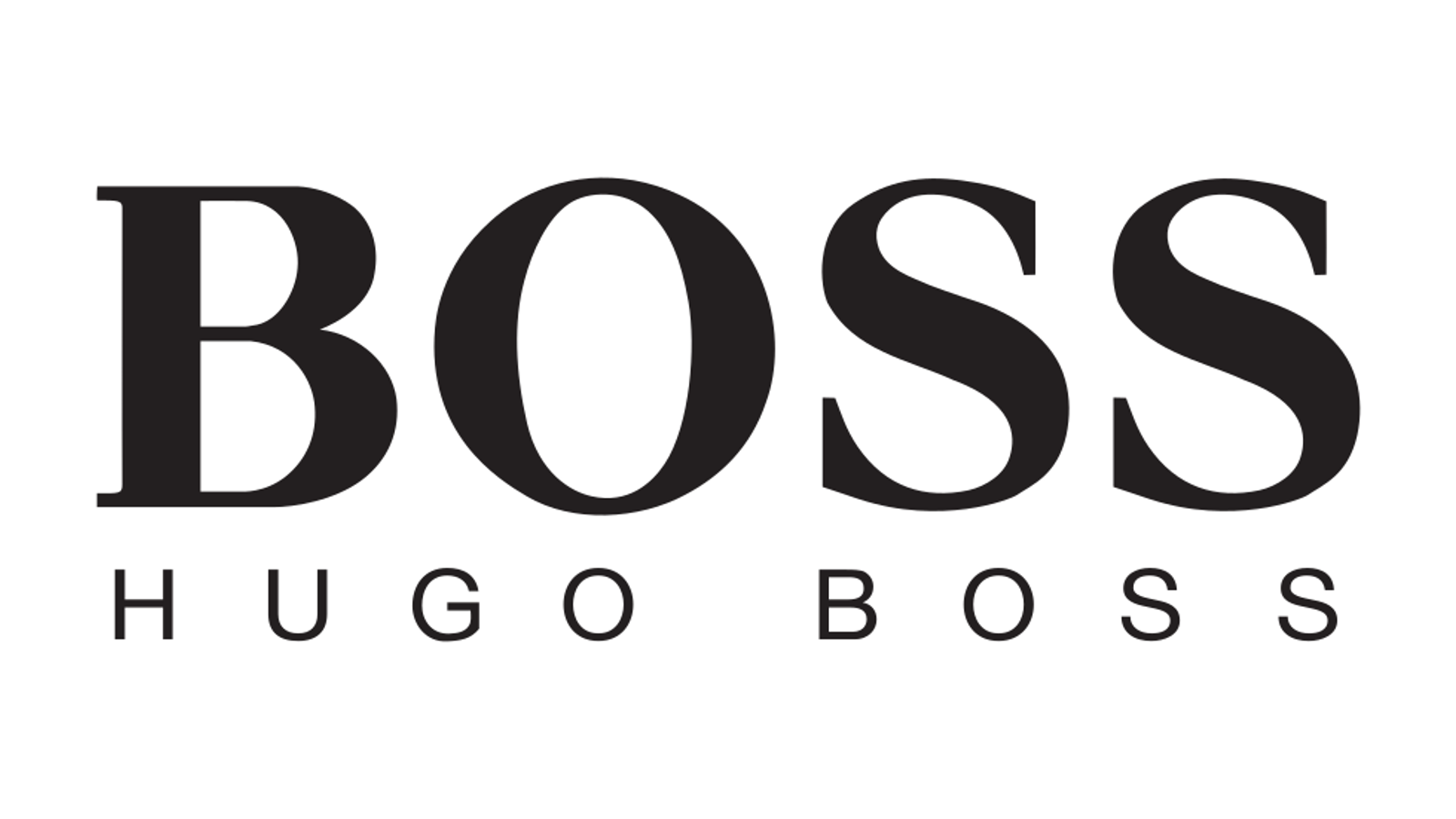
The stacked HUGO BOSS wordmark carried the company identity before the 2021 simplification.
The current corporate wordmark removes the stacked treatment and keeps the company name direct and legible.
Product and service lineage.
Hugo Boss only reads correctly when BOSS, HUGO, tailoring, casualwear, womenswear, stores, ecommerce, fragrance, and campaign surfaces stay visibly separated.

BOSS carries premium authority
BOSS has to feel sharp, adult, and credible across tailoring, casualwear, stores, digital commerce, and campaign media.

HUGO keeps the younger lane separate
HUGO gives the house a more expressive youth lane without forcing the BOSS promise to do every job.
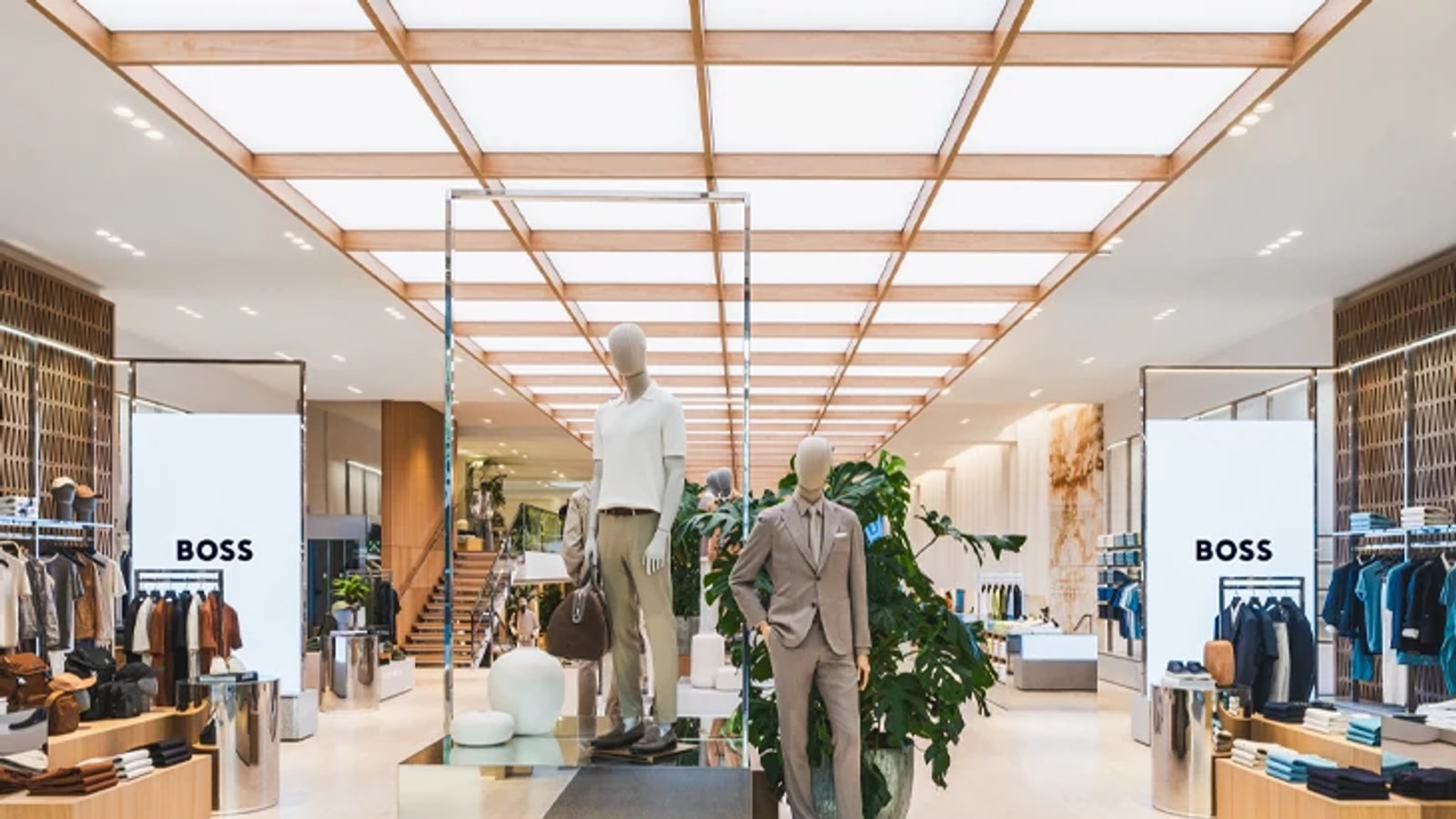
The store is proof
The buyer checks fabric, fit, service, price, and brand confidence in the store before the wordmark earns trust.
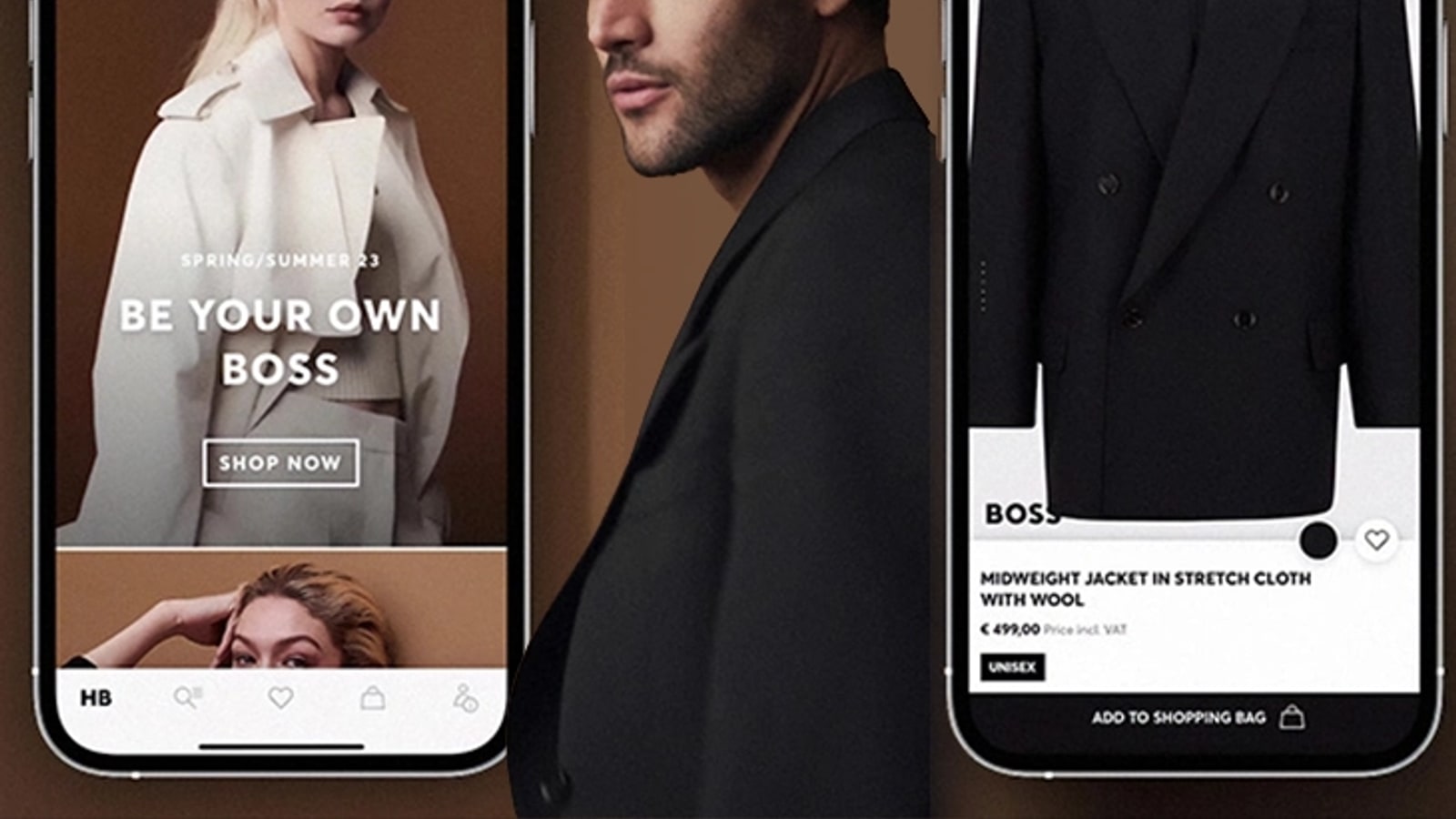
Digital has to preserve fit
Luxury apparel cannot become a flat catalog; the digital surface must still carry material, styling, and decision confidence.
Product and service system
The premium authority lane: tailoring, polished casualwear, stores, and adult status.
The younger and more expressive lane, useful because it keeps youth energy from diluting BOSS.
Stores make fit, fabric, service, merchandising, and premium confidence inspectable.
Online buying has to carry style and fit confidence without the fitting-room proof.
Licensing extends the name but needs restraint so the apparel promise stays credible.
Public campaigns should clarify the lane, not replace product proof.
Turning points.
Events that changed what buyers could see, buy, repeat, or trust.
The company lists publicly in Frankfurt, making scale and performance inspectable.
The company introduces broader brand lines including HUGO, helping separate style lanes.
Womenswear and lifestyle categories widen the house beyond classic menswear.
Public reaction.
The useful reaction is about trust and pressure, not sentiment counts.
Buyers trust Hugo Boss when fit, store finish, campaign tone, and brand lane match the price.
The brand loses confidence when fashion language feels generic or when BOSS and HUGO sound interchangeable.
Full timeline.
Hugo Ferdinand Boss founds the company in Metzingen, Germany.
The postwar company rebuilds around menswear production.
BOSS becomes associated with menswear, suits, and sharper public status.
The company lists publicly in Frankfurt, making scale and performance inspectable.
The company introduces broader brand lines including HUGO, helping separate style lanes.
Womenswear and lifestyle categories widen the house beyond classic menswear.
Strategic resets show the risk of stretching premium apparel without clear buyer proof.
The refreshed BOSS and HUGO identity system makes the two-lane architecture more public.
Hugo Boss reports FY2025 sales of about USD 4.90B after currency conversion.
Steal / avoid.
- Give different buyers different lanes instead of stretching one voice too far.
- Make fit, material, and store behavior carry the premium claim.
- Use digital commerce to reduce purchase anxiety, not just show product thumbnails.
- Do not reduce Hugo Boss to suits only.
- Do not collapse BOSS and HUGO into one tone.
- Do not let campaign mood replace product and retail proof.
Short answer.
Hugo Boss is useful for a business owner because it shows when one brand voice is not enough. BOSS and HUGO split buyer expectations, while fit, retail, ecommerce, campaign tone, and product category decide whether the premium promise is believable.
Frequently asked questions
What is Hugo Boss's core brand signal?
Hugo Boss turns BOSS, HUGO, stores, fit, campaigns, and digital commerce into a sharper apparel system.
Why not describe Hugo Boss as one product?
Because Hugo Boss spans BOSS, HUGO, tailoring, casualwear, stores, ecommerce, and licensed fragrance; one suit cannot explain the two-label system.
What should another brand steal from Hugo Boss?
Give different buyers different lanes instead of stretching one voice too far.
Need help with your own brand?
Use Private brand work when your name, identity, proof, or message needs a sharper branding decision.
Sources.
Use the education shelf for the concepts behind this brand page.
Private brand workIf two labels share a company name but need different price, attitude, and channel roles, Private Brand Work can make the split clear before campaigns blur it.
All brandsReturn to every brand page.
- https://annualreport.hugoboss.com/2025/
- https://annualreport.hugoboss.com/2025/management-report/report-on-economic-position/earnings-development.html
- https://annualreport.hugoboss.com/2025/shape-stories/shaping-brand-excellence.html
- https://annualreport.hugoboss.com/2025/shape-stories/shaping-distribution-excellence.html
- https://group.hugoboss.com/en/company/history
- https://www.hugoboss.com/us/home
- https://api.frankfurter.dev/v1/latest?from=EUR&to=USD