The Home Depot · Grow Your Brand · Retail Help Signal · United States / Active
The Home Depot
The Home Depot turns orange into project help. A Home Depot brand page on the orange apron, warehouse scale, project confidence, associate help, fiscal 2025 sales, logo continuity, and the lesson: color works when customers know what help it points to.
Positioning, name, and architecture.
Three evidence checks before the page talks about scale, color, or public reaction.
The orange apron makes help visible inside warehouse scale.
The Home Depot positions home improvement as a large project system made findable.
The name combines home with depot: a practical place to get project supplies.
How doers get more done
branded house with service and pro extensions
The master orange system leads retail, pro, rental, service, and private-label surfaces.
Stores, ecommerce, project advice, fulfillment, and the orange-apron service promise.
Master retail brand: Home improvement retail source
Products, fulfillment, credit, and account support for trades and institutional buyers.
Professional customer system: Pro services source
Rental and installation convert store access into completed-project capability.
Service extensions: Tool Rental, installation services source
Private-label families extend the masterbrand into tools, essentials, home, and flooring decisions.
Owned and exclusive product cues: Husky and HDX source
Naming and tagline progression
The Home Depot name frames the store as a project supply base.
Orange stencil identity becomes more standardized.
Doer language keeps the brand focused on project action.
Market and scale snapshot.
The Home Depot pairs warehouse-scale retail with trained project help, Pro services, rental, installation, and a large public-company operating base.
The Home Depot FY2025 net sales.
The Home Depot FY2025 net earnings.
Home Depot market capitalization observed on 15 Jul 2026.
Publicly listed home-improvement retailer.
Color system.
Home Depot orange is valuable because it points to a person, aisle, cart, project, or next step.
How the palette behaves
Orange carries action, visibility, and practical energy.
Black and warehouse neutrals keep the system grounded instead of playful.
Wood and tool surfaces make the color feel connected to real projects.
Recognition assets.
Memory pieces the brand can use before someone finishes a sentence.
The color points to a person who can help.
The store feels useful when scale is organized by project.
Selection, advice, price, and pickup all have to connect.
Scores.
Use these scores to compare recognition, trust, proof, pressure, and risk.
Orange and stencil mark are immediate retail cues.
Strong when help and availability are visible.
The brand wins when shoppers find the next step.
Thin staffing weakens the color cue.
Name, ticker, category, and route are clear.
Store layout, associate help, project materials, pickup, and the orange apron keep the brand useful beyond the logo.
The Home Depot turns retail scale into project confidence through orange, associates, aisles, pro services, rental, pickup, and private-label proof.
The Home Depot needs the relationship between masterbrand, products, services, sub-brands, and proof points to stay readable.
How the logo changed.
The freight-crate stencil and orange square arrived with the first stores and remain recognizable because associates, aisles, and project help keep proving the same identity.
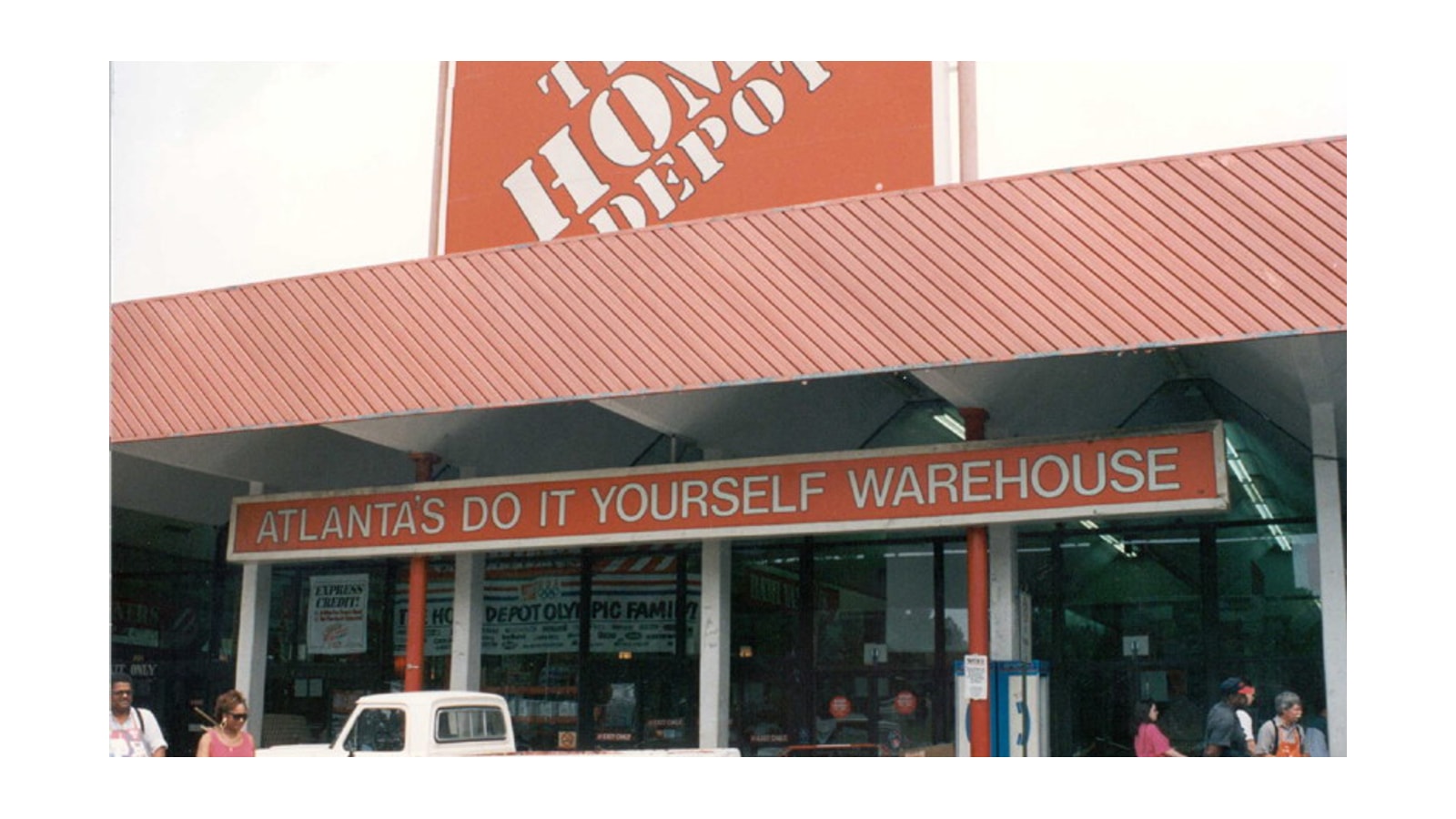
The first-store facade shows the angled freight-crate stencil already operating as a large orange retail beacon. source
The current mark keeps the same orange square, angled stencil, and warehouse directness across stores and digital surfaces. source
Product and service lineage.
The Home Depot turns retail scale into project confidence through orange, associates, aisles, pro services, rental, pickup, and private-label proof.
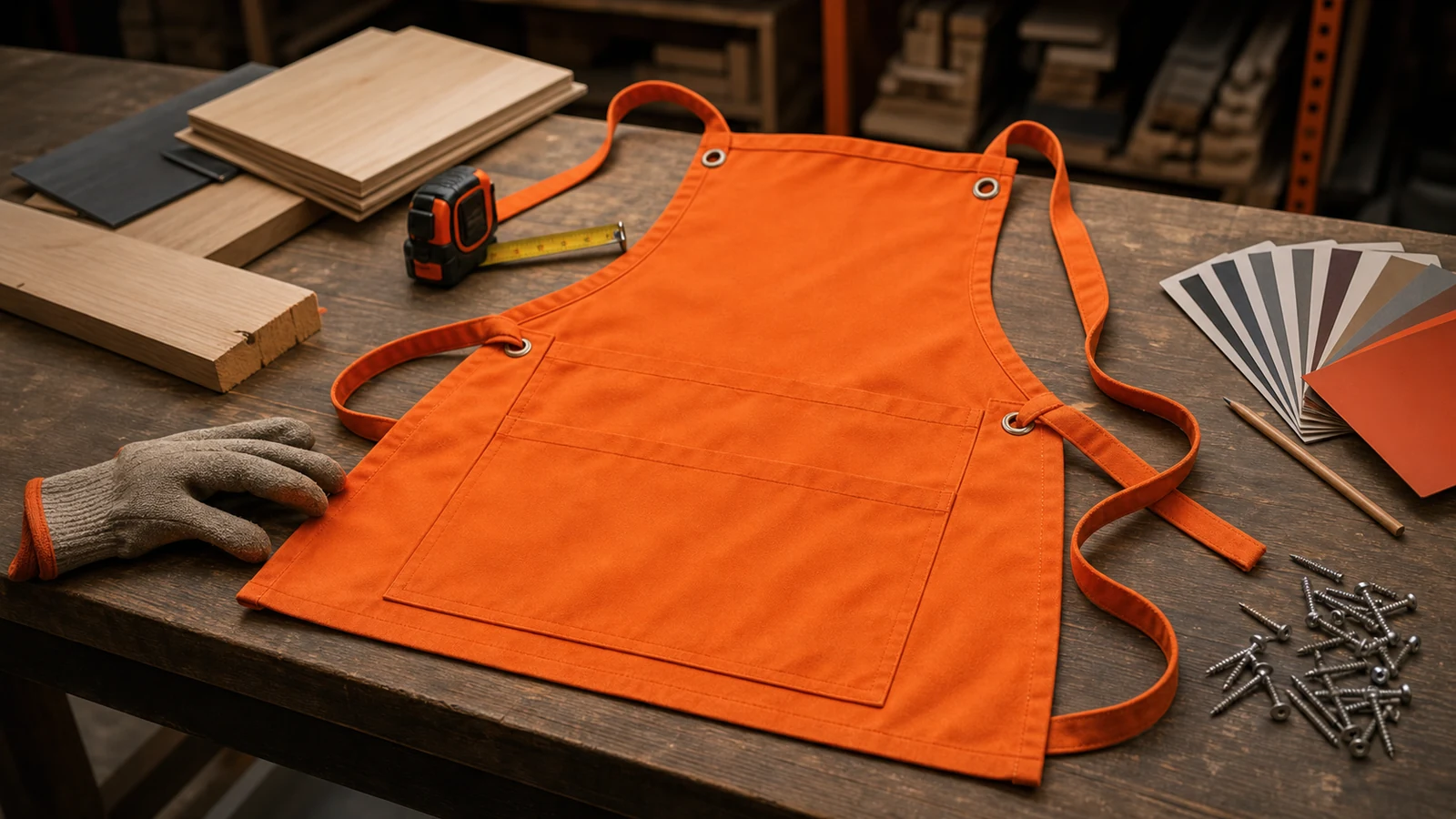
Apron as help
The strongest color cue is worn by the person who can answer the project question.

Project advice
Big-box scale feels useful when the next decision is easier.
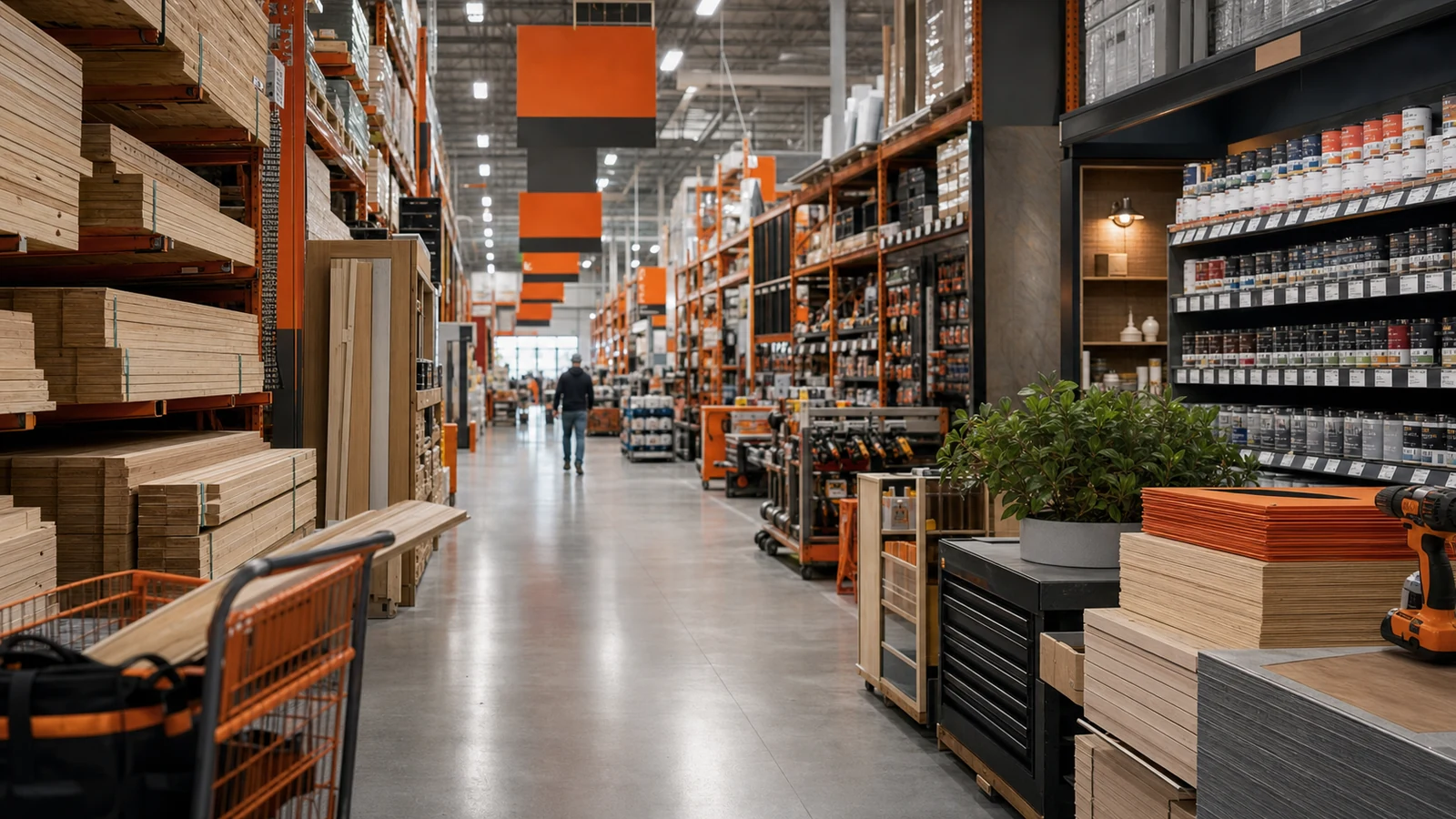
Store scale
The brand has to make the warehouse easy to navigate rather than merely large.
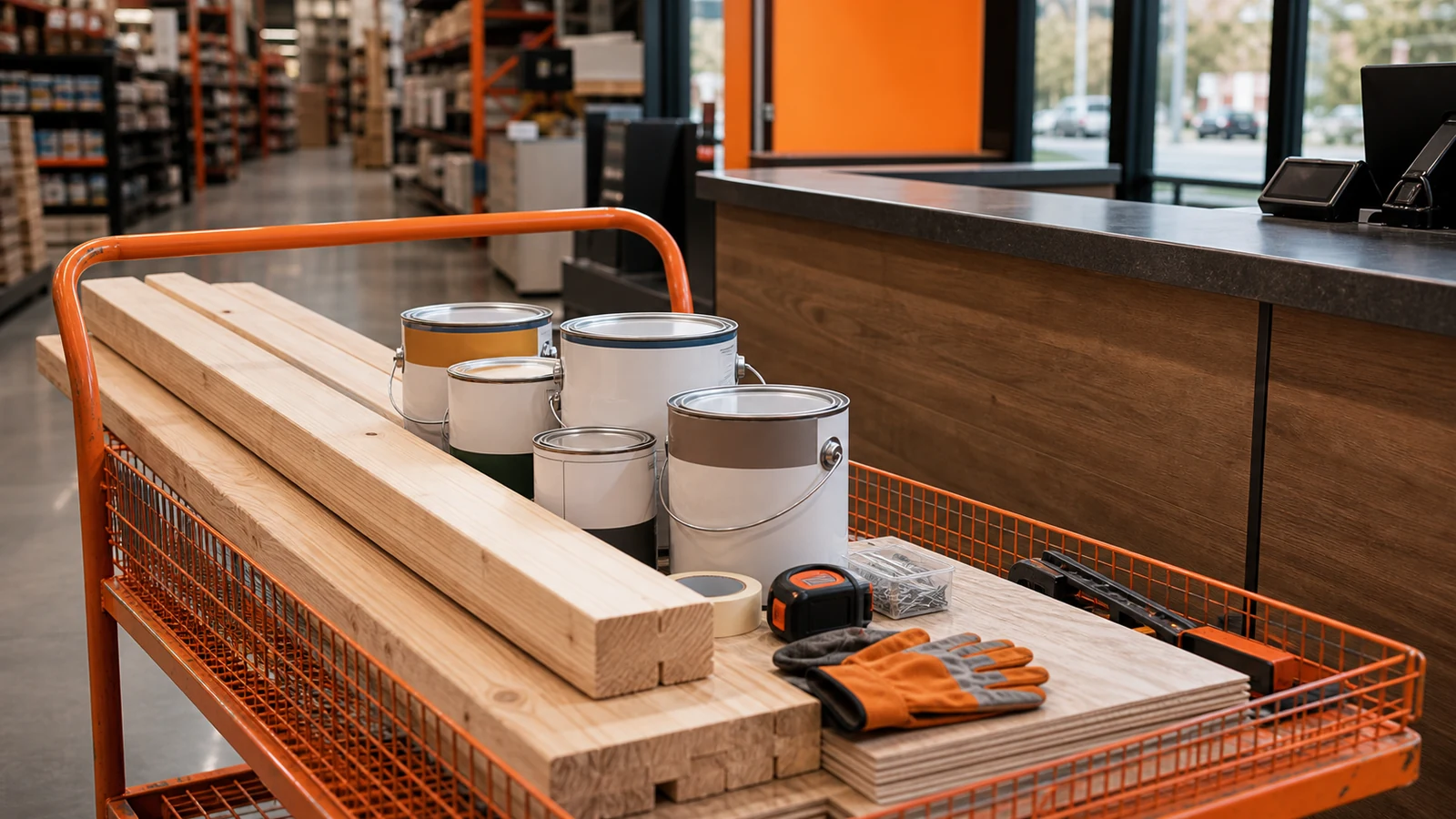
Cart to pickup
The project signal continues through cart, checkout, pickup, and installation.
Product and service system
The Home Depot starts as a home-improvement warehouse concept.
Orange stencil identity and apron behavior make help visible at store scale.
Pro, services, rental, and digital ordering expand the project route.
Fiscal 2025 net sales reach USD 164.683B.
Turning points.
Home Depot pressure appears when scale stops feeling helpful.
If aisles, signage, and associate help fail, the warehouse becomes friction.
The same orange system has to serve weekend projects and professional purchasing.
Online orders still need store-level handoff proof.
Public reaction.
Customers judge Home Depot by whether a difficult project becomes clearer.
The orange apron is powerful when shoppers feel helped.
If no one can help, the orange cue loses its meaning.
Full timeline.
Bernie Marcus and Arthur Blank establish The Home Depot concept.
The first two Home Depot stores open in Atlanta.
The Home Depot becomes a public company.
The company enters Canada through the Aikenhead's acquisition.
The Home Depot enters Mexico.
The Home Depot completes its acquisition of SRS Distribution.
Fiscal 2025 net sales reach USD 164.683B and net earnings reach USD 14.156B.
Steal / avoid.
- Make color point to a useful behavior people can find in the real world.
- Put the strongest brand cue on the person who solves the customer problem.
- Turn scale into help rather than inventory alone.
- Do not treat a famous color as brand equity if staffing and navigation do not support it.
- Do not make the store feel bigger than the customer project.
- Do not separate the brand promise from the employee behavior that proves it.
Short answer.
The Home Depot branding case is bigger than the orange square. The orange apron, warehouse layout, project language, carts, services, and pickup route make help easier to find.
Frequently asked questions
Why is Home Depot orange effective?
Because it points to help, project action, and store navigation rather than decoration alone.
How does the orange apron support the store promise?
It puts the help cue on the associate customers can ask before the warehouse scale becomes confusing.
What should another brand steal from The Home Depot?
Make color point to a useful behavior people can find in the real world.
Need help with your own brand?
Use Private brand work when your name, identity, proof, or message needs a sharper branding decision.
