Dyson · Grow Your Brand · Engineering-premium recognition case · United Kingdom / Singapore HQ / Active / private company
Dyson
Dyson turns engineering into a premium home ritual. A brand page on Dyson: cyclone vacuum memory, bladeless air, hair-tool desire, private-company scale, product-family discipline, and the danger of letting expensive engineering feel like a gadget trick.
Positioning, name, and architecture.
Three evidence checks before the page talks about scale, color, or public reaction.
Dyson makes the technology itself the design language: cyclone chambers, air rings, hair barrels, filter forms, and precise materials become recognition assets.
Dyson is a premium-engineering card: the brand wins when product form, material discipline, and visible technology make expensive appliances feel inevitable rather than decorative.
Founder-name masterbrand from James Dyson; use as a human inventor cue, not as a celebrity story.
Only a Dyson works like a Dyson
single masterbrand / product-family architecture
Dyson uses one masterbrand across floor care, air treatment, hair care, hand drying, lighting, and OnTrac headphones. Product names organize mechanisms and use cases without becoming separate brands.
The original cyclone mechanism still anchors the engineering promise.
product family: Cordless and robot floor care source
Air purifiers, fans, heaters, and humidifiers turn invisible airflow into room objects.
product family: Purifiers, fans, heaters, humidifiers source
Supersonic, Airwrap, Airstrait, and Corrale move the engineering claim into beauty.
daily ritual family: Supersonic / Airwrap / Airstrait / Corrale source
Airblade, lighting, and OnTrac headphones show how the engineering system stretches beyond floor care.
specialist lane: Airblade, lighting, and OnTrac headphones source
Naming and tagline progression
Only a Dyson works like a Dyson
Market and scale snapshot.
Dyson publishes annual operating results in pounds, giving a direct view of private-company scale without inventing a stock-market valuation.
Dyson group revenue.
Dyson profit before tax.
Dyson EBITDA.
Dyson has no public ticker or quoted market capitalization.
Color system.
Dyson color works best as engineering accent, not decoration.
How the palette behaves
Black and graphite make the product feel technical and precise.
Violet signals advanced technology without needing a long explanation.
Copper warms the engineering story and gives hair tools a premium object quality.
Silver and clear plastic let buyers see the mechanism, which supports price.
Recognition assets.
Memory pieces the brand can use before someone finishes a sentence.
Dyson sells better when the buyer can see what the engineering is supposed to do.
Air, floor, hair, and hand-dryer products must feel related without becoming the same object.
When the product feels overdesigned or unreliable, the premium signal turns against the brand.
Scores.
Use these scores to compare recognition, trust, proof, pressure, and risk.
Distinctive product silhouettes and visible mechanisms.
Strong masterbrand stretch if categories stay useful.
High when engineering is visible and trusted.
High prices invite dupe comparisons and performance scrutiny.
Visible cyclones, airflow engineering, motors, heat control, and product form explain why Dyson can charge a premium.
Dyson needs parent, product, service, market, and history lanes labeled cleanly so search systems do not flatten the brand into one vague entity.
Floor care, air treatment, beauty tools, hand dryers, lighting, and wearables keep Dyson's engineering authority broader than one vacuum.
Dyson carries risk when the customer experience does not support the recognition system the page is describing.
How the logo changed.
Dyson is a continuity case: the wordmark stayed stable while the product categories multiplied.

The lowercase wordmark established the quiet engineering signature used as Dyson entered the vacuum market.

Dyson retained the lowercase wordmark while extending it across air, beauty, floor care, and headphones. source
Product and service lineage.
The brand has to prove itself on real products and service surfaces.
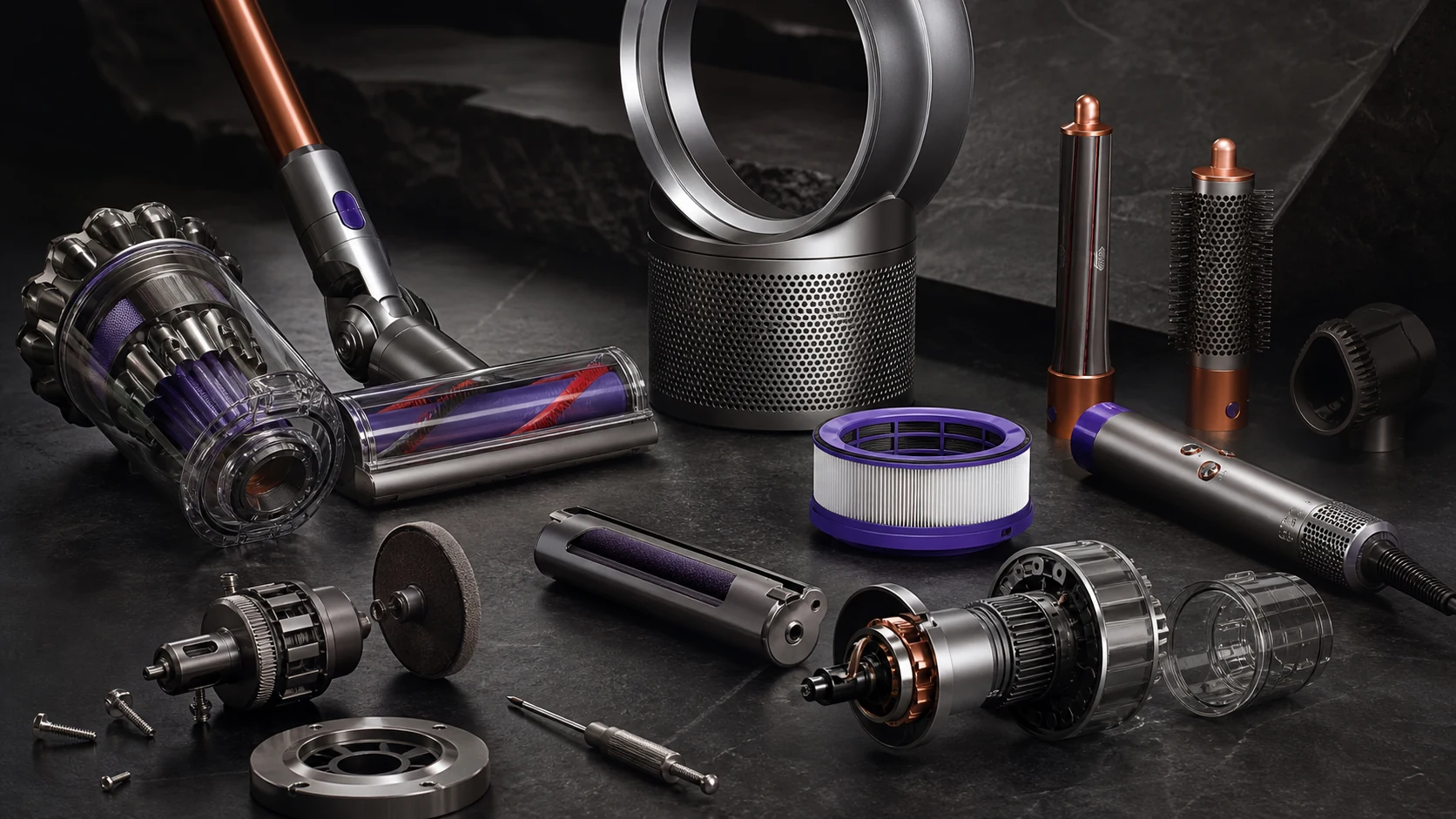
Mechanism earns premium
Cyclone, filter, airflow, and material cues have to explain the price before the copy does.
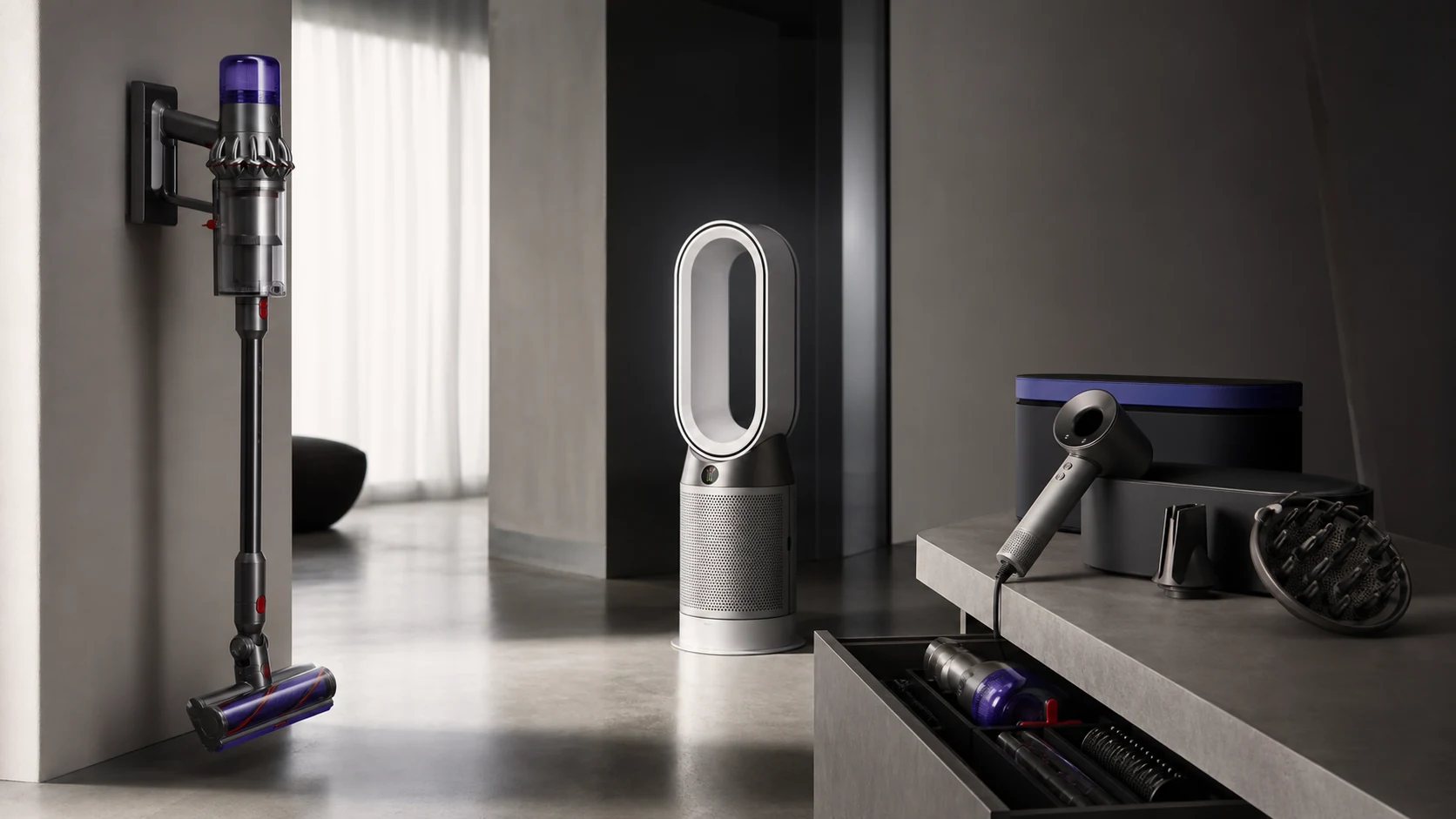
Product-family engineering proof
The third evidence point shows Dyson as a product-family engineering language, not one expensive object.
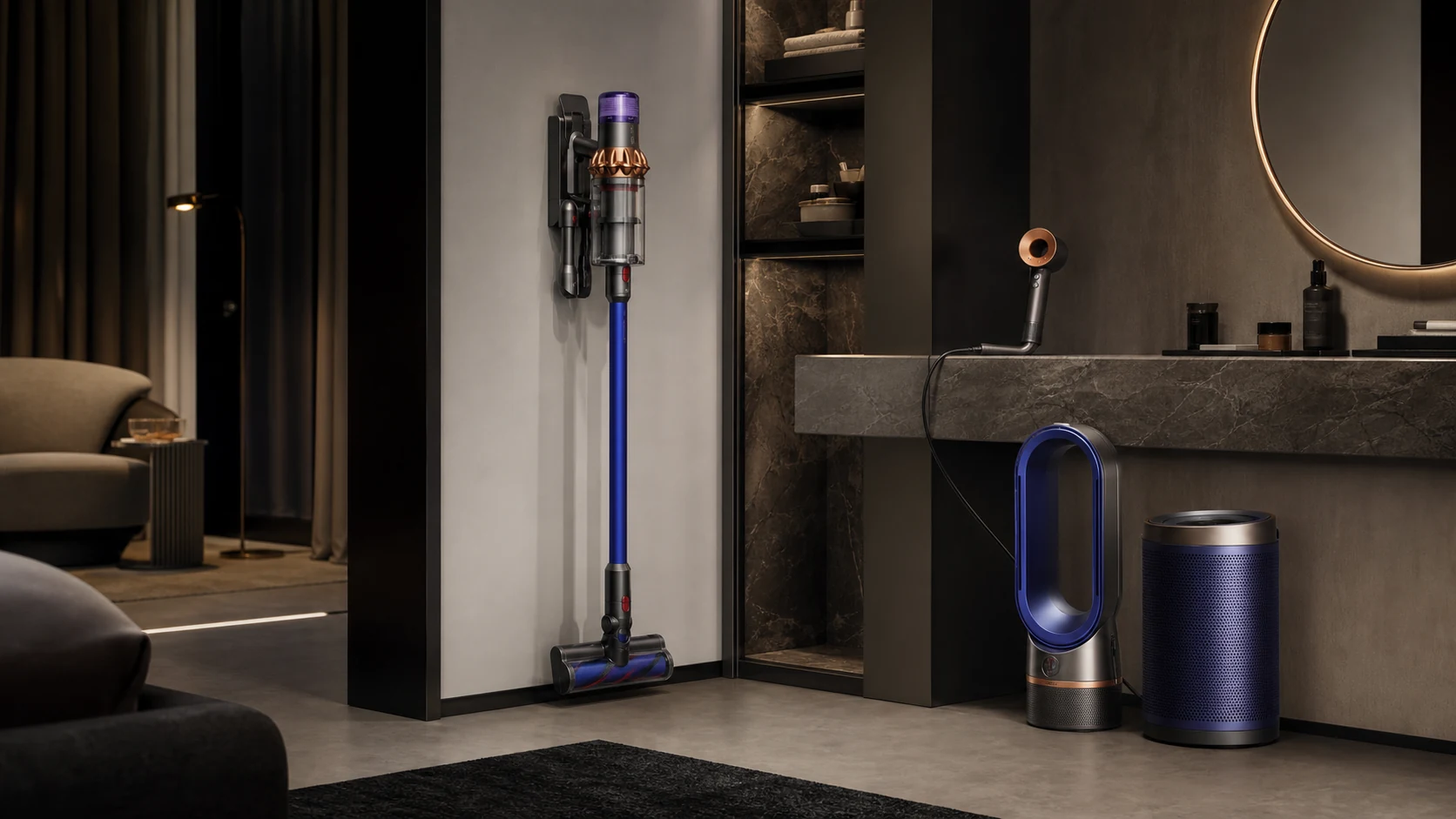
Home system carries the engineering promise
Vacuum, air, and hair-care forms show the same mechanism-first language across daily rooms.
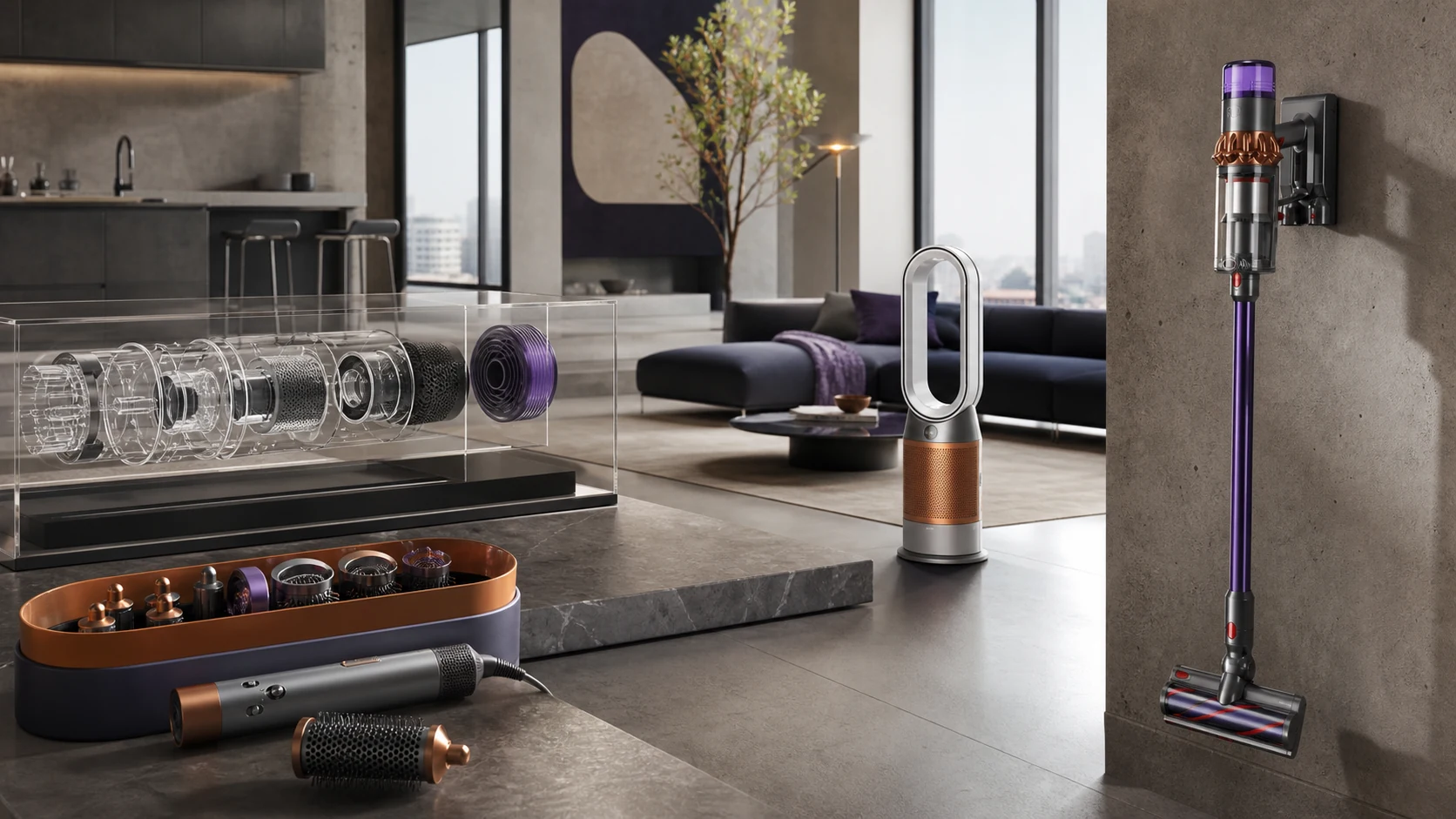
Engineering crosses daily rituals
One mechanism-first design language connects cleaning, air treatment, and hair care.
Product and service system
The original recognition engine made unseen suction technology visible.
A commercial hand dryer showed the air-engineering system outside the home.
The bladeless ring made airflow a recognizable object.
Hair tools moved the engineering promise into beauty and daily ritual.
Turning points.
Events that changed what buyers could see, buy, repeat, or trust.
Founder-name engineering story gives the brand a clear inventor frame.
Cyclone chambers turned hidden performance into a visual asset.
Hair care made the brand more personal and more expensive.
The cancelled EV project and layoff reporting show that engineering desire still needs operating discipline.
Public reaction.
The useful reaction is about trust and pressure, not sentiment counts.
Dyson products often get treated as status objects because the mechanism is visible and the materials feel deliberate.
The same premium cue creates dupe comparisons when buyers cannot feel enough difference in daily use.
Full timeline.
Dyson company is founded by James Dyson.
Dyson-branded dual-cyclone vacuum reaches the market
Airblade extends air-engineering proof into commercial hand dryers.
Air Multiplier turns airflow into a recognizable ring form.
Supersonic moves Dyson into premium hair care.
Airwrap makes Coanda-air styling a household desire object.
Singapore HQ move
Steal / avoid.
- Make the product form explain the value before the headline does.
- Carry one technical language across categories only when each product has a real job.
- Use materials and visible mechanisms as recognition assets.
- Do not sell premium price with vague innovation language.
- Do not stretch into a category where the mechanism is not credible.
- Do not let one hero product hide the rest of the system.
Short answer.
Dyson is useful for studying visible engineering as brand signal. The brand makes premium pricing easier to understand when the product itself shows the mechanism: cyclone chambers, airflow rings, hair-tool barrels, filters, docks, and material precision. The danger is stretching the engineering story into products where buyers cannot feel enough proof.
Frequently asked questions
What is Dyson's strongest brand signal?
Visible engineering: product forms that make airflow, suction, filtration, and styling mechanisms legible.
Why should a founder study Dyson?
Because Dyson shows how a product can explain price through form, materials, and mechanism rather than copy alone.
What is the risk?
Premium price creates a constant worth-it debate if performance, reliability, or product need is unclear.
Need help with your own brand?
Use Private brand work when your name, identity, proof, or message needs a sharper branding decision.