Coach · Grow Your Brand · Accessible luxury leather system · United States / Active
Coach
Coach turns leather, bags, stores, outlet reach, and Tapestry scale into everyday status. A brand page on Coach as a daily luxury system: handbags, leather goods, retail stores, outlet, ecommerce, gifting, Tapestry ownership, Kate Spade as a sister brand, and the discipline required when access and aspiration live together.
Positioning, name, and architecture.
Three evidence checks before the page talks about scale, color, or public reaction.
Coach turns leather, bags, stores, outlet reach, and Tapestry scale into everyday status.
A brand page on Coach as a daily luxury system: handbags, leather goods, retail stores, outlet, ecommerce, gifting, Tapestry ownership, Kate Spade as a sister brand, and the discipline required when access and aspiration live together.
Coach began in New York in 1941 as a workshop of six artisans; the horse-and-carriage identity later connected the name to craft, movement, and heritage.
Courage to Be Real / Expressive Luxury
Tapestry house of brands with Coach product, extension, and channel layers
Coach is a Tapestry brand alongside Kate Spade New York. Coach Outlet and Coachtopia are brand extensions or channels; handbags, accessories, footwear, and ready-to-wear are categories; DTC, wholesale, and licensing are channels. Stuart Weitzman left the portfolio in August 2025.
New York fashion house centered on leather goods and expressive luxury.
Tapestry brand: Coach source
Outlet expands reach; Coachtopia explores circular-design and younger community cues.
Extensions and channels: Coach extensions source
Separate Tapestry brand, not a Coach sub-line.
Sister brand: Tapestry portfolio source
Naming and tagline progression
Six artisans establish the New York leather workshop that becomes Coach.
Bonnie Cashin becomes lead designer and expands the product language.
Courage to Be Real frames Coach as an expressive-luxury house.
Market and scale snapshot.
Coach's FY2025 sales, operating profit, store count, and share of Tapestry revenue show the scale behind the mainline, outlet, ecommerce, gifting, and Coachtopia system.
Audited FY2025 Coach segment net sales.
Audited FY2025 Coach segment operating income.
Tapestry market capitalization observed 15 Jul 2026; Coach has no standalone public valuation.
Coach is a Tapestry brand; Tapestry trades on NYSE.
Coach stores at FY2025 year end.
Coach share of Tapestry FY2025 net sales.
Parent-company DTC mix; not presented as Coach-only.
Color system.
Coach's black-brown leather palette keeps material, hardware, and horse-and-carriage memory ahead of generic luxury styling.
How the palette behaves
Near-black gives the Coach name and bag silhouette a firm retail anchor.
Leather brown ties the system to material craft, handles, edges, and bag hardware.
Tan gives mainline, outlet, and Coachtopia proof room to separate without losing the leather category cue.
Recognition assets.
Memory pieces the brand can use before someone finishes a sentence.
Material quality has to be felt before the logo is believed.
The historic cue links the name to leather travel goods and New York retail.
Coach is visible where real buyers actually shop, not only in fashion media.
Metal letters, tags, zippers, and straps make the mark physical.
Scores.
Use these scores to compare recognition, trust, proof, pressure, and risk.
The name, leather goods, and retail doors are widely understood.
Tapestry, Coach, Kate Spade, outlet, and DTC have to be separated.
Bags, wallets, gifts, and stores make the signal practical.
Outlet access helps volume and risks aspiration at the same time.
Coach only reads correctly when leather goods, handbags, stores, outlet access, ecommerce, gift buying, Tapestry, Kate Spade, and the divestiture of Stuart Weitzman stay visible.
Coach needs parent, product, service, and history lanes labeled cleanly so search systems do not flatten the brand into one vague entity.
Coach turns leather, bags, stores, outlet reach, and Tapestry scale into everyday status.
Coach weakens when leather craft, outlet reach, mall stores, ecommerce, gifting, Tapestry ownership, and Kate Spade sister-brand architecture collapse into generic luxury language.
How the logo changed.
Two verified identity stages are shown: the heritage horse-and-carriage lockup and the simplified current Coach wordmark.
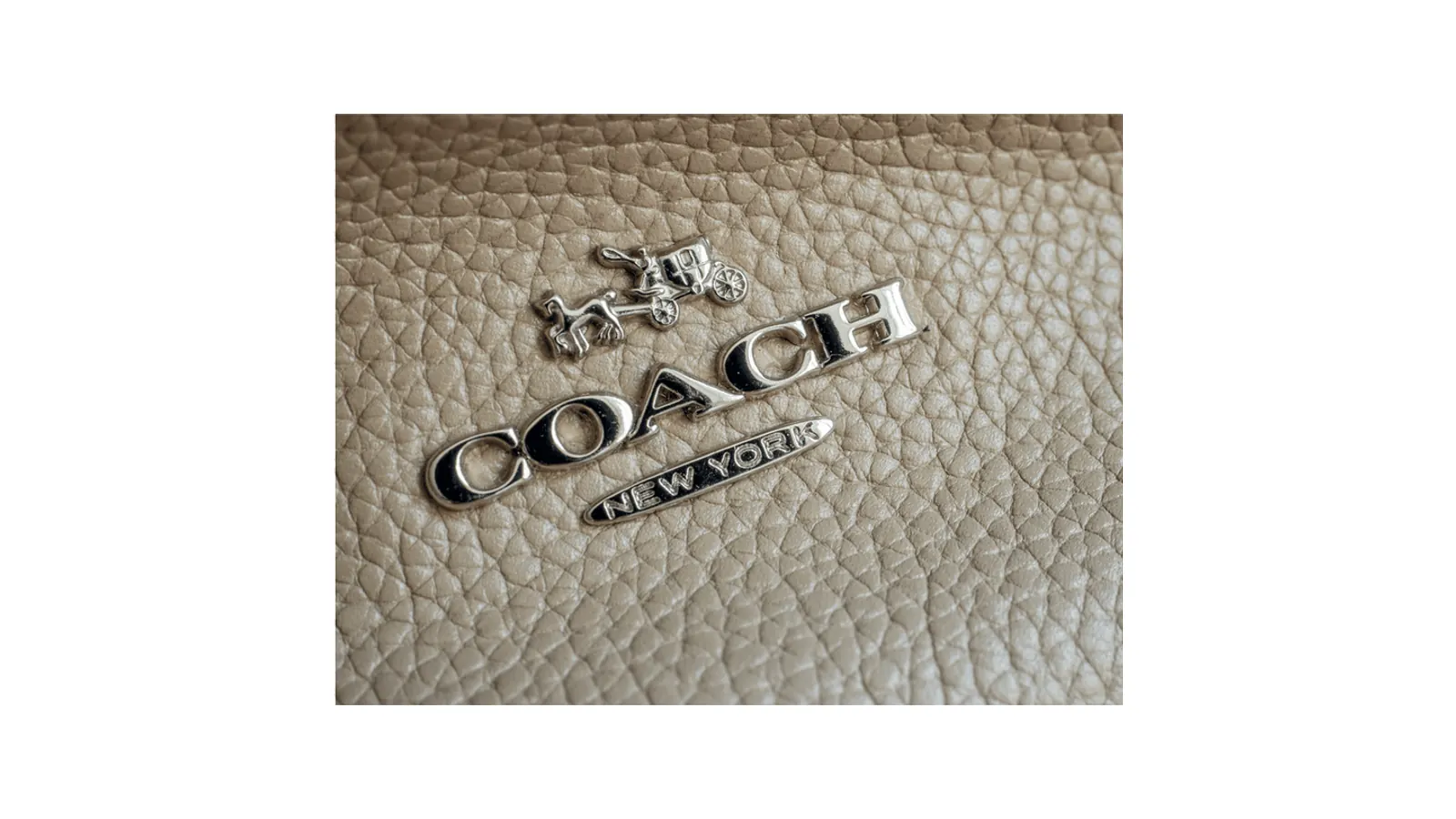
Coach’s first logo introduced the horse-and-carriage motif; this sourced application shows the heritage lockup on leather rather than inventing a historical vector. source
The current wordmark simplifies the system for stores, product hardware, packaging, and digital use.
Product and service lineage.
Coach only reads correctly when leather goods, handbags, stores, outlet access, ecommerce, gift buying, Tapestry, Kate Spade, and the divestiture of Stuart Weitzman stay visible.
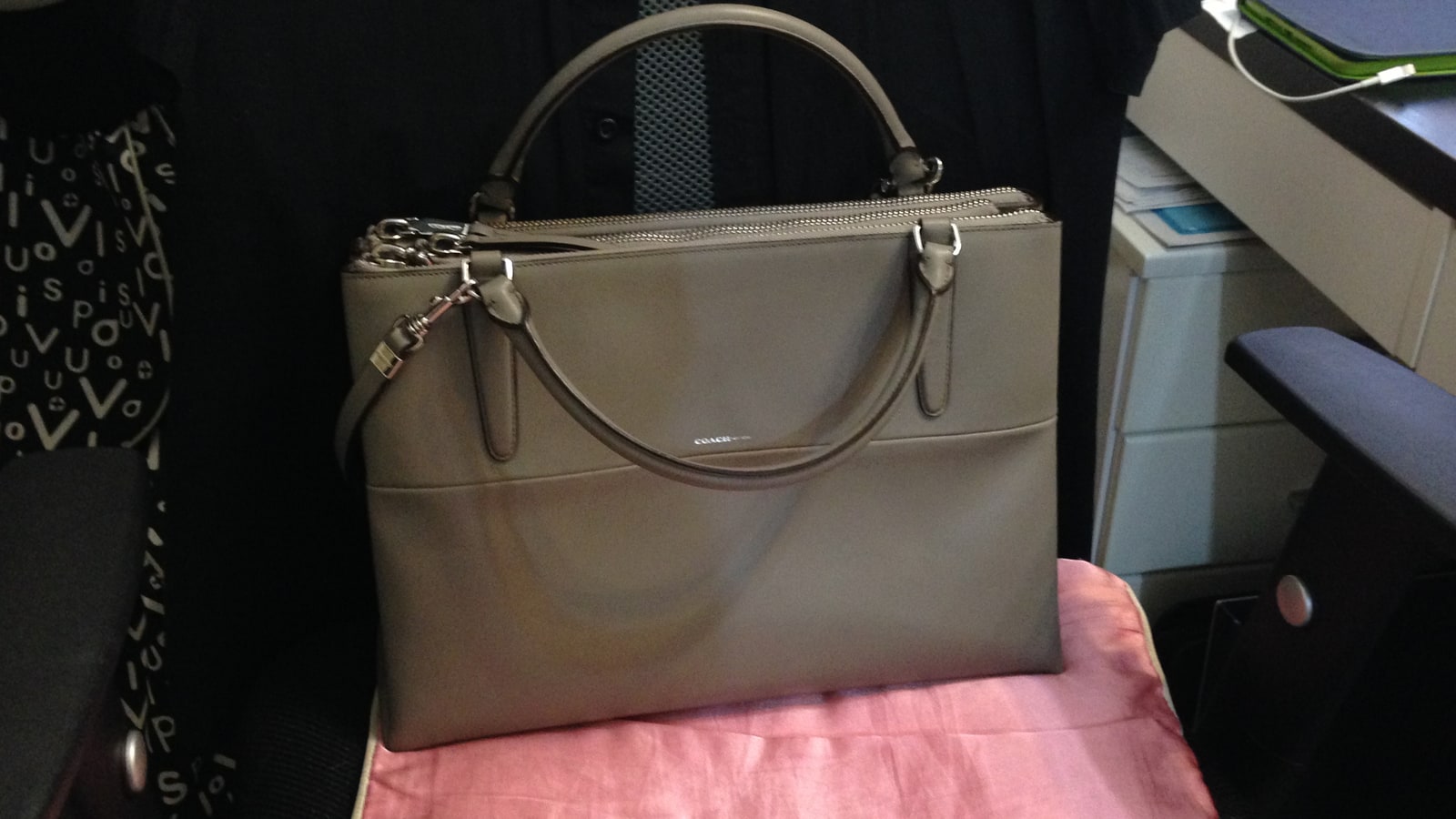
Handbag as evidence point
A bag carries the material cue, hardware, silhouette, and price-positioning choice after the buyer leaves the store.
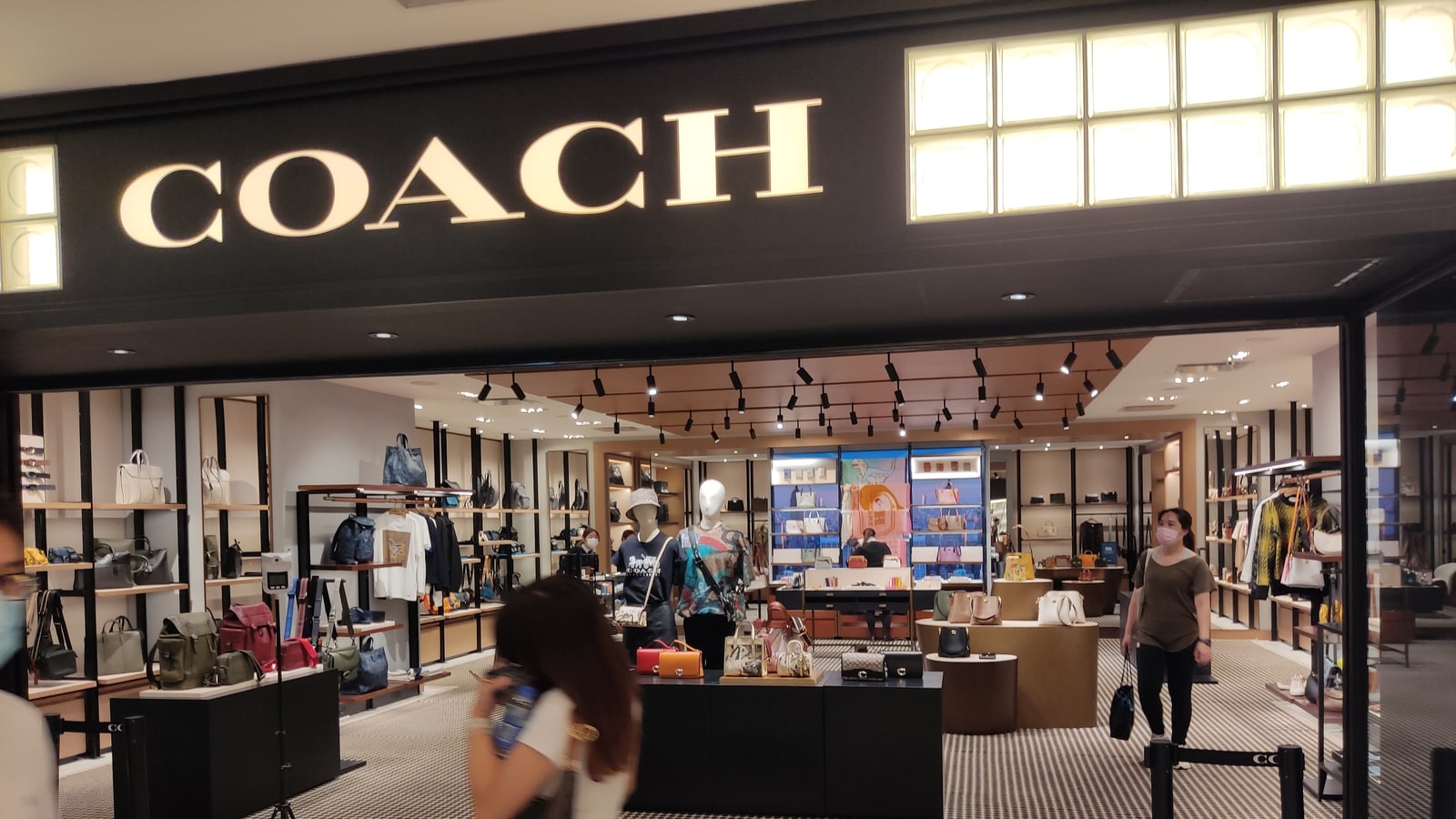
Store, mall, outlet
Coach is not only runway aspiration. The brand is judged in mall stores, outlet doors, ecommerce, gift tables, and everyday carry.

Outlet reach changes the signal
The outlet system widens access but also puts discount discipline at the center of the brand decision.
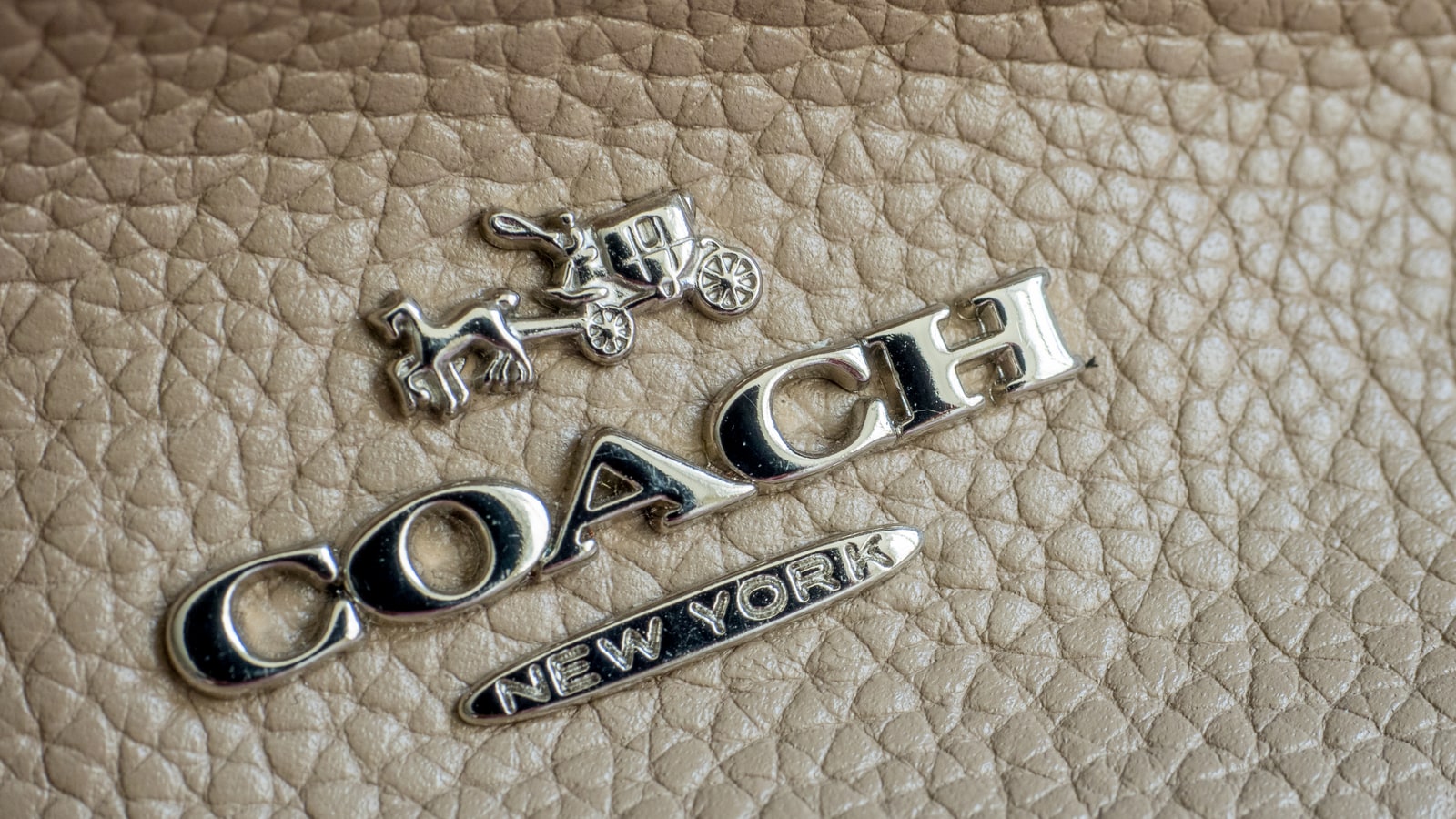
Hardware and leather memory
The mark works best when it sits on leather, stitching, metal, and product shape, not as a floating badge.
Product and service system
The bag is the evidence point: leather, hardware, zipper, stitching, silhouette, and hand feel carry the promise.
Physical stores make the brand inspectable: bags on shelves, associates, gift rhythm, repair questions, and street-level signage.
Outlet reach is a real growth and risk surface; it brings buyers in but can flatten aspiration if discount logic leads.
Tapestry says direct-to-consumer was about 86% of FY2025 net sales, so the controlled channel matters.
Coach sits inside Tapestry with Kate Spade as a sister brand, while Stuart Weitzman was sold after FY2025.
Small leather goods, footwear, ready-to-wear, fragrance, and accessories extend the bag memory into daily use.
Turning points.
Events that changed what buyers could see, buy, repeat, or trust.
Coach becomes a public company, making the accessible luxury model easier to inspect.
Stuart Weitzman joins the group, widening the fashion portfolio.
Coach, Inc. changes its corporate name to Tapestry, separating the house from the Coach brand.
Public reaction.
The useful reaction is about trust and pressure, not sentiment counts.
Buyers understand Coach when the bag, leather, price, store, gift moment, and access point all tell the same story.
The brand weakens when outlet volume, discount cues, or sister-brand confusion make the leather promise feel less special.
Full timeline.
Coach is founded in New York as a leather goods company.
Bonnie Cashin designs for Coach and helps give the product language sharper form.
Sara Lee acquires Coach and scales the business beyond the original workshop story.
Coach becomes a public company, making the accessible luxury model easier to inspect.
Stuart Weitzman joins the group, widening the fashion portfolio.
Coach, Inc. changes its corporate name to Tapestry, separating the house from the Coach brand.
Kate Spade becomes part of Tapestry and creates a clearer sister-brand architecture.
Tapestry reports FY2025 net sales of USD 7.01B, with Coach at 79.9% of the total.
Tapestry agrees to sell Stuart Weitzman, tightening the brand house around Coach and Kate Spade.
Steal / avoid.
- Let material quality carry the logo.
- Use retail doors as proof, not just distribution.
- Keep outlet strategy visible because it changes brand meaning.
- Do not call Coach only a handbag brand.
- Do not treat Kate Spade as a Coach sub-brand.
- Do not let discount access erase the craft cue.
Short answer.
Coach is useful for small businesses because it shows the access problem clearly. Leather, product feel, store proof, outlet reach, ecommerce, and parent-company architecture all have to agree, or the brand becomes a discount bag with a famous name.
Frequently asked questions
What is Coach's core brand signal?
Coach turns leather, bags, stores, outlet reach, and Tapestry scale into everyday status.
Why not describe Coach as one product?
Because Coach spans mainline leather goods, Coach Outlet, Coachtopia, ecommerce, gifting, and a Tapestry-owned retail network; one handbag cannot explain the business.
What should another brand steal from Coach?
Let material quality carry the logo.
Need help with your own brand?
Use Private brand work when your name, identity, proof, or message needs a sharper branding decision.
Sources.
Use the education shelf for the concepts behind this brand page.
Private brand workIf your brand sells through mainline, outlet, ecommerce, and circular-product lanes, Private Brand Work can keep price, craft, and channel roles from blurring.
All brandsReturn to every brand page.
- https://www.sec.gov/Archives/edgar/data/1116132/000111613225000019/tpr-20250628.htm
- https://www.tapestry.com/
- https://www.coach.com/
- https://commons.wikimedia.org/wiki/File:Coach_New_Logo.svg
- https://commons.wikimedia.org/wiki/File:Coach_House_-_NYC_(48155637632).jpg
- https://commons.wikimedia.org/wiki/File:Coach_-_The_Borough_Bag_in_Retro_Glove_Tan_Leather.JPG
- https://commons.wikimedia.org/wiki/File:A_Coach_store_in_an_outlet_mall.jpg

.jpg)

