Adobe · Grow Your Brand · Creative software, document, and digital-experience system · United States / Active
Adobe
Adobe turns creative tools and document standards into workflow power. A brand page on Adobe as a creative and document system: Photoshop, Illustrator, Premiere Pro, After Effects, Acrobat, PDF, Creative Cloud, Experience Cloud, Firefly, Express, Substance 3D, Frame.io, Behance, Adobe Fonts, Adobe Stock, subscriptions, and the history that moved the company from PostScript to AI-era creative workflows.
Positioning, name, and architecture.
Adobe holds together professional creation, the PDF document standard, enterprise experience software, and generative AI by making each product part of a connected workflow.
Adobe turns creative tools and document standards into workflow power.
Adobe connects creative production, PDF document standards, marketing operations, and generative AI inside professional workflows that teams already depend on.
John Warnock named Adobe after Adobe Creek, which ran behind his home in Los Altos, California.
Mission platform: Creativity for all.
company system / portfolio architecture
Creative Cloud: Photoshop, Illustrator, InDesign, Premiere Pro, After Effects, Lightroom, fonts, stock, and shared cloud workflows carry the creator system. Acrobat and PDF: PDF, Acrobat, Sign, AI Assistant, and document approvals make Adobe an office and compliance standard. Experience Cloud: Analytics, commerce, journeys, content, and personalization give Adobe a marketing-operations lane. Firefly: Generative AI has to be source-aware, workflow-native, and trusted by creative professionals. Frame.io: Video review and collaboration make Adobe useful inside production teams, not just at the editing desk. Substance 3D: 3D materials and product visualization extend Adobe into gaming, retail, industrial design, and immersive content. Express and Behance: Template creation and public creative portfolios give Adobe a wider creator funnel.
Photoshop, Illustrator, InDesign, Premiere Pro, After Effects, Lightroom, fonts, stock, and shared cloud workflows carry the creator system.
Portfolio family: Creative Cloud source
PDF, Acrobat, Sign, AI Assistant, and document approvals make Adobe an office and compliance standard.
Portfolio family: Acrobat and PDF source
Analytics, commerce, journeys, content, and personalization give Adobe a marketing-operations lane.
Portfolio family: Experience Cloud source
Generative AI has to be source-aware, workflow-native, and trusted by creative professionals.
Portfolio family: Firefly source
Video review and collaboration make Adobe useful inside production teams, not just at the editing desk.
Portfolio family: Frame.io source
3D materials and product visualization extend Adobe into gaming, retail, industrial design, and immersive content.
Portfolio family: Substance 3D source
Template creation and public creative portfolios give Adobe a wider creator funnel.
Portfolio family: Express and Behance source
Naming and tagline progression
Adobe takes its name from Adobe Creek and begins with publishing technology.
The stylized A becomes the durable corporate recognition device.
Adobe moves the corporate mark to one warmer red for consistent digital use.
Market and scale snapshot.
Adobe's FY2025 results show the scale behind its creative, document, and digital-experience systems.
FY2025 revenue in USD.
FY2025 net income in USD.
Market capitalization reported for Nasdaq:ADBE on July 15, 2026; not a standalone brand valuation.
Adobe Inc. trades on Nasdaq under ADBE.
Color system.
Adobe red identifies the parent company while product colors keep Creative Cloud tools, Acrobat, and Experience Cloud from collapsing into one software block.
How the palette behaves
Adobe red anchors the corporate mark across creative, document, and enterprise workflows.
Black gives the red mark contrast while individual app colors preserve Photoshop, Acrobat, Premiere Pro, and Firefly recognition.
Near-white space lets the Creative Cloud app grid and PDF proof read as a connected workflow.
Recognition assets.
The red Adobe mark identifies the company; Photoshop, Acrobat, Premiere Pro, Creative Cloud, and PDF make the wider system recognizable through repeated tools and file habits.
The red mark signals software authority before the product name is read.
A product became public language for image manipulation.
The file format gives Adobe institutional memory beyond creative work.
The suite is recognized as a system of tools, not one app.
Scores.
Use these scores to compare recognition, trust, proof, pressure, and risk.
Adobe owns unusually strong creative and document memory.
The system is strong but needs product lanes translated for non-creators.
PDF gives Adobe a durable cross-industry evidence point.
Firefly has to protect creator trust and rights-sensitive workflow expectations.
The red Adobe mark identifies the company; Photoshop, Acrobat, Premiere Pro, Creative Cloud, and PDF make the wider system recognizable through repeated tools and file habits.
Adobe needs parent, product, service, and history lanes labeled cleanly so search systems do not flatten the brand into one vague entity.
Adobe only reads correctly when creative apps, PDF/Acrobat, Experience Cloud, Firefly, collaboration, 3D, templates, fonts, stock, and community surfaces stay separated enough to inspect.
Adobe holds together professional creation, the PDF document standard, enterprise experience software, and generative AI by making each product part of a connected workflow.
How the logo changed.
Adobe moved from an early wordmark to the durable stylized A, then refined that corporate system for consistent digital use.
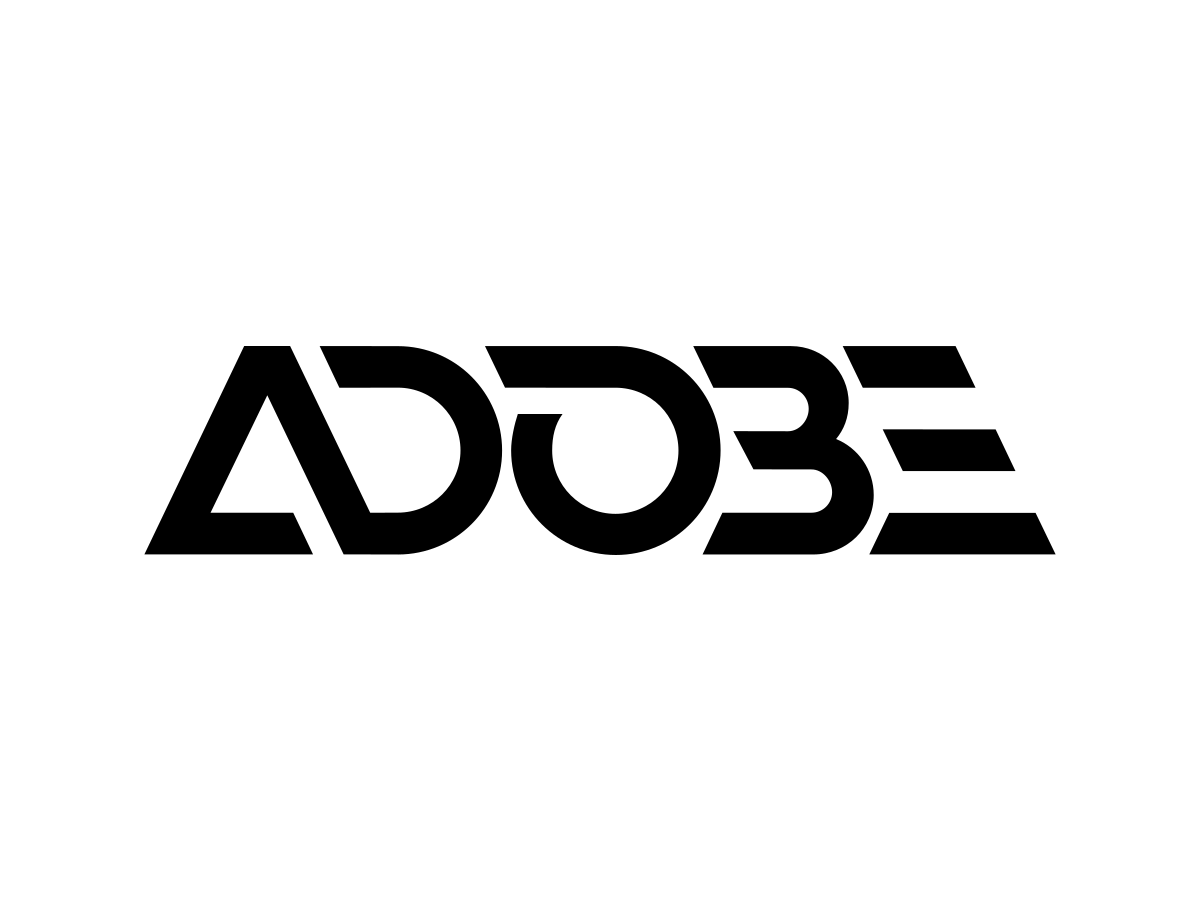
The first Adobe identity paired a distinctive angular A with the company name during the PostScript and desktop-publishing era.
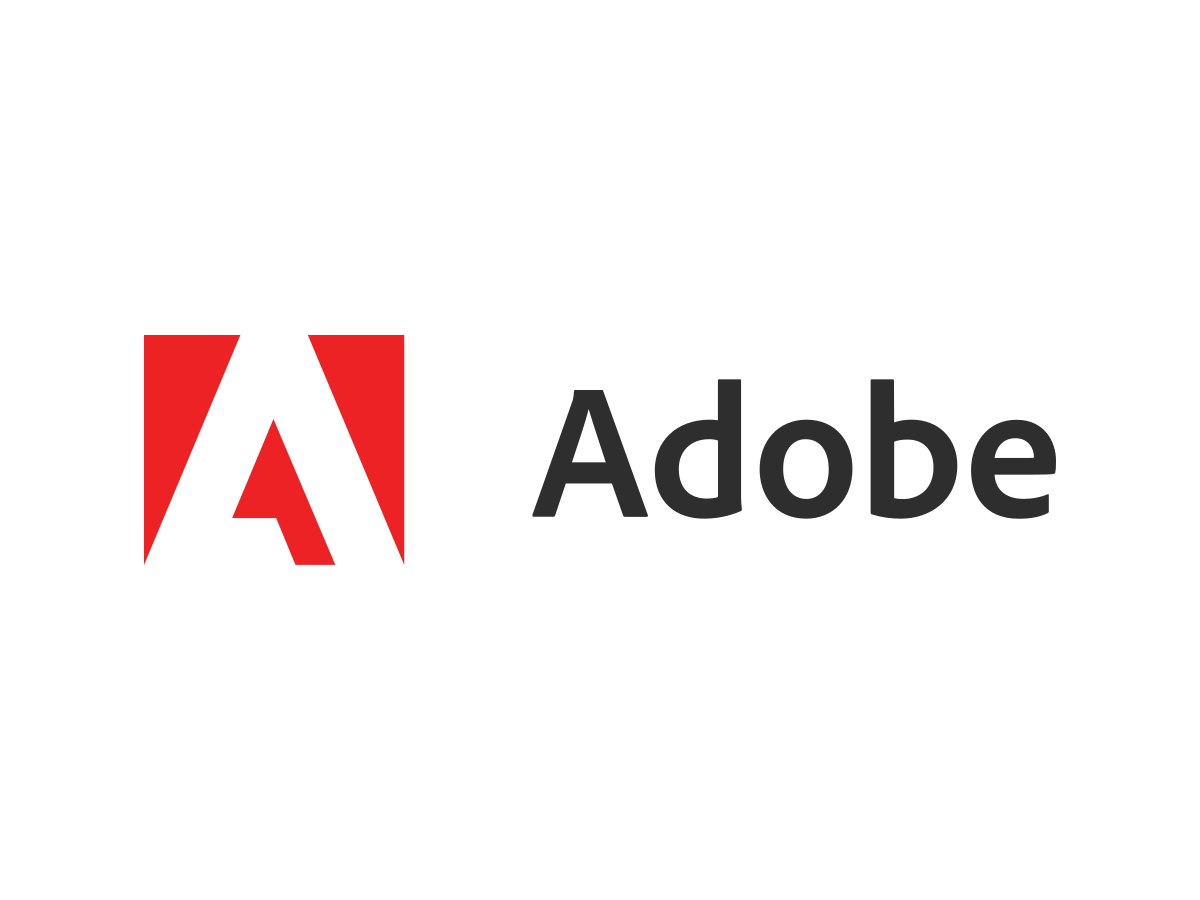
The simplified red A and black wordmark became Adobe's corporate signature as Photoshop, Acrobat, and Creative Suite expanded.
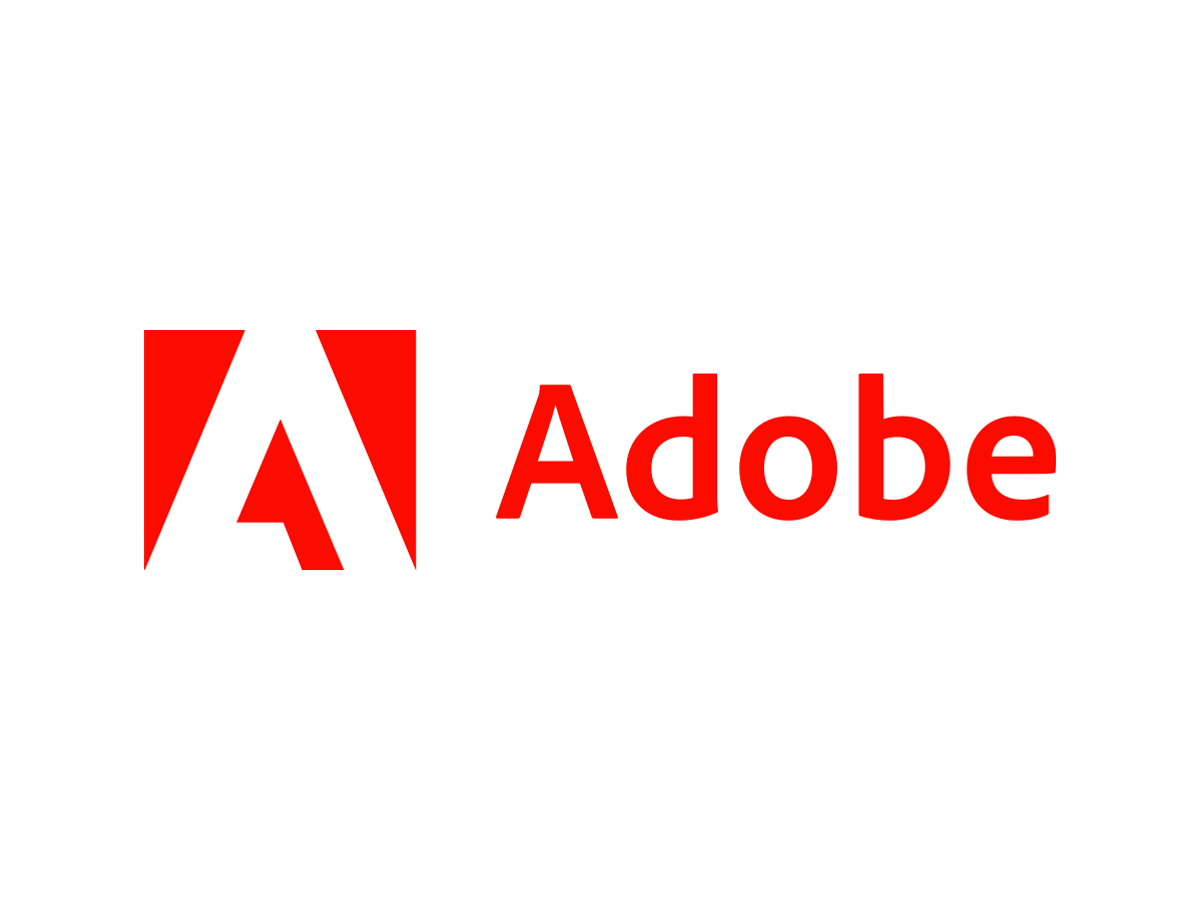
The 2020 refinement uses one warmer red and a cleaner lockup so the corporate identity stays consistent across digital surfaces. source
Product and service lineage.
Adobe only reads correctly when creative apps, PDF/Acrobat, Experience Cloud, Firefly, collaboration, 3D, templates, fonts, stock, and community surfaces stay separated enough to inspect.
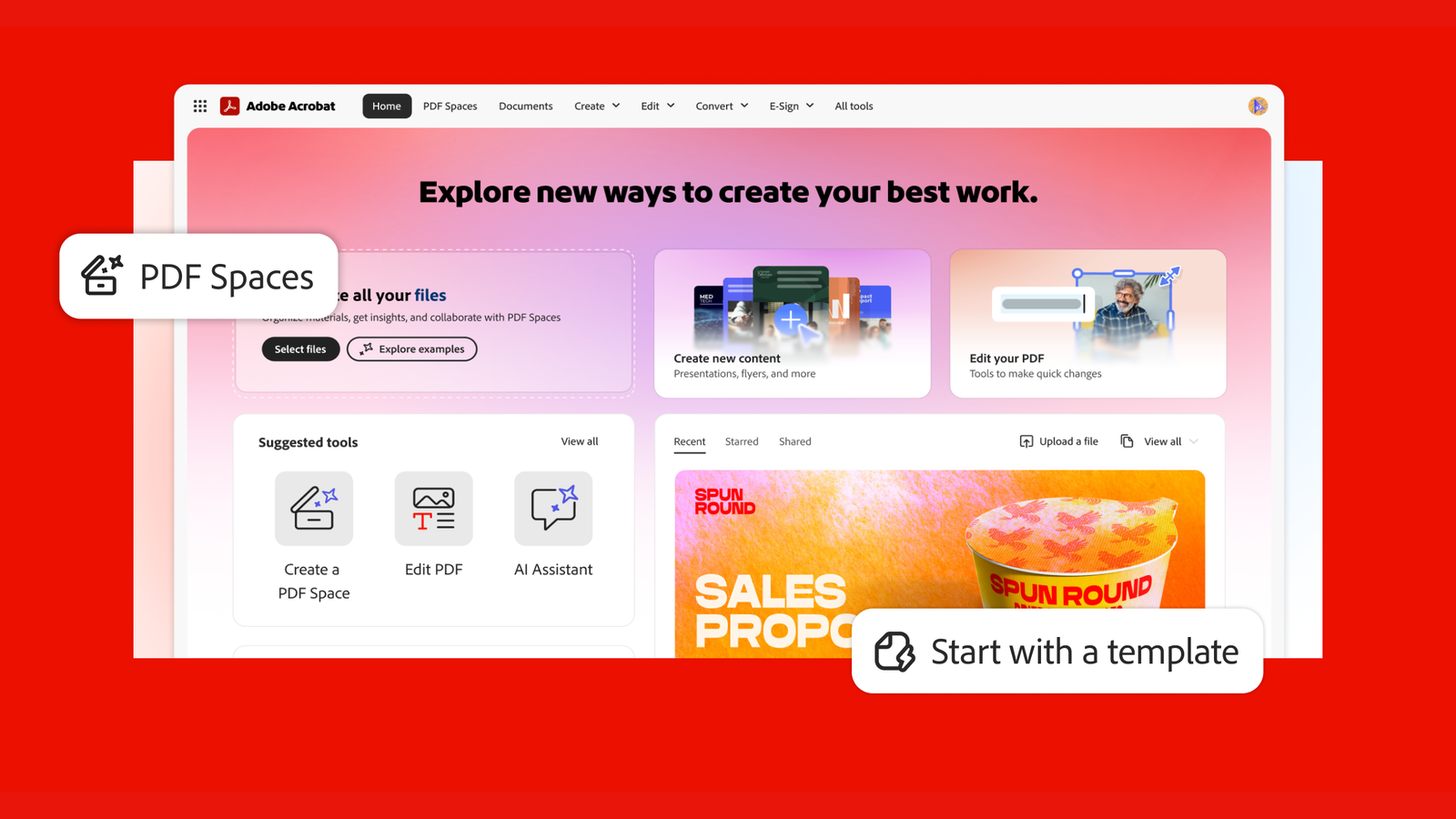
Acrobat makes PDF operational
Acrobat turns a file standard into an everyday system for review, signing, compliance, and shared documents.

Creative Cloud connects the craft
Photoshop, Illustrator, InDesign, and shared assets matter because one team can move from image to layout to final campaign without losing control.

Substance extends the craft into 3D
Materials, models, and product visualization move Adobe beyond flat images into gaming, retail, and industrial design.
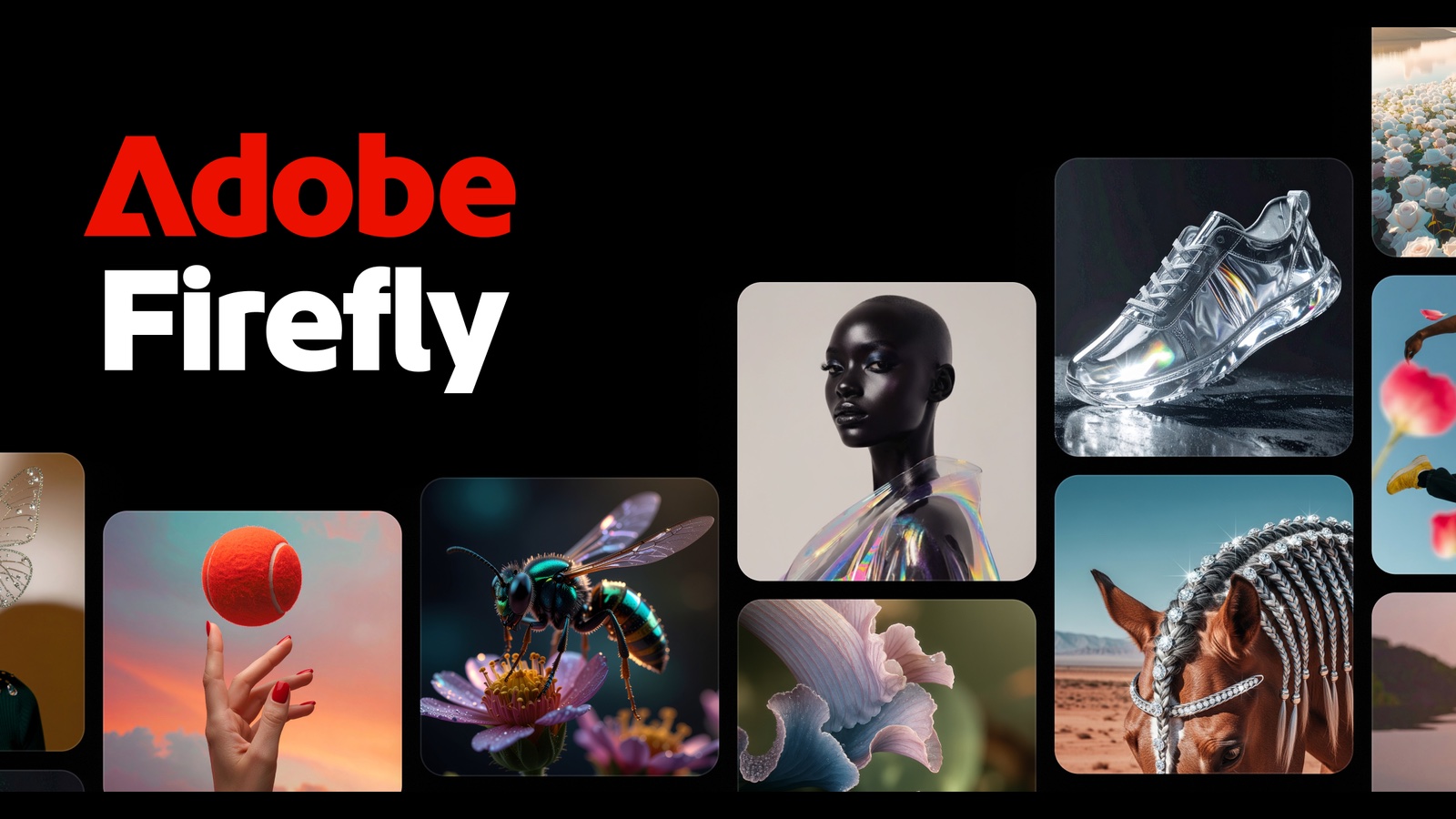
Firefly makes the AI promise visible
Firefly is useful only when generative tools remain connected to licensed, controllable professional workflows and creator trust.
Product and service system
Photoshop, Illustrator, InDesign, Premiere Pro, After Effects, Lightroom, fonts, stock, and shared cloud workflows carry the creator system.
PDF, Acrobat, Sign, AI Assistant, and document approvals make Adobe an office and compliance standard.
Analytics, commerce, journeys, content, and personalization give Adobe a marketing-operations lane.
Generative AI has to be source-aware, workflow-native, and trusted by creative professionals.
Video review and collaboration make Adobe useful inside production teams, not just at the editing desk.
3D materials and product visualization extend Adobe into gaming, retail, industrial design, and immersive content.
Template creation and public creative portfolios give Adobe a wider creator funnel.
Turning points.
Events that changed what buyers could see, buy, repeat, or trust.
Photoshop launches and later becomes the public shorthand for image editing.
Acrobat and PDF turn Adobe into a document-standard company.
Macromedia acquisition brings Flash and Dreamweaver into the portfolio.
Public reaction.
The useful reaction is about trust and pressure, not sentiment counts.
Adobe wins when professionals see control, compatibility, file standards, and deep workflow memory.
Adobe loses trust when subscription cost, lock-in, or AI uncertainty feels stronger than creative value.
Full timeline.
John Warnock and Charles Geschke found Adobe Systems.
PostScript becomes a foundation for desktop publishing.
Illustrator expands Adobe from page-description technology into creative tools.
Photoshop launches and later becomes the public shorthand for image editing.
Acrobat and PDF turn Adobe into a document-standard company.
Macromedia acquisition brings Flash and Dreamweaver into the portfolio.
Creative Cloud launches and begins shifting the brand toward subscription workflow.
Creative Cloud subscription becomes the main creative-suite model.
Magento acquisition strengthens Adobe Experience Cloud commerce.
Frame.io acquisition adds cloud video collaboration.
Substance 3D and Express make the portfolio broader than traditional desktop apps.
Firefly brings generative AI into Adobe's creative workflow story.
Adobe and Figma terminate the proposed acquisition after regulatory pressure.
FY2025 results show creative, document, and experience software under one operating system.
Steal / avoid.
- Own a workflow standard, not only a product interface.
- Let one famous product help the portfolio, but keep the rest visible.
- Use AI only where it strengthens professional control and repeatable output.
- Connect file standards, collaboration, and creation into one buyer story.
- Do not reduce Adobe to Photoshop.
- Do not hide Acrobat, PDF, Experience Cloud, Firefly, Frame.io, Substance 3D, Express, fonts, stock, or Behance.
- Do not use fake app icons or invented creative-interface visuals.
- Do not talk about AI without addressing creator trust.
Short answer.
Adobe should be read as a workflow-standard company. Photoshop gives it public memory, but PDF, Acrobat, Creative Cloud, Experience Cloud, Firefly, Frame.io, Substance 3D, Express, fonts, stock, and Behance explain why the brand reaches far beyond one app.
Frequently asked questions
What is Adobe's core brand signal?
Adobe turns creative tools and document standards into workflow power.
Why not describe Adobe as one product?
Because Adobe spans Creative Cloud, Acrobat and PDF, Experience Cloud, Firefly, and production tools; calling it Photoshop hides the document and enterprise system.
What should another brand steal from Adobe?
Own a workflow standard, not only a product interface.
Need help with your own brand?
Use Private brand work when your name, identity, proof, or message needs a sharper branding decision.
Sources.
Use the education shelf for the concepts behind this brand page.
Private brand workIf your company has to separate a masterbrand from tools, file standards, and AI products, Private Brand Work can define the role and proof for each layer.
All brandsReturn to every brand page.
- https://www.sec.gov/Archives/edgar/data/796343/000079634326000003/adbe-20251128.htm
- https://www.adobe.com/creativecloud.html
- https://www.adobe.com/products/photoshop.html
- https://www.adobe.com/acrobat.html
- https://www.adobe.com/products/firefly.html
- https://business.adobe.com/
- https://blog.adobe.com/en/publish/2021/10/07/adobe-completes-frameio-acquisition
- https://www.adobe.com/products/substance3d.html
- https://blog.adobe.com/en/publish/2020/05/28/evolving-our-brand-identity-uk
- https://www.adobe.com/about-adobe.html
- https://business.adobe.com/uk/resources/10-things-you-might-not-know-about-adobes-40-years-of-innovation.html
- https://marketcap.company/market-capitalization/nasdaq-adbe-adobe-systems-incorporated/
- https://commons.wikimedia.org/wiki/File:Adobe_1990_logo.svg
