Asset 1
Store signs, aisles, carts, bags, receipts, private labels, ads, app surfaces, and weekly trips
Store signs, aisles, carts, bags, receipts, private labels, ads, app surfaces, and weekly trips.
A Brand Signal Card from Grow Your Brand
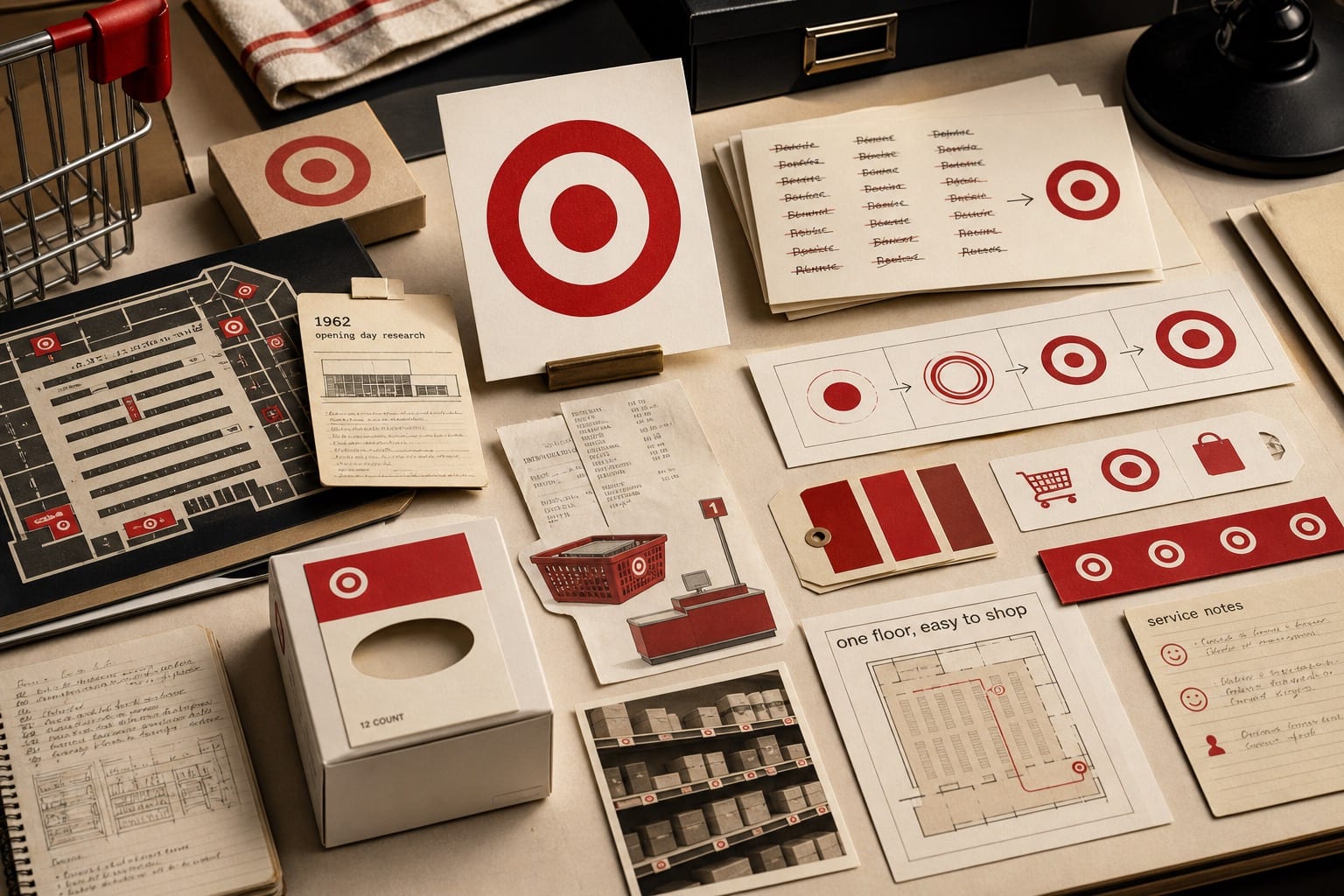
Target made a broad discount store easier to read with a name and mark that worked at road, shelf, bag, and app distance.
Identity snapshot
The snapshot keeps the route useful without turning the page into a company profile.
Recognition assets
These points come from the existing source material and keep the page tied to observable brand behavior.
Asset 1
Store signs, aisles, carts, bags, receipts, private labels, ads, app surfaces, and weekly trips.
Color system
Color is shown as a controlled signal layer attached to the brand surfaces.
Retail visibility and immediate store recognition.
A clean ground for the bullseye and value cues.
Contrast for tags, receipts, and app surfaces.
Product or service signal
A Brand Signal Card has to connect identity to a real surface, product, service, or repeated customer behavior.
Store signs, aisles, carts, bags, receipts, private labels, ads, app surfaces, and weekly trips.
Target made a broad discount store easier to read with a name and mark that worked at road, shelf, bag, and app distance.
Brand pressure
The events stay compact so the reader can see what pressure the brand had to absorb.
1962 first store
The first Target store opened in Roseville, Minnesota.
Name selection
Target says more than 200 names were considered before the bullseye system.
Mark simplification
The bullseye was simplified and refined as the store system expanded.
Signal checks
Scores stay qualitative here because the batch is preserving source-backed facts, not inventing a numeric model.
Recognition
The bullseye works at distance and across many shopping surfaces.
Use surface
The mark appears before, during, and after the retail trip.
Proof
The cue helps the store feel simpler than the assortment behind it.
Steal / avoid
The point is not to copy the visible artifact. It is to copy the discipline behind it.
When the offer is broad, make the memory asset simple enough to carry the whole trip.
Do not make a busy category harder to scan. Cleverness loses when the shopper needs a fast cue.
Browse taxonomy
These links keep the transferred route inside the current Brand Signal Index foundation.
Related cards
Related links use existing Grow Your Brand routes already present in the public tree.
Source board
Source links are carried over from the existing source material.
Private brand work